From A Final Ward · Thomas & Erin Ptacek · · 2m
How to write with an LLM
Two rules that let language models improve your writing without making it sound like a machine.
In brief
Two rules that let language models improve your writing without making it sound like a machine. Use LLMs as a copyeditor, not a ghostwriter. Never use their suggested words, and ignore their praise of your first draft. Originally reported by A Final Ward.
Readers spot LLM writing instantly
No matter how much you polish it, audiences detect machine-generated text. It registers as output, not writing, and breaks their attention.
“Readers can detect LLM words in the parts per trillion.”
Use LLMs as copyeditors
The solution is to write your piece first, then feed it to a model to find flaws. Treat them like an editor, not a ghostwriter.
Rule one: never use their words
Frontier models excel at pleasing phrases, but their suggestions will make your writing sound like magazine headlines. Reject every word they propose, no exceptions.
“You may not use a single word an LLM suggests to you.”
Rule two: avoid their encouragement
Models praise everything, but your first draft is full of bad paragraphs and unnecessary words. Their approval will trap you in weak impulses you'd normally edit out.
“that's gold, Jerry!”
Praise makes you double down
When models encourage your first-draft impulses, you stop rethinking and replacing paragraphs. Those edits are what make your voice yours. Readers sense the artificial flavor.
What models actually excel at
They're tireless at spotting mechanical problems: overused passive voice, filler words like very and really, repeated phrases, and paragraphs that could move elsewhere.
Study copyediting principles first
Read Style: Lessons in Clarity and Grace to understand what good editing looks like. Then create a list of editing prompts to run against your work in passes.
The three-step editing workflow
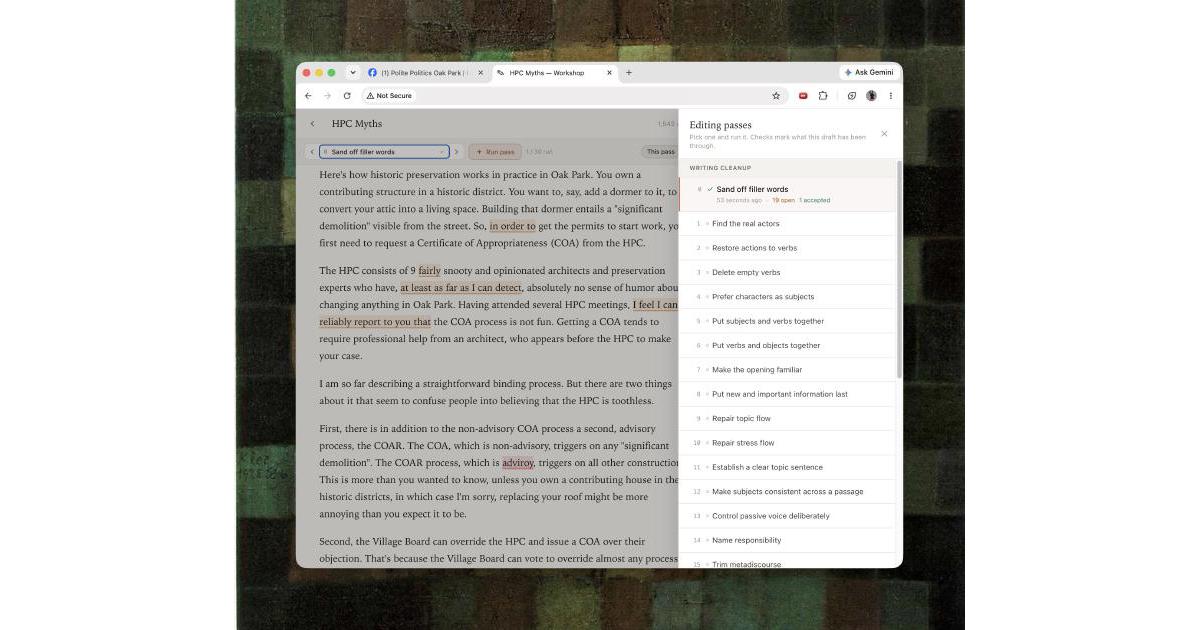
Ask the model to spot problems. Rewrite each one. Then ask a fresh model instance which version is better, so it doesn't know you just rewrote something.
Build a tool to manage the process
Create software to track editing passes, highlight problems, and compare versions side by side. This removes the temptation to accept the model's judgment uncritically.
Outsource tedium, keep your voice
Don't let models pick your words or trick you into thinking your first draft is good. Delegate the exhausting mechanical work and preserve what makes you sound like you.
Ignore advice that doesn't fit
Models will suggest cuts and changes that are technically correct but don't match your style. You can disagree with their copyediting and stay true to yourself.
The essence
Use LLMs as a copyeditor, not a ghostwriter. Never use their suggested words, and ignore their praise of your first draft.





