From Al Jazeera · Tamara Khandaker · · 3m
Canada's top court upholds Quebec's religious symbols ban
Canada's Supreme Court largely upholds Quebec's secularism law banning religious symbols for public workers, settling a years-long legal battle but leaving affected communities disappointed.
In brief
Canada's Supreme Court largely upholds Quebec's secularism law banning religious symbols for public workers, settling a years-long legal battle but leaving affected communities disappointed. Canada's Supreme Court upheld Quebec's Bill 21, which bans public school teachers, police officers and some other public…
Supreme Court upholds Quebec's ban

Canada's Supreme Court has largely upheld Quebec's secularism law, leaving in place a ban on public school teachers, police officers and some other public employees wearing religious symbols at work.
Bill 21 forces impossible choices
The ruling settles a years-long legal battle over a law that has forced some workers to choose between their careers and how they practise their faith.
Exception for elected officials
The court upheld an exception to a separate rule requiring elected members of Quebec's National Assembly to uncover their faces, finding the requirement infringed upon their democratic rights.
Muslim groups call it a dark day
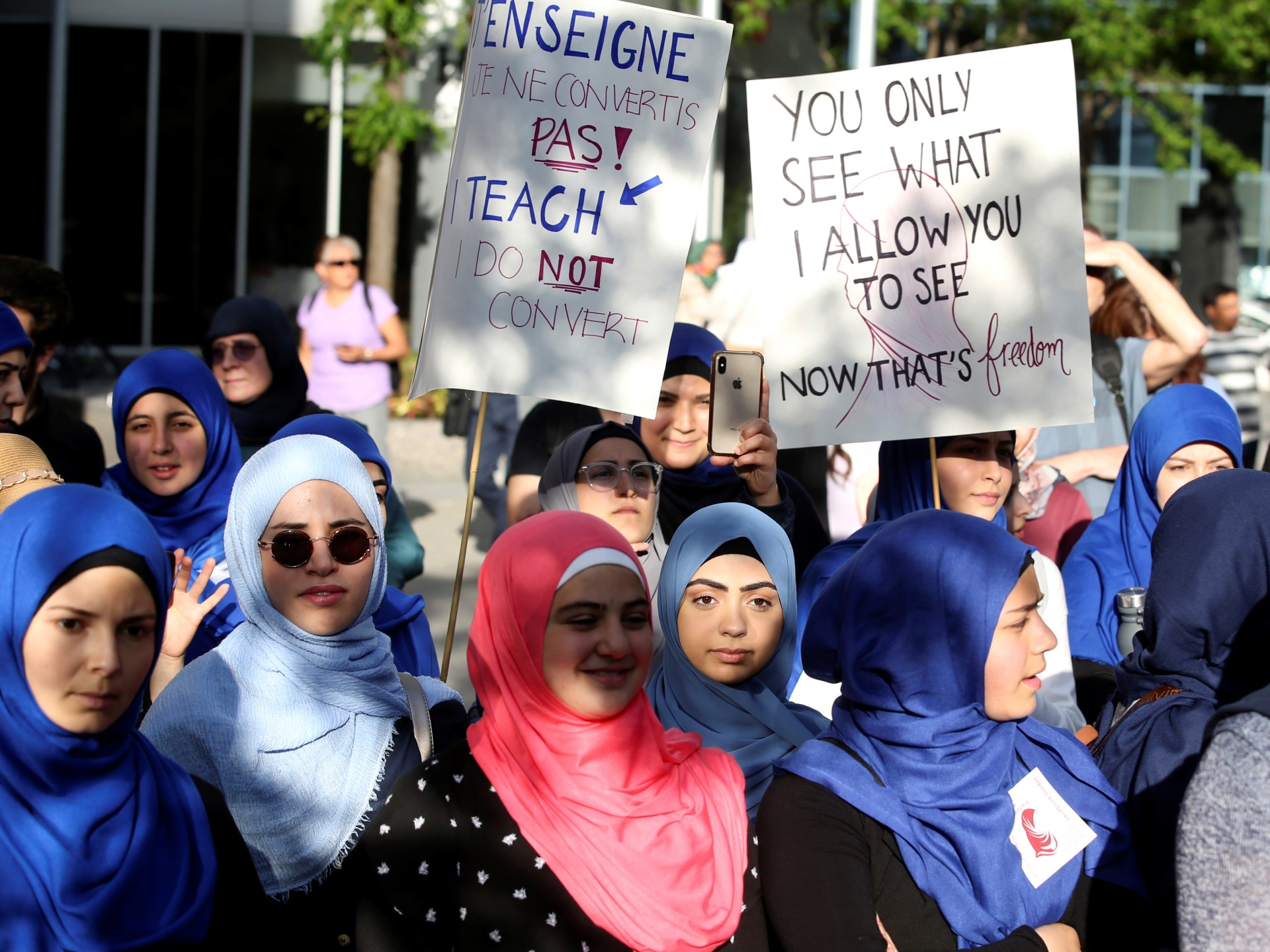
The National Council of Canadian Muslims called the ruling a dark day in constitutional democracy. Chief executive Stephen Brown said entire categories of people are now barred from employment sectors.
“In our country, in the 21st century, entire categories of people are now barred from entire sectors of employment, not because of what they have done, but because of who they are.”
Court approves notwithstanding clause use
The Supreme Court found Quebec had used the notwithstanding clause lawfully and that it can be used before a court rules on whether a law violates Charter rights.
Dissenting judges cite disproportionate impact
Justices Andromache Karakatsanis and Michelle O'Bonsawin wrote the law violates freedom of religion and falls most heavily on Muslim women, affecting their basic sense of belonging in Canadian and Quebec society.
“The Act's effects are not experienced equally. They fall most heavily on Muslim women.”
Woman loses volunteer role over hijab
Nevien Waly, who wears a hijab, was told she could not volunteer at her children's school under Bill 94. She said she is sad for herself and worried about the future of her kids.
“I'm sad for myself, worried about the future of our kids.”
Waly encourages children to leave Quebec
After the ruling, Waly said she was encouraging her children to excel in school so they would have the option to leave. She said she does not see a good future in Quebec.
“I don't see a good future in Quebec.”
Clause use spreading across Canada
Stephen Brown of the National Council of Canadian Muslims said the ruling came as governments across Canada were losing restraint with the notwithstanding clause, pointing to Saskatchewan and Alberta's recent uses.
“It was intended to be an instrument of last resort, and now it has become an ordinary instrument of government.”
The key point
Canada's Supreme Court upheld Quebec's Bill 21, which bans public school teachers, police officers and some other public employees from wearing religious symbols at work.
Read the TL;DR — this story on one card.