From Ars Technica · · 2m
A hot Jupiter vanished from its star
An exoplanet observed for seven years stopped transiting its host star, suggesting an unseen companion is tilting its orbit out of view.
In brief
An exoplanet observed for seven years stopped transiting its host star, suggesting an unseen companion is tilting its orbit out of view. TOI-2535b, a Jupiter-sized exoplanet, stopped appearing in transit observations after seven years, likely due to gravitational shifts from an unseen companion planet. Originally…
A planet that vanished
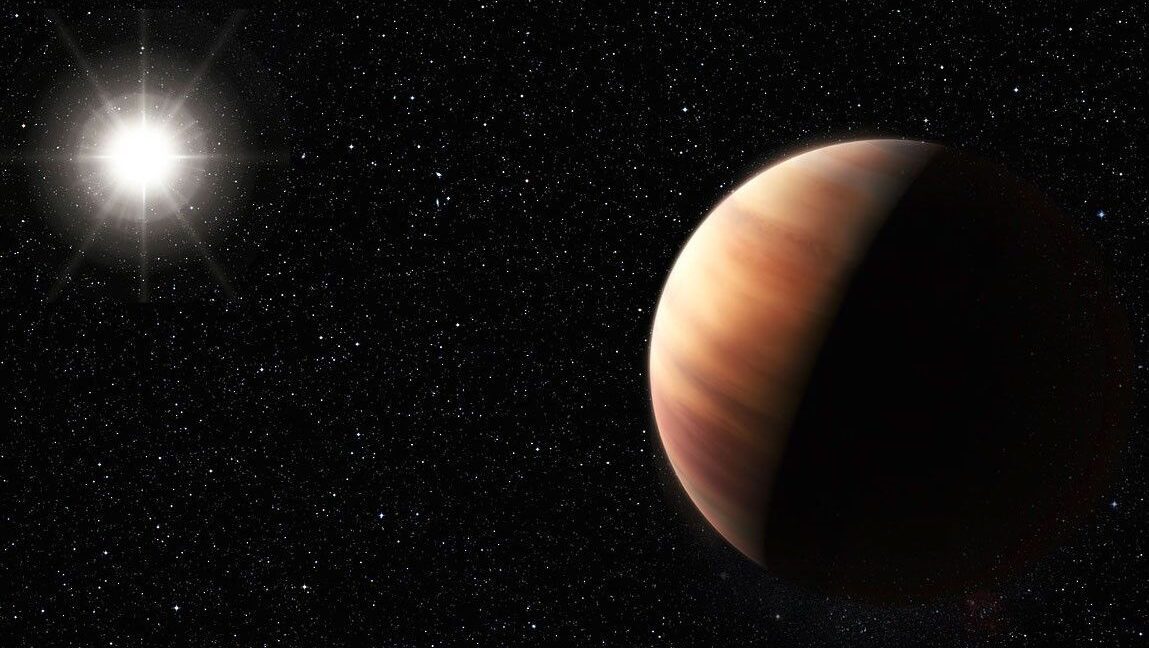
TOI-2535b, a Jupiter-sized exoplanet orbiting the star TOI-2535 every eight days, stopped appearing in recent observations after seven years of regular transits between its star and Earth.
Timing shifts revealed trouble
The planet's transit timing shifted by as much as six hours, a substantial variation for such a brief orbit. This typically signals gravitational interactions with another unseen planet in the system.
The orbit tilted away
Transit duration grew progressively shorter in recent observations, suggesting the planet shifted from crossing the star's equator to crossing near its poles, eventually stopping transits entirely.
An unprecedented change
Researchers noted this is the fastest rate of inclination change observed for an exoplanet orbiting a single star. The unseen companion would need to be extremely massive or on a highly eccentric orbit.
“This is the fastest rate of inclination change observed for an exoplanet orbiting a single star.”
Modeling 300,000 scenarios
Researchers modeled three hundred thousand different starting configurations to understand what could cause such rapid orbital changes. They found no single favored configuration, only orbital resonances that provided stability.
Two-thirds became unstable
When the hundred best solutions were run forward for a million years, about two-thirds became unstable. The remaining third showed the unseen planet must be Saturn-sized at minimum with a small orbital angle.
Detection remains elusive
The unseen planet's gravitational pull on the star should create detectable radial velocity changes, but researchers currently lack clean enough data. A third planet in the system cannot be excluded from transit timing noise.
The formation mystery remains
How this system reached its current state is unclear. Planet migration and orbital friction should limit the angle between orbits, yet this system shows unusually large orbital tilting without an obvious explanation.
The takeaway
TOI-2535b, a Jupiter-sized exoplanet, stopped appearing in transit observations after seven years, likely due to gravitational shifts from an unseen companion planet.