From Ars Technica · · 3m
AI cracks the Riemann hypothesis
A mathematician used Claude to prove one of math's biggest unsolved problems, raising urgent questions about how AI will reshape the field.
In brief
A mathematician used Claude to prove one of math's biggest unsolved problems, raising urgent questions about how AI will reshape the field. Mathematician Levent Alpöge used Claude to prove the Riemann hypothesis, but mathematicians worry AI-generated proofs may rob the field of the insights that come from working…
A century-old problem solved
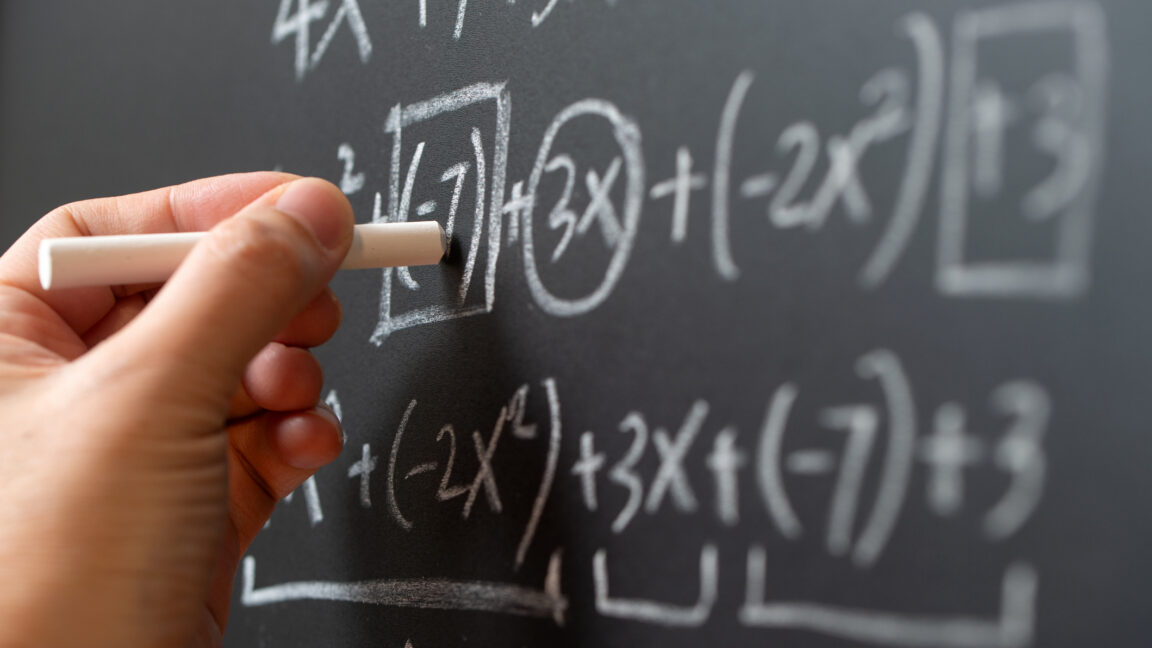
Mathematician Levent Alpöge announced he had proved the Riemann hypothesis, one of mathematics' most important unsolved problems since the mid-1800s, using Claude, an AI system made by Anthropic.
Why Riemann matters
The Riemann hypothesis, formulated by Bernhard Riemann, has implications for the distribution of prime numbers and significance for number theory and cryptography. Pure mathematicians consider it one of the most important problems in the field.
How Alpöge used AI
Alpöge had long been interested in the hypothesis and had insights into connecting different areas of math.
Two forms of proof
The proof exists in two forms: a rigorous description in Lean, a programming language that allows rapid verification the proof is valid, and a description of the logic behind it.
The process matters more than the answer
Mathematicians have expressed formal concerns that the reasoning behind a proof, not just the step-by-step logic, is what advances the field. Working through proofs helps mathematicians develop new tools and find shortcuts.
What AI cannot explain
The internal workings of large neural networks are opaque. When asked about its reasoning, AI tends to make up explanations that sound good rather than reveal actual processes, offering little new insight to the field.
Mathematicians are still digesting it
Nobody can say much about the Riemann proof yet because mathematicians have barely started working through the logic as expressed in Lean. It may take years before humans figure out what new insights it contains.
A possible model for the future
Once Alpöge describes his approach, mathematicians may gain the insights they normally expect from proofs. His method of mixing human intuition with machine-generated detail and rigor could show what mathematics looks like in coming years.
The field is still finding its way
This is all new and progressing incredibly quickly. The mathematics field has had no time to find a new normal or establish how AI should be used to advance mathematical knowledge and discovery.
In short
Mathematician Levent Alpöge used Claude to prove the Riemann hypothesis, but mathematicians worry AI-generated proofs may rob the field of the insights that come from working through problems.
Read the TL;DR — this story on one card.