From Ars Technica · · 3m
Europe's Hera finds chaos after asteroid impact test
The European Space Agency's Hera spacecraft arrives at a double asteroid system four years after NASA's DART mission deliberately crashed into one, revealing an unexpectedly dramatic aftermath.
In brief
The European Space Agency's Hera spacecraft arrives at a double asteroid system four years after NASA's DART mission deliberately crashed into one, revealing an unexpectedly dramatic aftermath. Europe's Hera spacecraft found hundreds of boulders surrounding asteroids Didymos and Dimorphos after NASA's DART impact…
NASA's asteroid impact test worked
In September 2022, NASA's Double Asteroid Redirection Test spacecraft slammed into asteroid Dimorphos at more than thirteen thousand seven hundred miles per hour, shortening its twelve hour orbit around larger companion Didymos by about thirty…
The impact was far more powerful than expected
The spacecraft released some ten billion joules of energy as it hit Dimorphos, shortening the asteroid's orbit by about thirty three minutes, twenty five times the most conservative expectation.
Scientists knew they made a mess
Sabina Raducan, a planetary scientist at the International Space Science Institute in Bern, Switzerland, said we knew right away that the impact was successful, that DART made a really, really large mess.
“We knew right away that the impact was successful, that DART made a really, really large mess.”
Europe's Hera arrives to investigate
The European Space Agency's Hera spacecraft recently arrived in the vicinity of Didymos and Dimorphos after a two year journey from a launch pad in Florida.
Hera reveals a massive crater
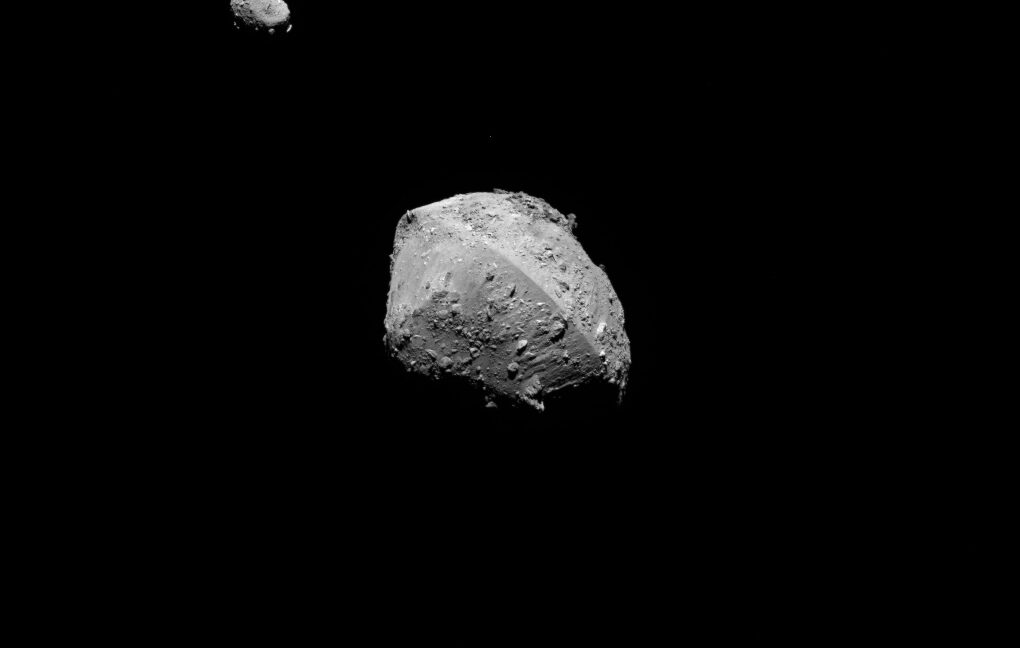
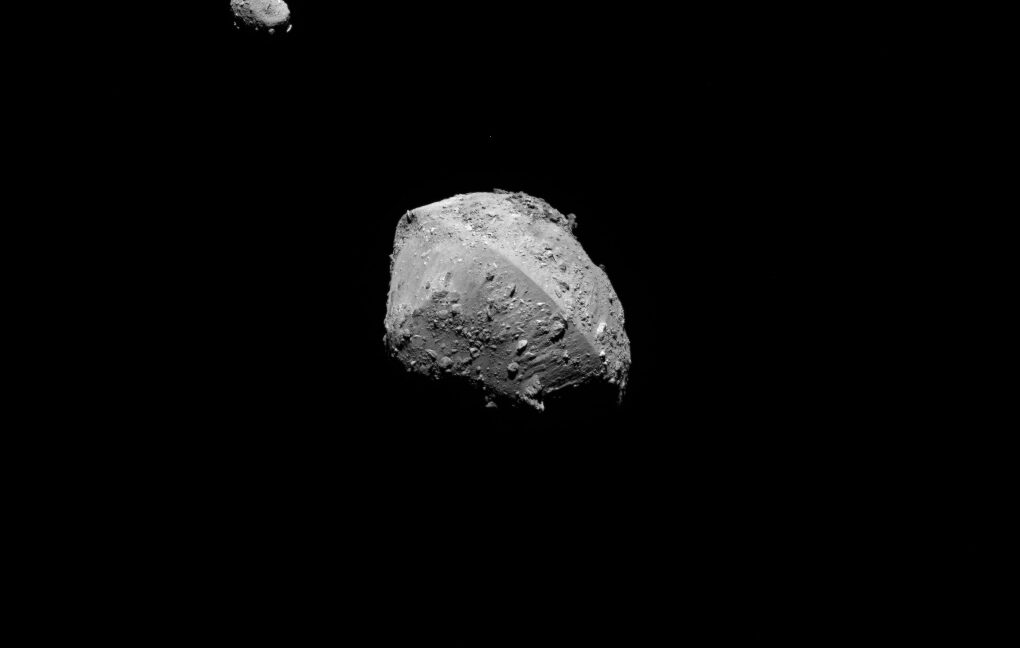
ESA released Hera's first views of the scar left by DART on Dimorphos. The images show the car sized impactor carved out a crater the size of a stadium, nearly as big as Dimorphos itself…
The impact reshaped the asteroid
Patrick Michel, Hera's principal investigator from Côte d'Azur Observatory in Nice, France, said the crater is so large that the shape has changed.We are in a sort of transition between just cratering and global transformation.
“In fact, we did both because the crater is so large that the shape has changed.”
Dimorphos is now tumbling wildly
Hera found Didymos, the larger asteroid, spinning on its axis as DART observed in twenty twenty two. But Dimorphos is no longer stable and is tumbling wildly in its orbit.
Hundreds of boulders surround the asteroids
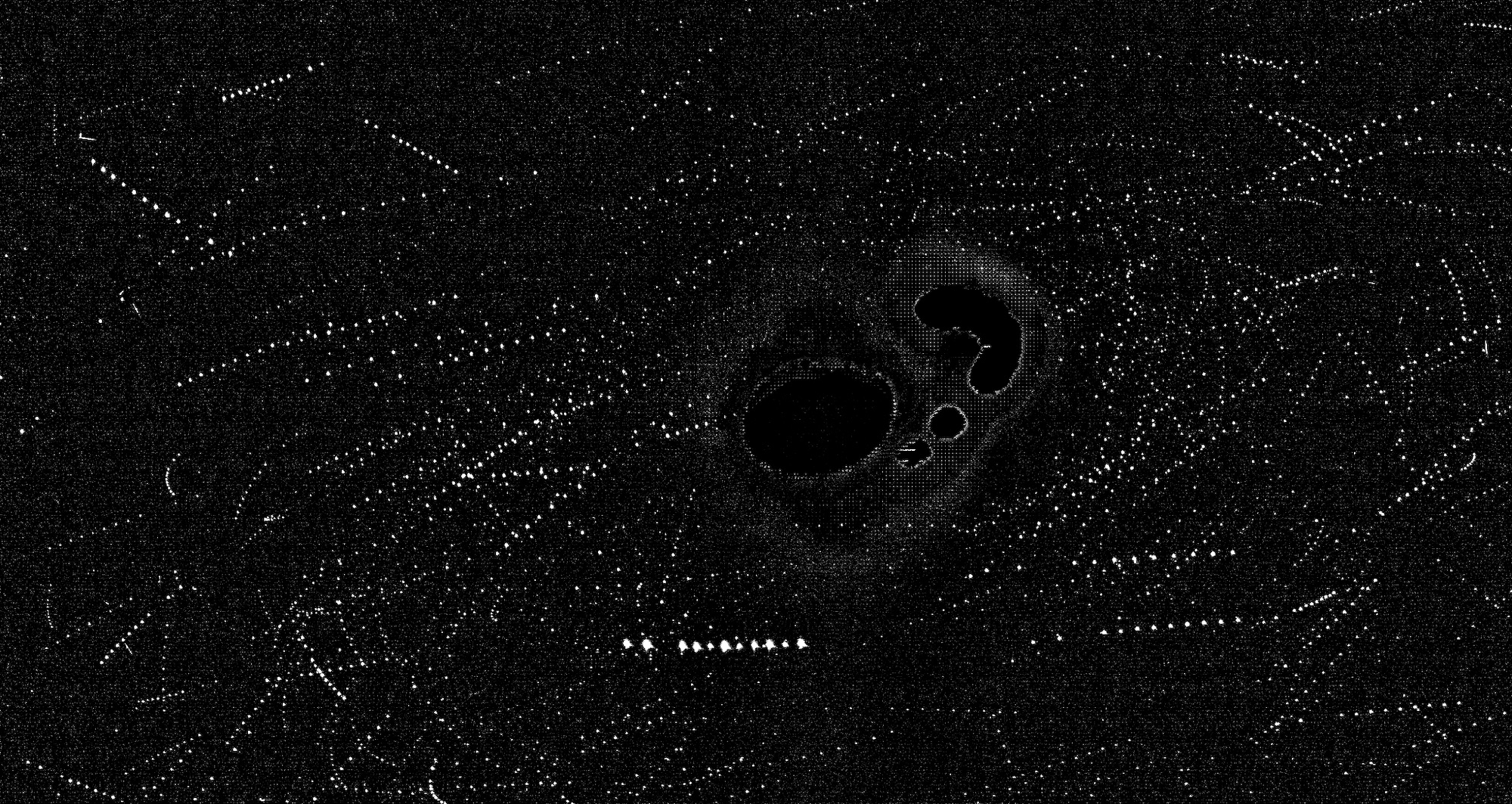
In its initial reconnaissance this month, Hera spotted hundreds of boulders surrounding the double asteroid. Scientists were astonished by the extent of the debris swarm in Hera's first images.
The debris field is unexpectedly large
Naomi Murdoch, planetary scientist at the Institut Supérieur de l'Aéronautique et de l'Espace in Toulouse, France, said Hera came to visit two asteroids and found hundreds of companions.
“Hera came to visit two asteroids, and we found hundreds of companions.”
The boulder field poses deployment risks
The boulders create challenges for navigating around the asteroids. In particular, they are an added risk for the two small CubeSats Hera is supposed to deploy in January.
Low gravity makes collisions survivable
The good news is the asteroids' gravity is so weak that Hera, Milani, Juventas, and hazards around them all move at snail like speeds.
Hera will study the impact aftermath
Over the next six months, Hera will fly closer to obtain more detailed observations. It will release two small sub satellites to attempt landings on Dimorphos and collect data on composition, internal structure, and mass…
The big picture
Europe's Hera spacecraft found hundreds of boulders surrounding asteroids Didymos and Dimorphos after NASA's DART impact test, revealing the collision caused far more debris than expected.
Read the TL;DR — this story on one card.