From Ars Technica · · 3m
Exoskeletons move from labs into rescue and combat
Powered devices that boost human strength are now being tested by mountain rescuers, used by soldiers in Ukraine, and adopted by major manufacturers.
In brief
Powered devices that boost human strength are now being tested by mountain rescuers, used by soldiers in Ukraine, and adopted by major manufacturers. Exoskeletons that enhance human strength and endurance are moving from research into real-world use by rescue teams, militaries, and manufacturers, with the sector…
Mountain rescuers test powered exoskeletons
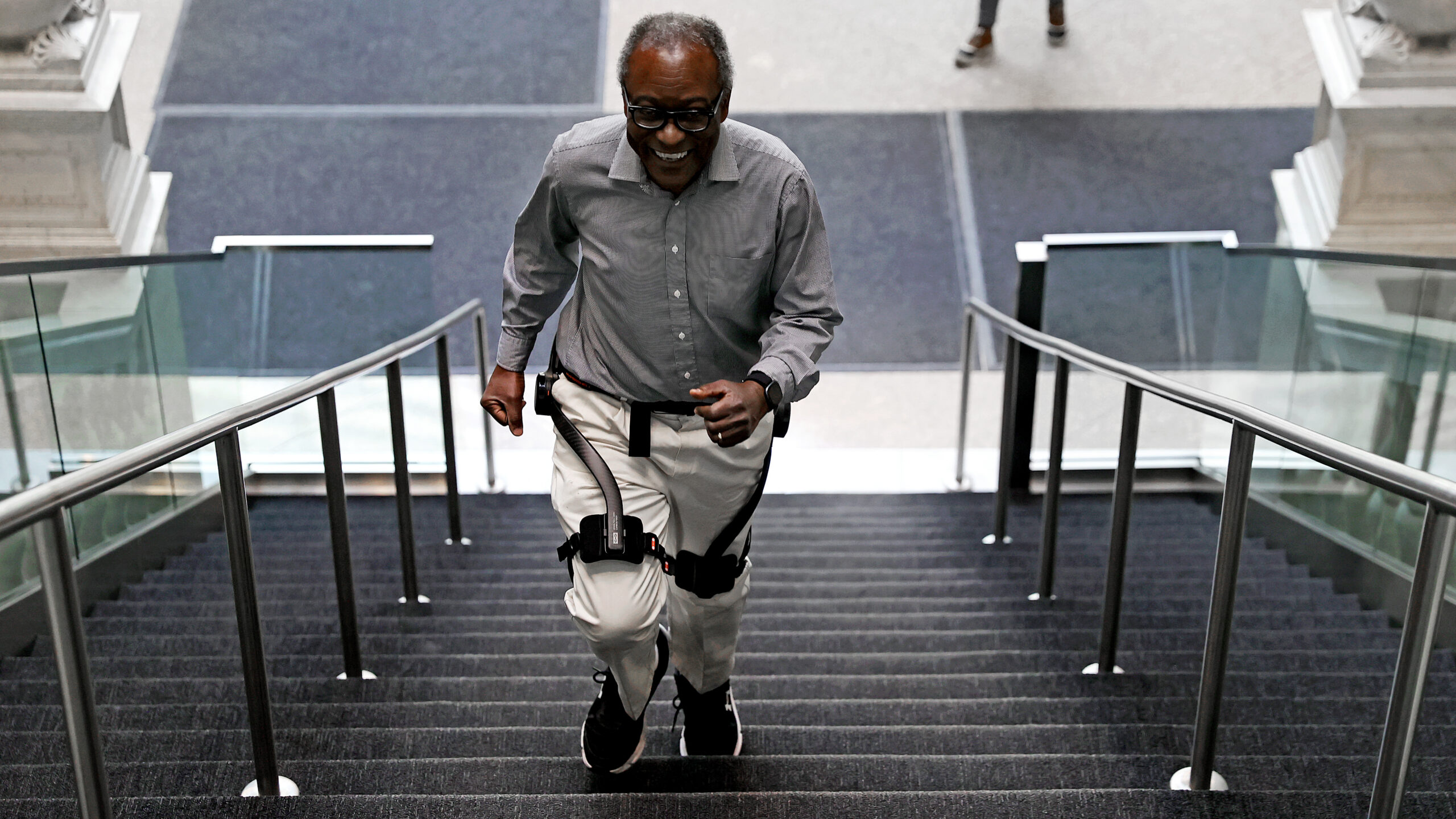
Members of Seattle Mountain Rescue are hiking into the Pacific Northwest wilderness wearing powered assistive devices attached to hips and legs to boost lower-body strength during searches for stranded people.
What exoskeletons are and how they work
Human exoskeletons attach to the body to create an external mechanical structure that enhances physical capabilities. They generate forces to make wearers stronger, move faster, or fatigue slower during strenuous tasks.
Major manufacturers already using the technology
IKEA has used SuitX exoskeletons for several years to assist warehouse workers with heavy materials. Ford, Boeing, and Mazda Toyota have also adopted the technology on some of their assembly lines.
Ukraine deploys exoskeletons in combat
In early two thousand twenty-six, the Ukrainian military revealed soldiers had been using Hypershell exoskeletons on the front lines to help carry artillery shells. According to Colonel Vitalii Serdiuk, soldiers wearing the devices become less fatigued, work faster, and maintain combat effectiveness for longer.
“become less fatigued, work faster, and maintain combat effectiveness for longer”
Market expected to grow significantly
The exoskeleton sector is currently valued at around five hundred million dollars, or three hundred seventy million pounds. Estimates predict it could double or triple in size by the mid-two thousand thirty-s.
The concept dates back over a century
One of the earliest known exoskeleton concepts was patented in eighteen ninety by Nicholas Yagn, a self-taught Russian inventor. In nineteen nineteen, American Leslie C. Kelley patented a steam-powered device to support walking.
How modern exoskeletons are controlled
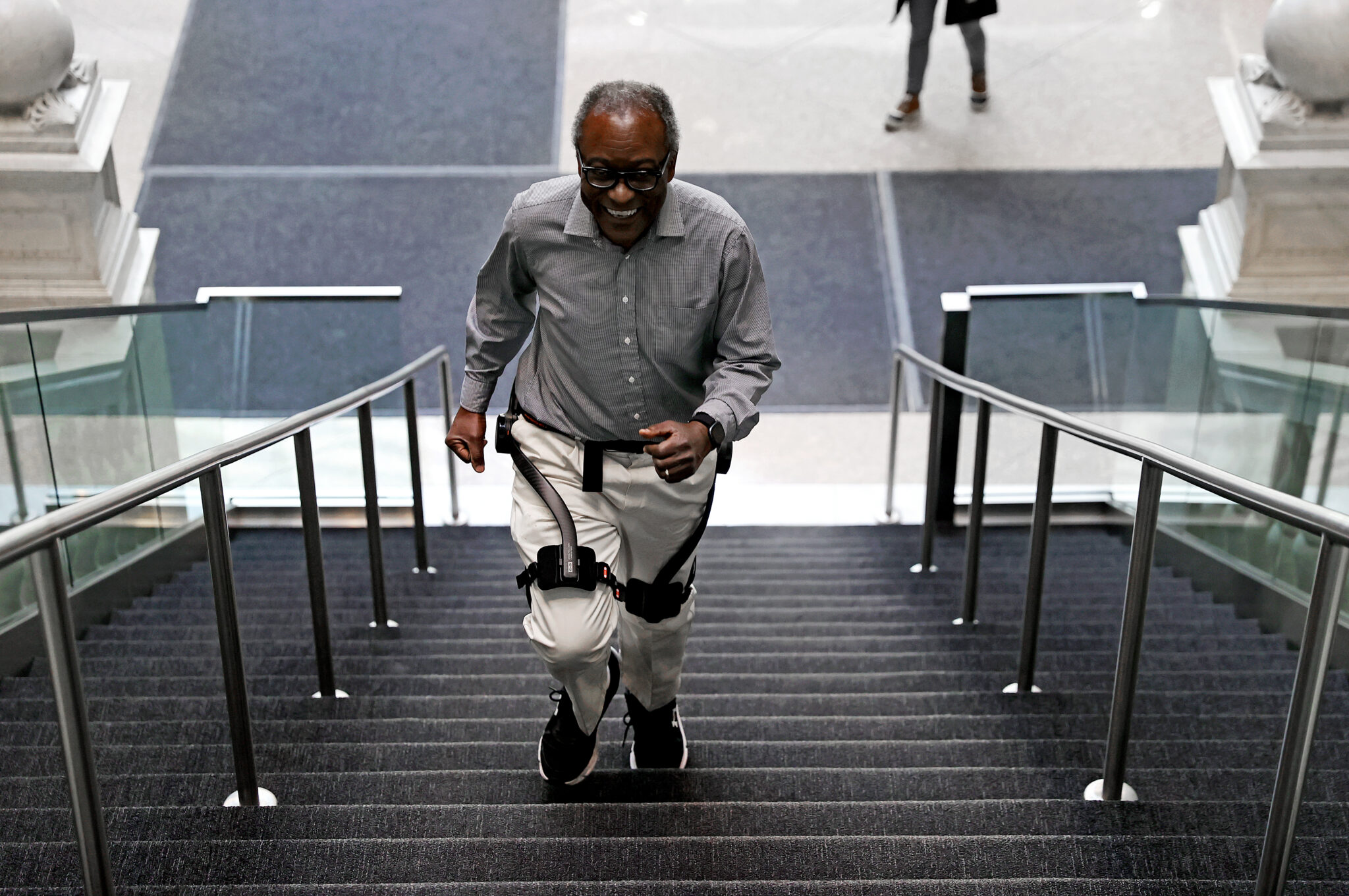
Modern active robotic exoskeletons use actuators that convert electric power from batteries into mechanical movement. Control units embedded in the device define movement trajectories and force levels, using sensors to determine what the wearer needs.
Three ways exoskeletons provide assistance
Power augmentation increases user force capabilities, commonly seen in assistive devices. Assist-as-needed settings provide support only when necessary, often used in rehabilitation. Full robotic control allows the exoskeleton to assume complete control for users who have lost motor functions.
Brain signals and soft materials are next
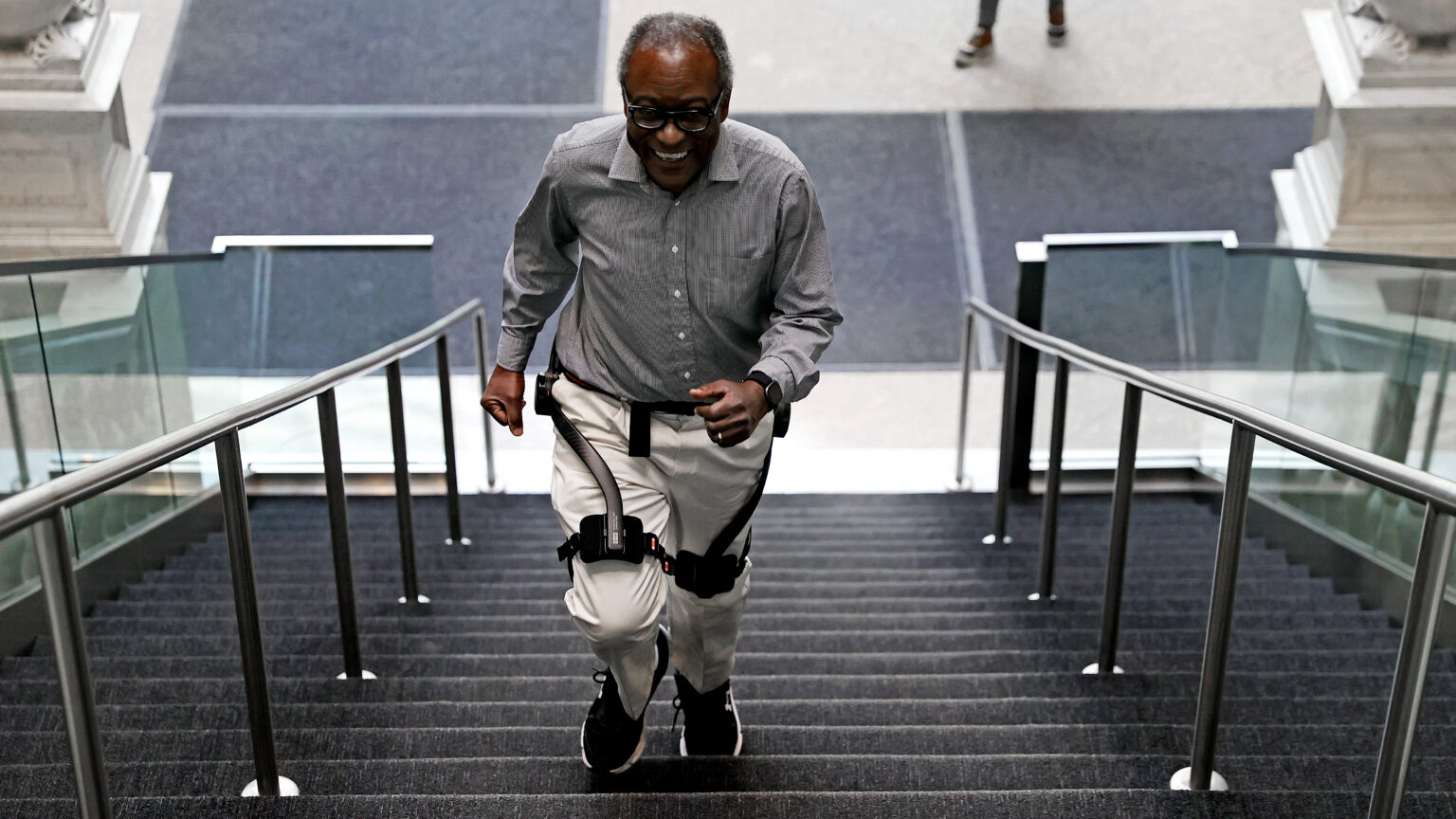
Future exoskeletons could be operated with signals from the wearer's muscles or brain, though this remains a challenge requiring invasive interfaces and extensive calibration. New soft textile and rubber-like materials are being developed that integrate into clothing and footwear.
Battery power and humanoid robots drive progress
Battery weight and size constraints remain a current challenge, though energy density is steadily improving. Interest in humanoid robotics is now accelerating development of actuators and batteries that will advance wearable robotic technologies.
The key point
Exoskeletons that enhance human strength and endurance are moving from research into real-world use by rescue teams, militaries, and manufacturers, with the sector expected to grow significantly by the mid-2030s.





