From Ars Technica · · 2m
Knife through eye and brain, man walks out fine
A man in his twenties survived a 15 mm blade that pierced his right eye and traversed his brain, and recovered with almost no lasting damage.
In brief
A man in his twenties survived a 15 mm blade that pierced his right eye and traversed his brain, and recovered with almost no lasting damage. A man in his twenties survived emergency surgery to remove a 15 mm-wide knife blade that went through his right eye and brain, and was discharged with no significant…
Blade through eye and brain
A man in his twenties arrived at a UK hospital with a knife hilt protruding from his face.
Conscious and talking despite injury
The man was alive and conscious when he arrived.He could talk and move all four limbs, though doctors described him as agitated.On the Glasgow Coma Scale, he scored a 12, indicating a moderate brain injury.
Doctors sedate him to prevent self-harm
Concerned the confused, agitated man might pull the knife out himself, doctors swiftly sedated and intubated him. They gave him prophylactic treatments for bacterial infections, including tetanus, then used imaging to assess the damage.
Blade missed critical brain structures
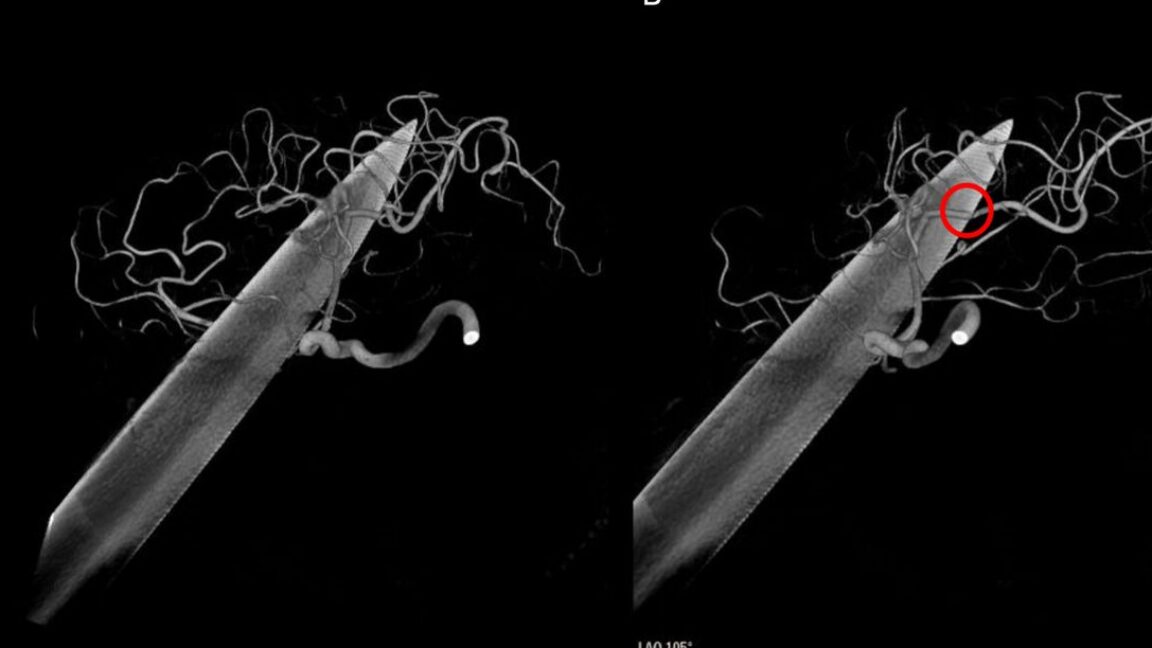
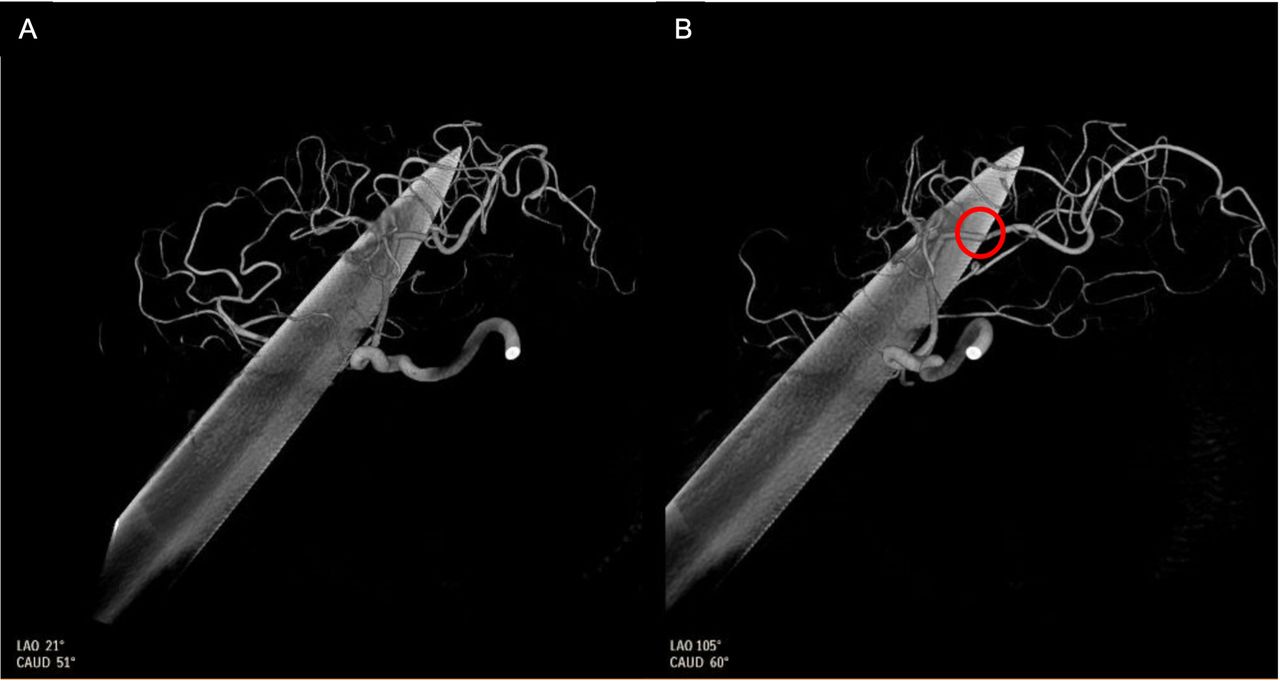
Imaging showed the blade traversed the left frontal and temporal lobes but passed in front of the corpus callosum without injuring it.The blade also missed the left internal capsule, both bundles of critical nerve fibres.
Major blood vessel narrowly spared
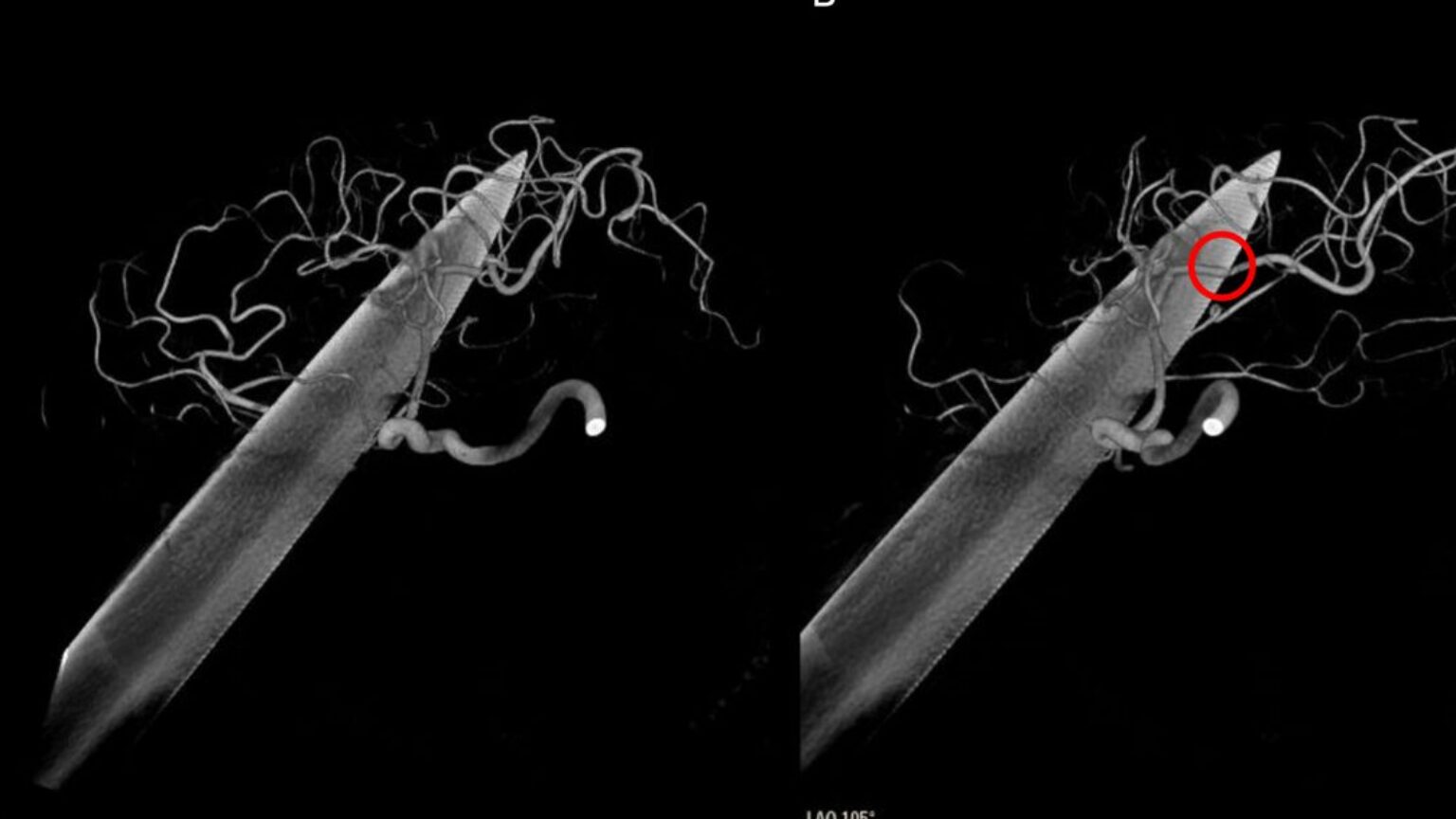
The blade came close to the left internal carotid artery, a major blood vessel, but did not damage it. However, a branch of the middle cerebral artery appeared to be indented by the knife.
Conservative surgery removes the blade
Neurosurgeons removed part of the man's skull and used a conservative pull-and-see method to slide the blade out rather than invasively excavate it.After removal, there were no signs of significant bleeding.
Rapid recovery in intensive care
A day after surgery, doctors removed his breathing tube.He developed minor right-side weakness that resolved two days later.Brain scans showed steady improvement with only minor bleeding and swelling.He developed no infections and had no seizures.
Discharged with full neurological function
Despite the dramatic intracranial trajectory, his language function was preserved and he had no loss of movement or coordination.
Outcome depends on trajectory, not severity
Doctors noted such injuries are rare and usually fatal.Low-velocity penetrating brain injuries carry substantial morbidity and mortality from hemorrhage, vascular injury, abscess, meningitis, cerebrospinal fluid leak, seizures and neurological deficit.
Precise trajectory determined survival
Doctors concluded that outcome may depend less on external severity than on precise trajectory relative to critical vascular, cortical and subcortical structures.
“outcome may depend less on external severity than on precise trajectory relative to critical vascular, cortical and subcortical structures”
The headline
A man in his twenties survived emergency surgery to remove a 15 mm-wide knife blade that went through his right eye and brain, and was discharged with no significant neurological damage.