From Ars Technica · · 2m
Life may have thrived in dinosaur crater
The Chicxulub impact crater hosted a hydrothermal system for 8 million years, potentially creating a haven for microbial life.
In brief
The Chicxulub impact crater hosted a hydrothermal system for 8 million years, potentially creating a haven for microbial life. The Chicxulub impact crater that killed dinosaurs 66 million years ago may have sustained microbial life through a hydrothermal system lasting eight million years, far longer than previously…
Asteroid impact, unexpected aftermath
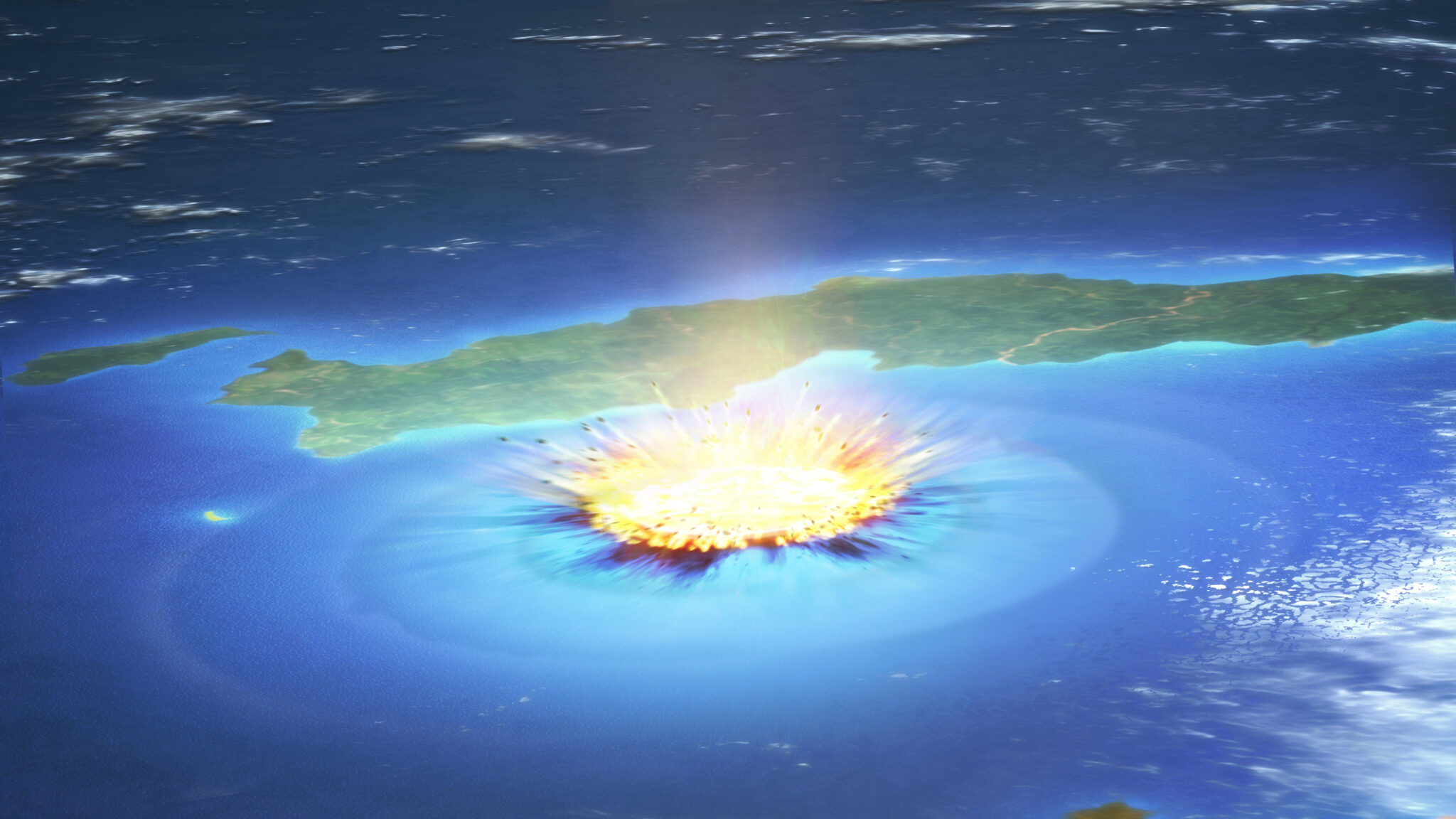
About 66 million years ago, the Chicxulub asteroid struck the Yucatan Peninsula. The collision killed non-avian dinosaurs and many other species, but also created something unexpected: a hydrothermal system.
Heat and rock create new conditions
The collision melted immense amounts of rock down 35 kilometres beneath the surface. Seawater seeped into the porous rock, creating hot water that formed a hydrothermal system in the ocean depths.
Hydrothermal system lasted much longer

Researchers led by geologist Annemarie Pickersgill of the SUERC Center for Isotope Sciences at the University of Glasgow studied rock samples from the crater. They found the hydrothermal system lasted at least 8 million years, four times longer than previously thought.
Extended heat creates life opportunities
Pickersgill explained that longer hydrothermal activity creates extended windows for prebiotic chemical reactions, life development, and microorganisms to thrive and spread beyond their point of origin.
“Longer periods of hydrothermal activity will generate extended windows of opportunity for prebiotic chemical reactions to occur, life to develop, and micro-organisms to thrive and propagate beyond their point of origin.”
Dating rocks with potassium decay
Pickersgill drilled one kilometre down at the crater site and took radioisotopic measurements of feldspar samples. Potassium in feldspar decays into argon, allowing researchers to determine when the rock solidified after melting.
Eight million years of habitable heat
Argon levels showed the hydrothermal system stayed heated from 66 million years ago to 58 million years ago. Computer simulations showed cooling to ninety degrees Celsius took one point five to two point three million years, with temperatures above fifty degrees Celsius lasting up to five million years.
Larger impacts could sustain life longer
Pickersgill noted that Chicxulub is relatively small compared to impact basins on early Earth and other planetary bodies. Larger impacts could have created even longer-lived hydrothermal systems capable of maintaining habitable conditions for several million years or more.
“Chicxulub is still relatively small compared to the impact basins expected on early Earth and observed on other planetary bodies.”
The takeaway
The Chicxulub impact crater that killed dinosaurs 66 million years ago may have sustained microbial life through a hydrothermal system lasting eight million years, far longer than previously thought.





