From Ars Technica · · 3m
Lockdowns cut wildfires by 12 percent, but not everywhere
A study of COVID-19 mobility restrictions reveals how human activity shapes fire patterns, with wildly different results across regions.
In brief
A study of COVID-19 mobility restrictions reveals how human activity shapes fire patterns, with wildly different results across regions. Research comparing 2020 lockdowns to previous years found human activity reduced fires by 12.3 percent overall, but increased them sharply in some regions, suggesting fire policy…
Massive fires threaten communities worldwide
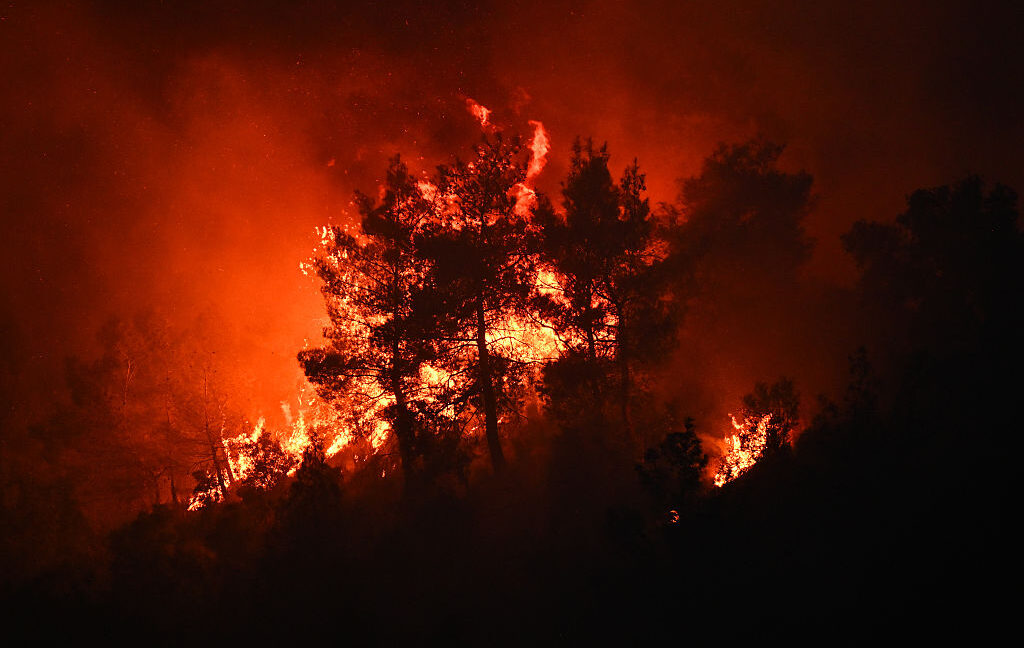
Bushfires swept southeastern Australia from 2019 to 2020, destroying thousands of homes. The 2025 Los Angeles wildfires spread widely across the city, resulting in massive damage to local communities.
Humans shape fire patterns but measuring impact is hard
Humans are the only factor that can make preventative efforts against wildfires. Measuring people's impact on fire is difficult because of the mix of human and natural influences.
Study compares lockdown era to previous years
A team led by Jianghao Wang, a professor at the Chinese Academy of Sciences, recently published a study in Cell Reports Sustainability comparing the COVID-19 era with other years.
Weather and human activity combine to cause fires
Fire regimes describe patterns of when, how often, and how widely fires occur. Weather is a major factor. Dry conditions and strong winds make vegetation more likely to catch fire and spread.
Humans both start and stop fires
Humans start fires through routine outdoor recreation and other activities. Firefighters contain fires and prevent them from spreading. Humans also take preventative actions such as clearing flammable material.
Lockdowns created a natural experiment
The COVID-19 lockdowns produced an abrupt, large-scale drop in human mobility while weather did not change in the same way. This gave researchers a natural experiment to measure human impact on fires.
“Human activity and climate normally vary together, because seasons, farming calendars, and weather all shape both fire and human behavior.”
Satellite data tracked fires during lockdowns
Researchers used NASA and NOAA's Suomi NPP satellite to track fires.Its VIIRS sensor detects heat signatures at a spatial resolution of 375 meters.
Lockdown areas had 12.3 percent fewer fires
Areas under lockdown in the first half of 2020 had about 12.3 percent fewer active-fire detections than the recent-past average. In forests, fires decreased by about 27.7 percent. In grasslands, fires decreased by 8.4 percent.
Weather adjustments revealed true human impact
Without adjusting for weather, the fire drop was only 5.8 percent, which was not statistically significant. After controlling for weather, the estimated decline increased to 12.3 percent, showing weather masked some human impact.
The 12.3 percent is net effect, not total human cause
The 12.3 percent decrease does not mean humans directly caused this share of fires.Restricting human activity shrank both humans' impact on starting fires and their impact on extinguishing them.
“The 12.3 percent is a net effect, not the share of fires caused by humans; opposing changes in ignition and suppression mean it does not capture the full magnitude of human influence.”
Some regions saw fires increase during lockdowns
Most of South America, southern Africa, and northeast Asia saw fire increases during COVID-19 lockdowns. Notable increases include 31.4 percent in Colombia, 25.4 percent in India, and 70.7 percent in Honduras.
Weakened fire suppression likely drove regional increases
Researchers inferred that diminished fire suppression capacity resulted in more fires in regions that saw increases.
“It is an inference, not a direct observation.”
Fire policy must be tailored to local conditions
The study suggests there is no single ideal policy response.Where fires decreased, reducing accidental ignitions through public education matters.Where fires increased, maintaining firefighting and patrol capacity during disruptions is important.
“Overall, a uniform policy is unlikely to work, and strategies should be tailored to local human-fire relationships.”
The takeaway
Research comparing 2020 lockdowns to previous years found human activity reduced fires by 12.3 percent overall, but increased them sharply in some regions, suggesting fire policy must be tailored locally.
Read the TL;DR — this story on one card.