From Ars Technica · · 2m
Orion's lunar redesign creates new problems
NASA's plan to make Moon landings easier is forcing major changes to the Orion spacecraft, which was not designed to fly this way.
In brief
NASA's plan to make Moon landings easier is forcing major changes to the Orion spacecraft, which was not designed to fly this way. NASA's Artemis program changes to help SpaceX Starship and Blue Origin Blue Moon reach the Moon are imposing substantial new demands on the Orion spacecraft, requiring modifications to its…
NASA reshapes Artemis Moon plans
NASA announced changes to the Artemis program to give SpaceX Starship and Blue Origin Blue Moon more flexibility reaching the Moon. Starship will dock with Orion in Earth orbit before traveling to the Moon together.
Orion must fly backward to the Moon
The new plan requires Orion to fly backward to the Moon with its Service Module at the top of the stack.
Propellant tank modifications needed
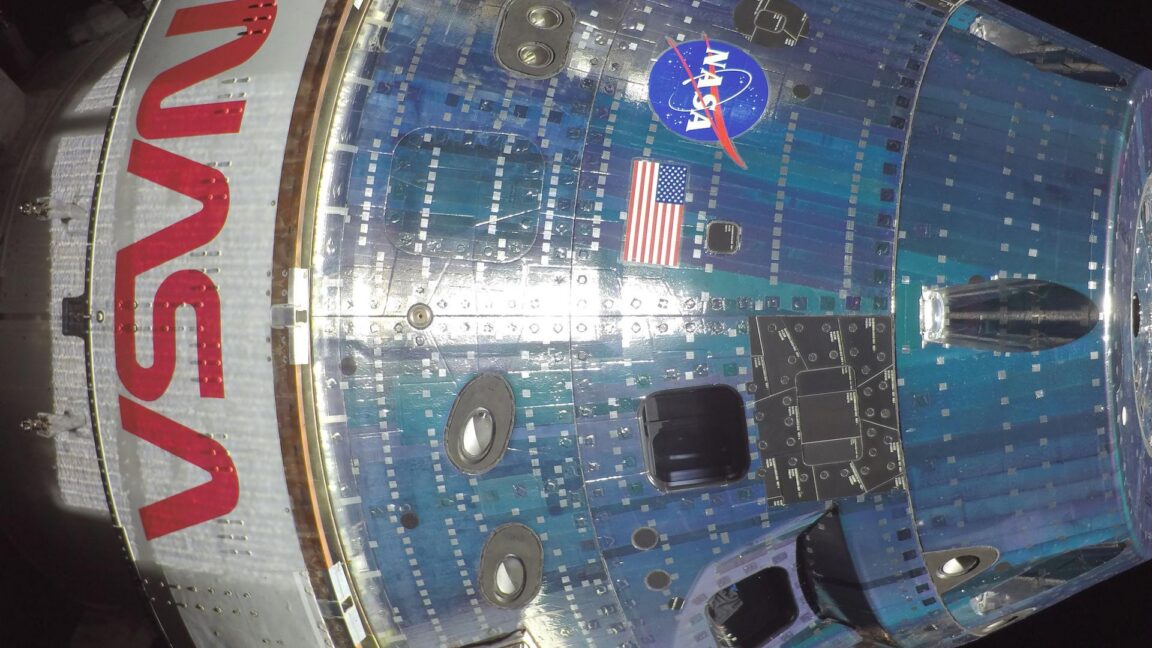
Flying backward causes liquid propellant to move toward the gas inlet side of the Service Module tanks instead of settling normally. The European Space Agency and Airbus are modifying the tanks to prevent damage.
“When you push it the other way, the liquid goes to the gas end of the tank, and you don't want the liquid in the gas part. Bad things can happen to you.”
Acceleration forces increase dramatically
With Starship providing thrust, Orion will experience accelerations of approximately zero point eight to one g in the opposite direction from original design.
Orion not built for low-Earth orbit
Artemis III will test Orion in low-Earth orbit for approximately two weeks before Moon operations. Orion was designed for deep space, which is colder than the thermal environment closer to Earth, creating heating concerns.
Compressed schedule for docking work
NASA removed the lunar landing from Artemis III, making it a rendezvous and docking demonstration in low-Earth orbit targeting twenty twenty-seven.
Lockheed working at maximum capacity
Lockheed Martin is working three shifts to meet the Artemis III launch target for summer or fall of twenty twenty-seven. Kirk Shireman, Orion program manager, said the team is working with zero margin schedule already.
“We're working three shifts. We had a zero margin schedule already, so we're, I call it hand-to-hand combat.”
Safety must not be sacrificed for speed
Shireman, who worked at NASA during both the Challenger and Columbia accidents, said the agency must balance urgency with mission safety. The responsibility is to not go too fast and cut too many corners.
“We also have a responsibility to not go too fast and cut too many corners and make sure that we are not taking undue risks.”
At a glance
NASA's Artemis program changes to help SpaceX Starship and Blue Origin Blue Moon reach the Moon are imposing substantial new demands on the Orion spacecraft, requiring modifications to its propulsion, thermal systems and structural certification.
Read the TL;DR — this story on one card.