From Ars Technica · · 2m
Software helps Webb see exoplanets more clearly
New algorithm uses AI techniques to filter out starlight noise and reveal distant planets in Webb Telescope images.
In brief
New algorithm uses AI techniques to filter out starlight noise and reveal distant planets in Webb Telescope images. Researchers developed FLIP, software that optimizes telescope models to reduce noise in Webb images, improving exoplanet detection by factors of one point five to fifteen times. Originally reported by…
The exoplanet imaging problem
Stars are far brighter than light from orbiting planets. Coronagraphs block starlight, but noise from telescope variations still limits what researchers can see and study.
How telescopes blur light
A point spread function describes how a telescope distorts a single point of light into a blurry spread. Hardware imperfections and pointing errors cause this distortion.
Two ways to measure distortion
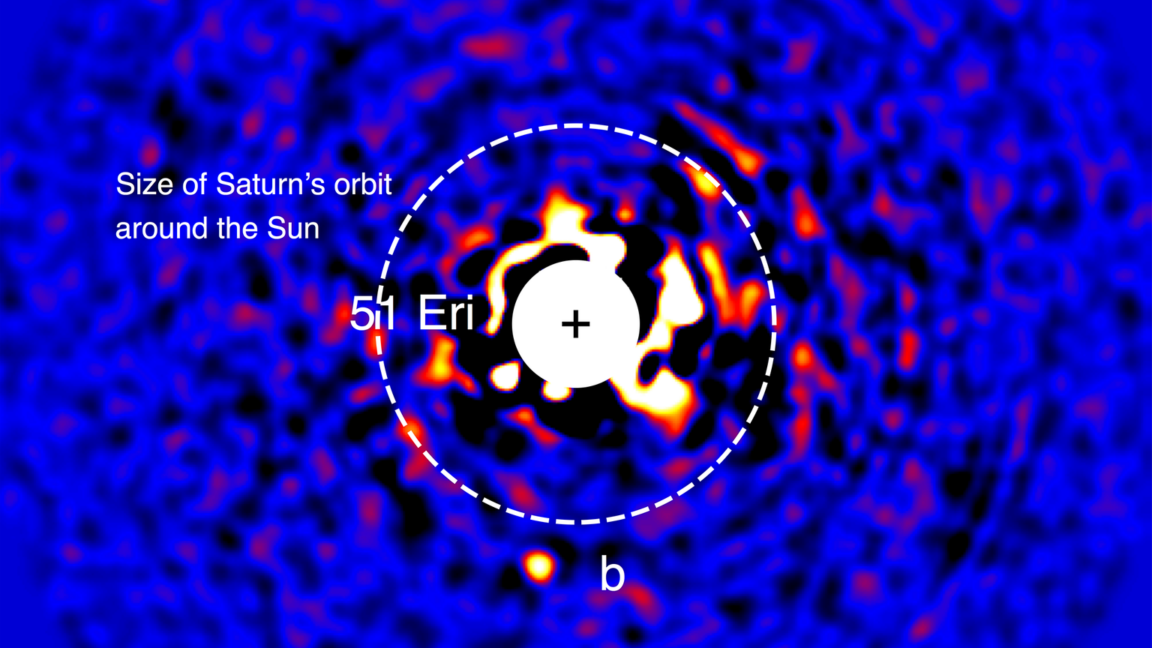
Researchers can observe known targets to measure the point spread function, but telescope hardware changes over time. Alternatively, they can model hardware behavior, but modern telescopes have too many parameters to tune.
AI techniques meet telescope modeling
Researchers adapted gradient descent, the technique used to train neural networks with billions of parameters, to optimize telescope hardware models on graphics processing units.
Introducing FLIP
FLIP, Physics-based Learning for Imaging Planets, optimizes a physical model of the NIRCam on the James Webb Space Telescope with ten to the sixth possible parameters using gradient descent on a GPU in just over…
Testing on known exoplanets
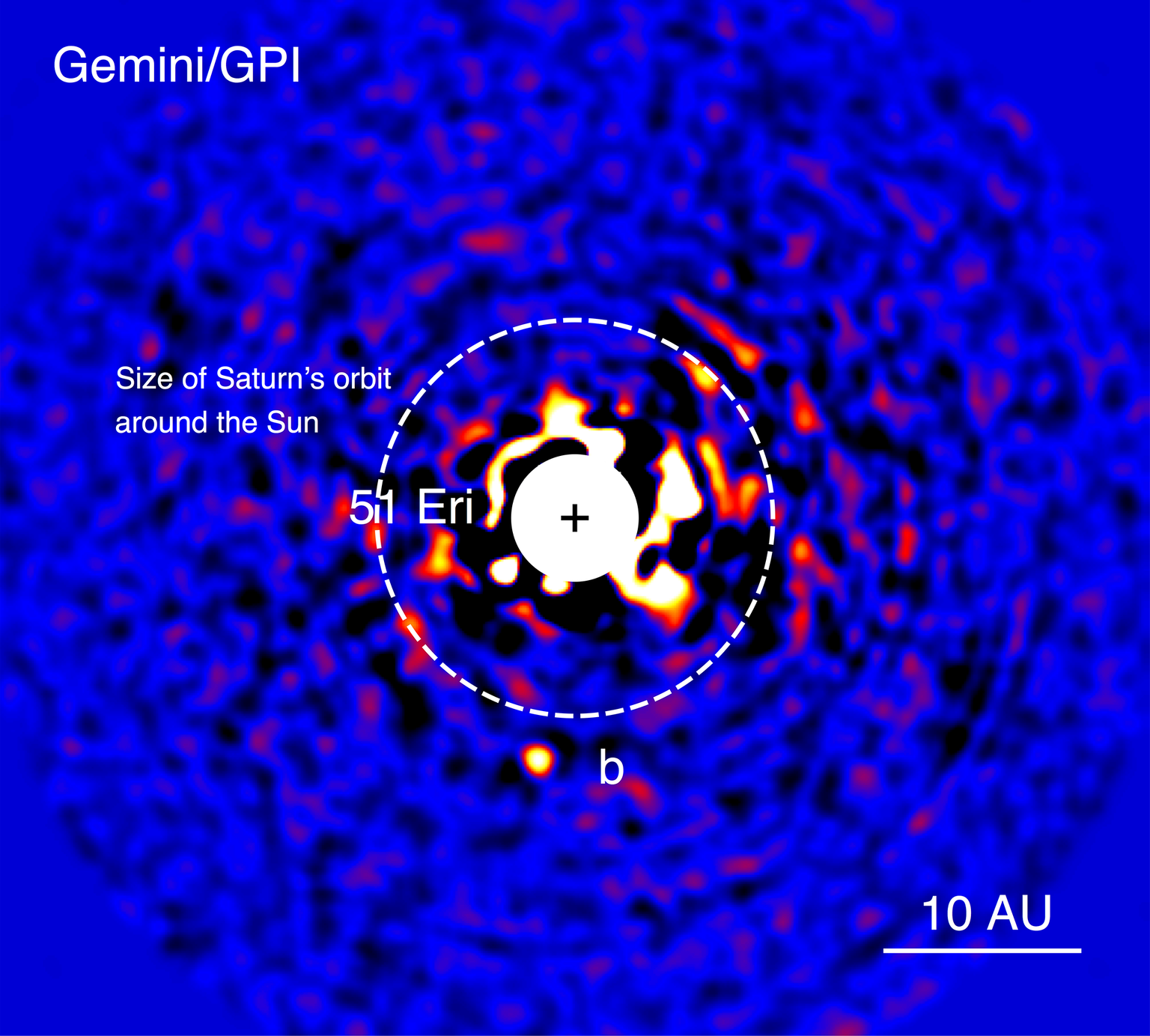
Researchers tested FLIP on observations of HIP 65426, 51 Eridani, and TYC 5899. The algorithm boosted signal-to-noise ratio by factors of one point five to two, and detected a planet at carbon dioxide wavelengths for…
Dramatic sensitivity gains
For TYC 5899, FLIP boosted observation sensitivity by a factor of fifteen, revealing how much noise reduction is possible when the telescope varies significantly between observations.
Finding dimmer, older planets
By lowering noise, FLIP should enable detection of dimmer and older or lower-mass planets that previously eluded discovery. The technique may also reveal useful information about the telescope's hardware behavior.
The big picture
Researchers developed FLIP, software that optimizes telescope models to reduce noise in Webb images, improving exoplanet detection by factors of one point five to fifteen times.