From Ars Technica · · 1m 30s
Solar cells that work underwater
A perovskite panel tuned for blue light hit 35 percent efficiency 10 meters down in the South China Sea.
In brief
A perovskite panel tuned for blue light hit 35 percent efficiency 10 meters down in the South China Sea. Perovskites can be tuned to the wavelengths that survive underwater, and a single additive fixed the moisture problem well enough to make submerged solar practical for sensors and drones. Originally reported by Ars…
Sunlight below the waves
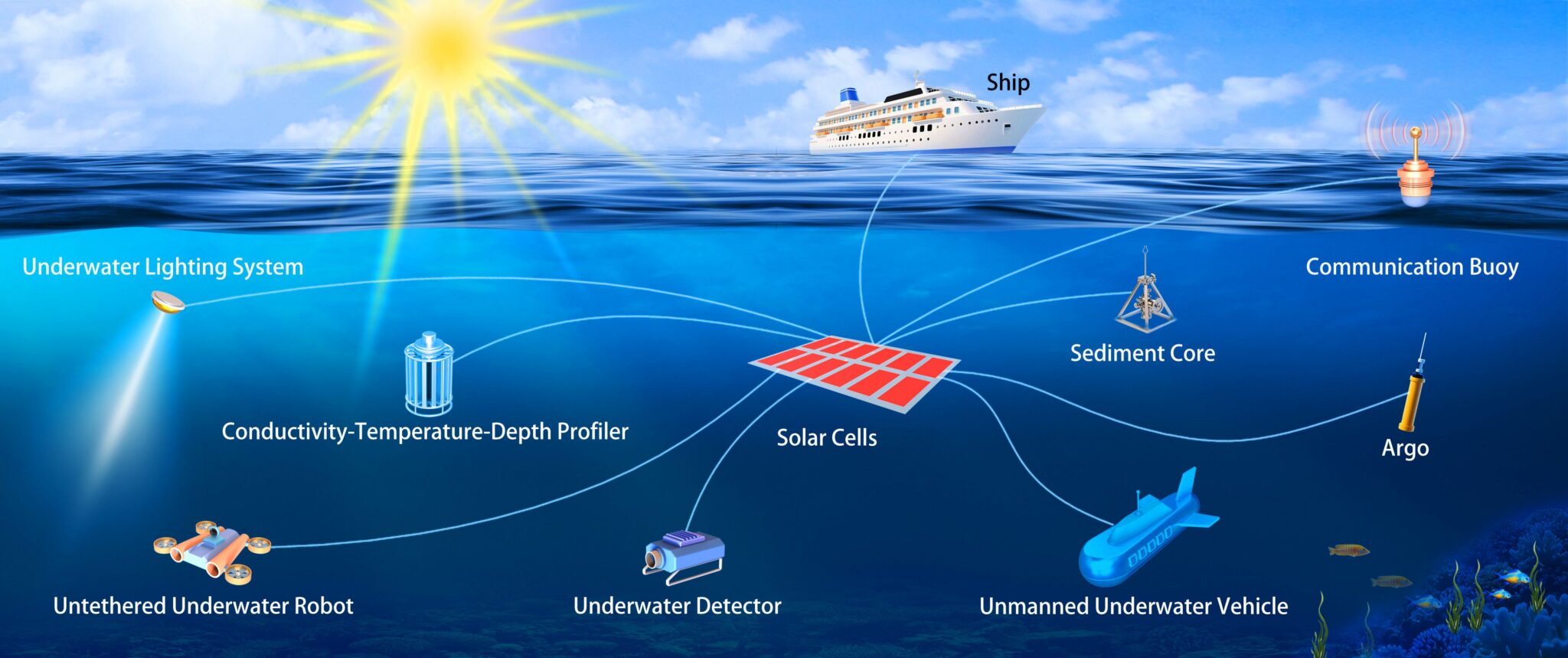
A team led by Simin Ma at Yunnan University built perovskite solar cells designed to run underwater, where ordinary silicon panels go dark.
Perovskites trade power for life
They are cheap, flexible, and convert more sunlight than silicon. The catch is that they degrade fast, and moisture is the worst offender of all.
Tune the cell to blue
Water swallows the wavelengths silicon needs, but perovskite chemistry can be retuned to catch what remains a few meters down. Dimmer, cooler conditions also slow the decay.
“a carefully designed perovskite cell could still make electricity in the deep blue sea”
One additive, three jobs
Polyhexamethylene guanidine hydrochloride wraps the material in a water-repelling layer, grows larger crystals, and pins ions in place. Durability and output both improved.
35 percent at ten meters
Under light filtered to mimic a 10 meter depth, the cells turned about 35 percent of it into electricity. Silicon panels sit closer to 20 percent.
Forty days in seawater
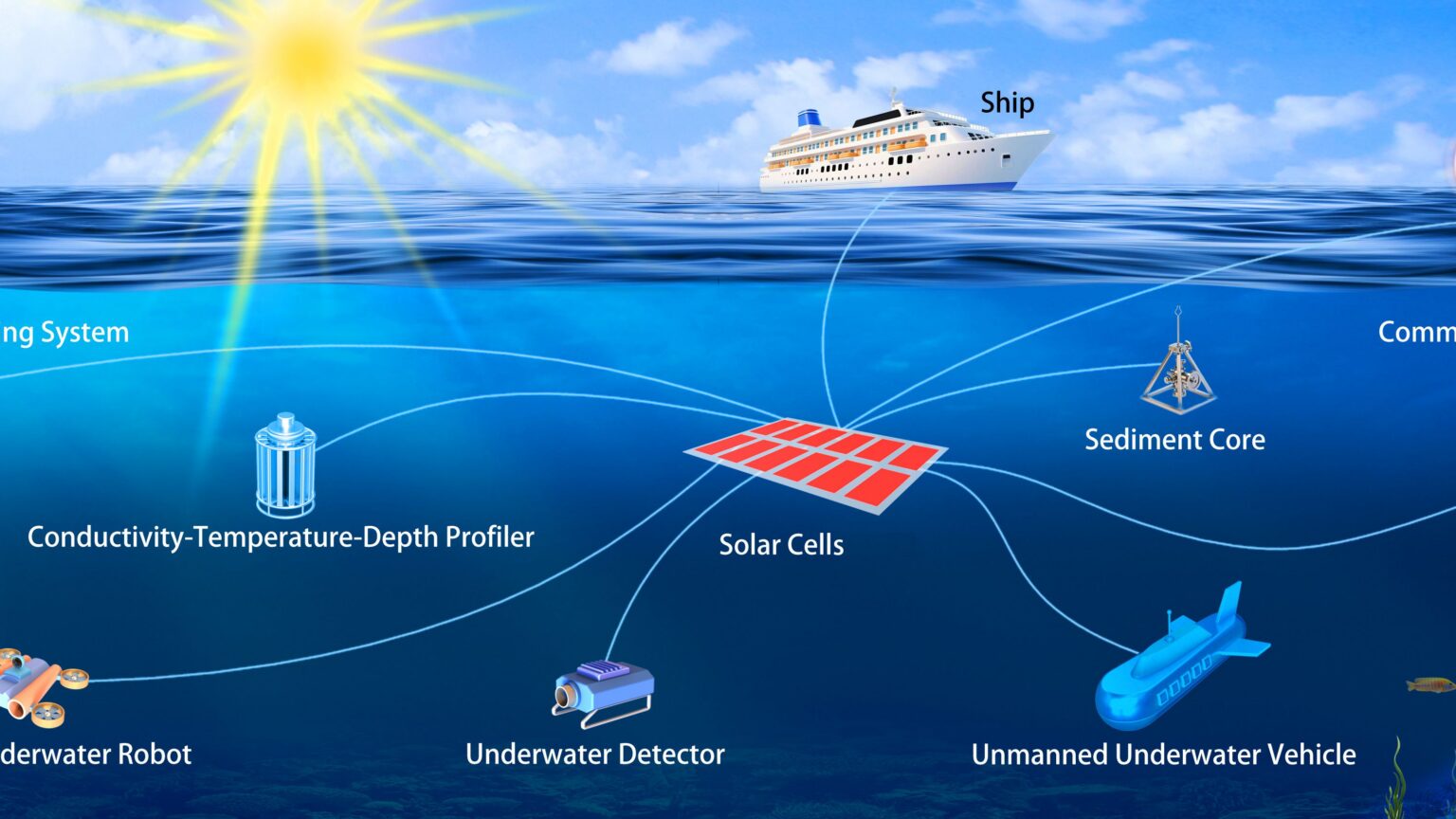
A sealed panel held 99.6 percent of its efficiency after 40 days submerged, pointing to a 5.5 year useful life. In the South China Sea it charged coin cells at 2, 6, and 10 meters.
“autonomous marine power systems and submerged Internet of Things infrastructure”
The bottom line
Perovskites can be tuned to the wavelengths that survive underwater, and a single additive fixed the moisture problem well enough to make submerged solar practical for sensors and drones.





