From Ars Technica · · 4m
SpaceX is leaving NASA's orbit economy behind
NASA spent two decades building a commercial space market in low-Earth orbit. SpaceX just walked away from it.
In brief
NASA spent two decades building a commercial space market in low-Earth orbit. SpaceX just walked away from it. SpaceX is retiring Crew Dragon after 2030, collapsing NASA's vision of a thriving low-Earth orbit economy and leaving Boeing's expensive Starliner as the only crewed option. Originally reported by Ars…
NASA's twenty-year orbit dream
For two decades, NASA has sought to foster a commercial economy in low-Earth orbit, starting with private cargo delivery to the International Space Station and expanding to transportation, stations, manufacturing, and tourism.
NASA's explicit vision in 2024
In April 2024, NASA stated it supports a robust commercial space economy that advances American industry and promotes technological discovery through in-space work and research.
“NASA supports a robust commercial space economy that advances American industry and promotes technological discovery through in-space work and research.”
The vision is crumbling
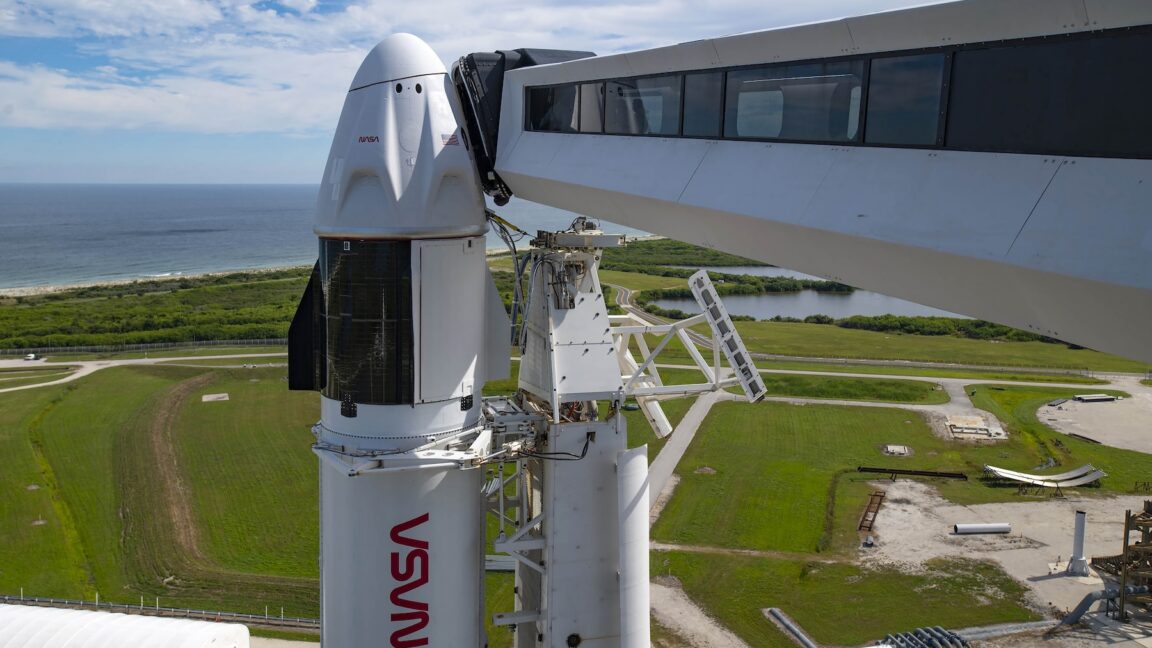
Just two years later, the grand plans for a low-Earth orbit economy involving humans appear to be going sideways as NASA focuses on the lunar surface and SpaceX signals it no longer wants to fly astronauts to low-Earth orbit.
SpaceX is retiring Dragon
SpaceX has told NASA it no longer wishes to fly Crew Dragon or Falcon 9 to low-Earth orbit. The company will support the International Space Station until 2030, then retire the spacecraft and refuse orders from private space station developers.
NASA cannot force SpaceX's hand
NASA invested three point one billion dollars in Crew Dragon's development and certification, but SpaceX was only contractually obliged to fly half a dozen missions. It has flown thirteen missions for NASA and will launch another soon, exceeding its obligations.
NASA is no longer SpaceX's priority
SpaceX now derives a majority of its revenue from Starlink, with financial filings showing most future revenue will come from Starlink and orbital data centers. NASA represents approximately one percent of SpaceX's total addressable market.
SpaceX's focus is Starship
SpaceX wants to focus on launching its own payloads on Starship. NASA Administrator Jared Isaacman acknowledged this reality, saying SpaceX intends to sunset older platforms like Falcon and Dragon as they concentrate on their next-generation capability, Starship.
“I do not think it's a secret that SpaceX intends to sunset older platforms like Falcon and Dragon as they concentrate on their next-generation capability, Starship.”
Starship won't help Earth orbit
Starship could potentially bring dozens of astronauts into orbit at once, revolutionizing access to low-Earth orbit. However, SpaceX has told NASA it is not interested in developing Starship for human launches into Earth orbit at this time.
Boeing gets more money
Boeing was NASA's other Commercial Crew partner. Despite investing five point one billion dollars to date, Boeing has yet to fly a single operational Starliner mission. NASA will now invest three hundred fifty-nine million dollars more to fix Starliner's propulsion system.
The monopoly concern
Critics say NASA has handed Boeing a monopoly on Western human spaceflight to low-Earth orbit for the next ten to twenty years, effectively ending hopes of a low-Earth orbit economy involving humans in space.
NASA's limited options
Others argue NASA faced few good choices. Given extraordinary investments in Boeing to date, abandoning Starliner would have been fiscally irresponsible when one Commercial Crew partner is walking away, making it sensible to support the remaining one.
The price problem
SpaceX's original Dragon seat price was approximately fifty-five million dollars. Recent missions cost seventy-eight point eight million dollars per seat. Starliner costs NASA ninety million dollars per seat during the International Space Station era, with prices expected to rise after Dragon retires.
Blue Origin is years away
Blue Origin is developing a Space Vehicle for astronauts to launch on the New Glenn rocket. Design work is well advanced with cabin pressure-vessel manufacturing, parachute testing, and thermal protection system testing underway. No earlier than dates are 2031 for a crew launch, likely optimistic.
Other options don't work
Russia's Soyuz is off the table after its invasion of Ukraine. India's Gaganyaan was supposed to launch in late 2021 but has slipped to at least 2027 and will be used solely for Indian missions. The Exploration Company won't be ready until 2035. Sierra Nevada's Dream Chaser seems unlikely to happen.
Only Starship could fix this
The only real hope for significantly lower prices for sending humans to low-Earth orbit is Starship. If incentivized, SpaceX could probably bring this capability online by 2030 and radically reshape the market. But SpaceX seems unlikely to prioritize crewed Starship for government astronauts soon.
SpaceX is maximizing revenue
SpaceX is a business focused on maximizing revenue. From its perspective, it makes sense to remove distractions like Dragon and Falcon 9 and focus on Starship, the future of the company. SpaceX and founder Elon Musk will do what they want.
What it means
SpaceX is retiring Crew Dragon after 2030, collapsing NASA's vision of a thriving low-Earth orbit economy and leaving Boeing's expensive Starliner as the only crewed option.