From Ars Technica · · 4m
SpaceX's Starship reaches orbit, deploys next-gen Starlinks
SpaceX's most powerful rocket completes its first orbital flight and releases 26 advanced broadband satellites designed to transform the Starlink network.
In brief
SpaceX's most powerful rocket completes its first orbital flight and releases 26 advanced broadband satellites designed to transform the Starlink network. SpaceX's Starship rocket reached orbit for the first time and deployed twenty-six next-generation Starlink satellites, marking a major step toward routine orbital…
Starship reaches orbit for first time
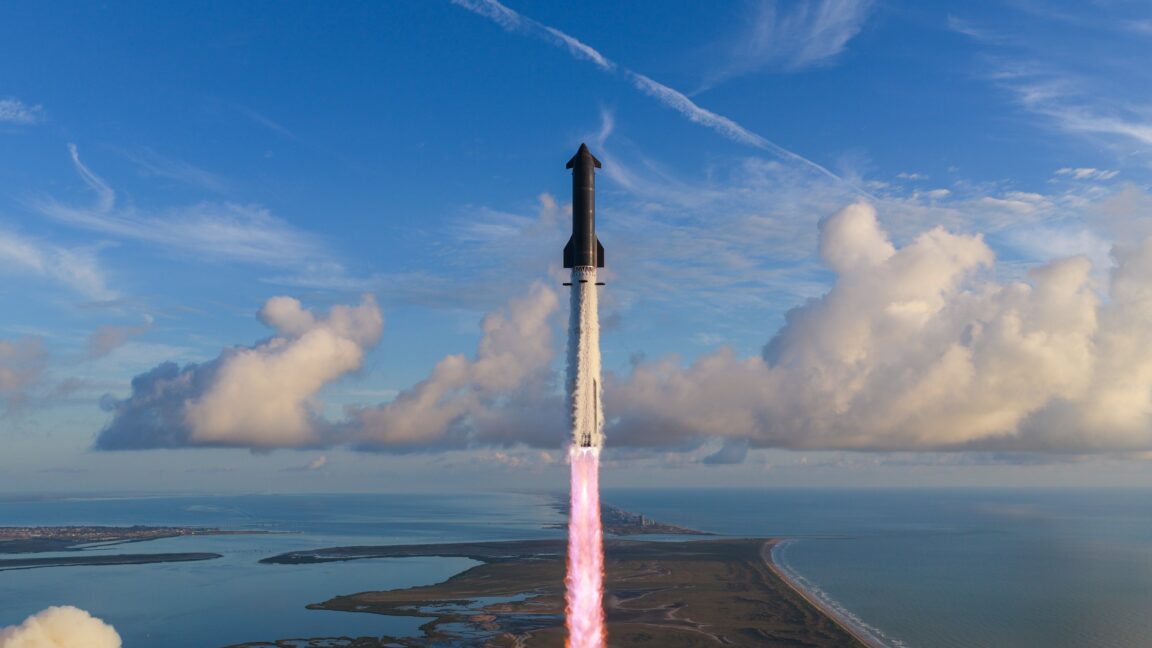
SpaceX's Starship rocket launched from South Texas on Monday and accelerated to orbital velocity for the first time in fourteen test flights.
Previous flights stayed suborbital
SpaceX had intentionally limited Starship's power on all earlier flights, keeping it slow enough for Earth's gravity to pull it back before completing a full orbit.
Starship carries next-gen Starlinks
The rocket's cargo bay held twenty-six Starlink V three satellites, too large for SpaceX's Falcon nine rocket, deployed using a pulley system like a Pez dispenser.
Launch from Starbase, Texas
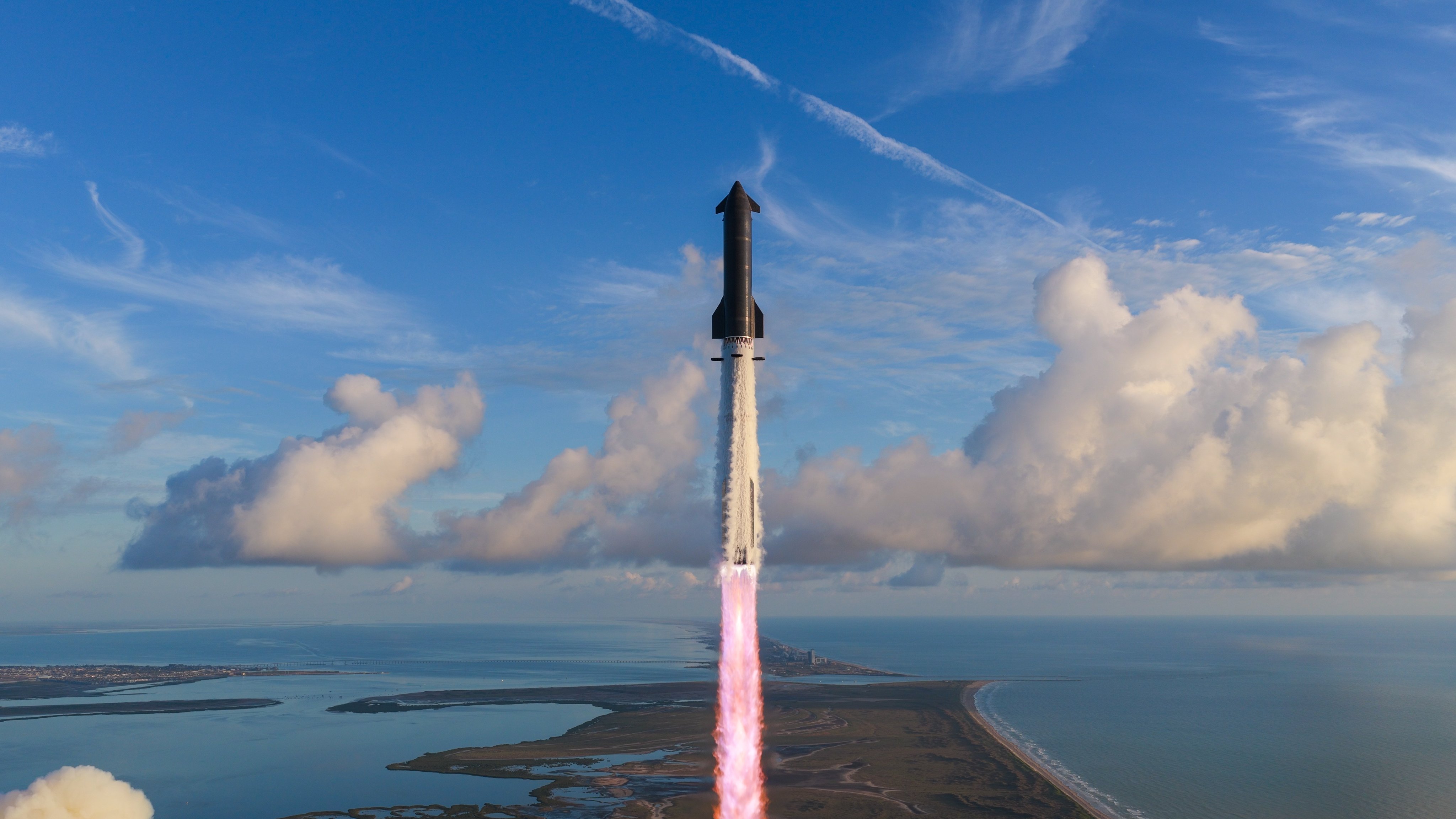
At eight forty-nine am Eastern Daylight Time, thirty-three methane-fueled Raptor engines generated eighteen million pounds of thrust to lift the four hundred seven foot tall rocket skyward.
Booster returns to Gulf of Mexico
The Super Heavy first stage detached and executed a rapid turnaround, making a controlled splashdown in the Gulf of Mexico off the Texas coast.
Engine failure during ascent
One of six Raptor engines on Starship shut down prematurely during ascent, forcing the remaining five to burn longer to compensate for the malfunction.
Mission control debates orbit insertion
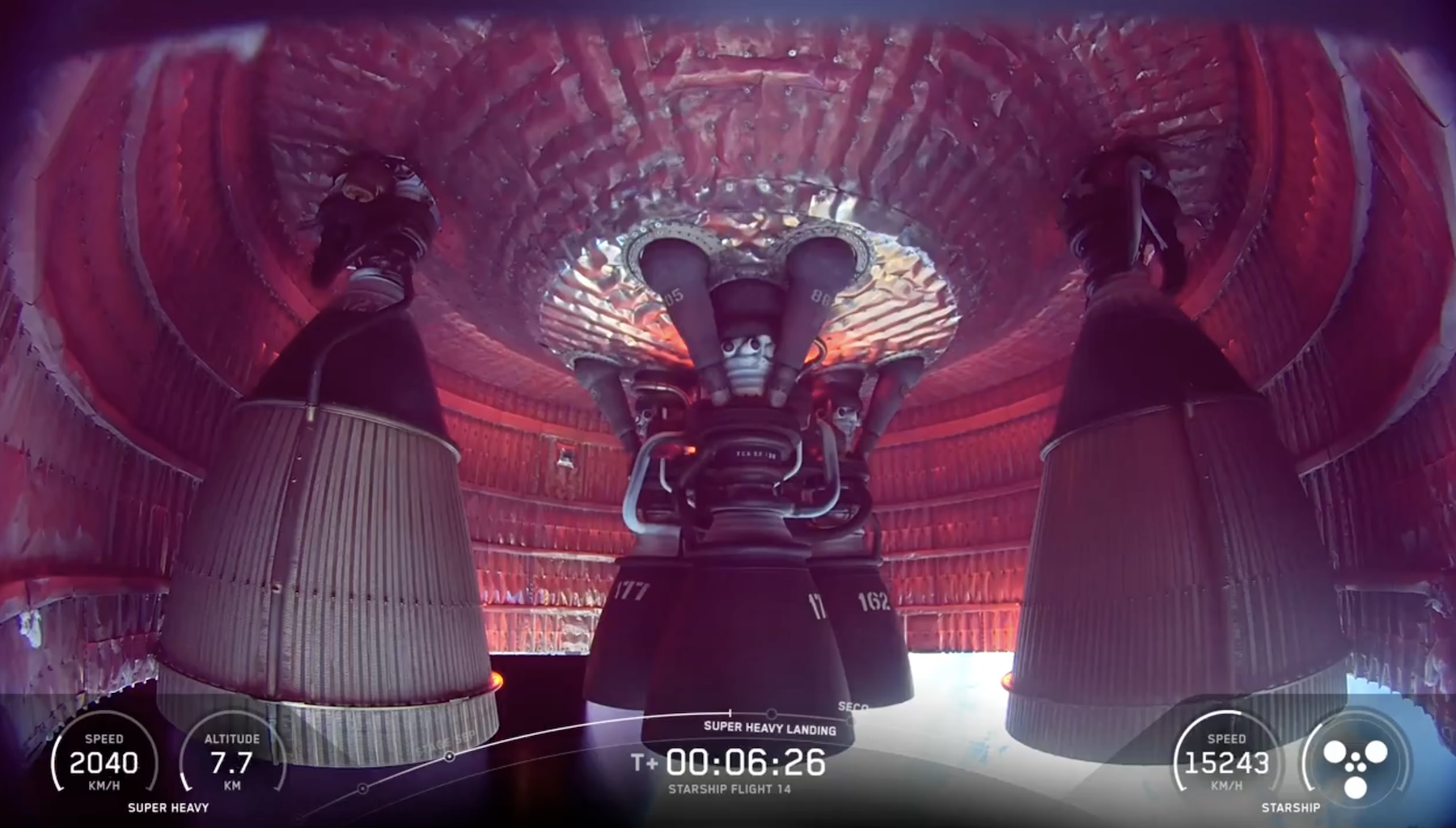
SpaceX flight controllers briefly considered aborting the orbital insertion burn due to engine concerns, but ultimately decided to proceed with the maneuver.
SpaceX plays it safe
SpaceX commentator Dan Huot explained the team was being extremely conservative to avoid stranding the one hundred ton vehicle in orbit uncontrollably.
“We were only going to go if we were very confident in the core systems that have to work to get you out of orbit once you're up there.”
Orbital insertion burn succeeds
One Raptor engine reignited for nineteen seconds, adding two hundred four miles per hour to reach a stable orbit at one hundred seventy-one miles altitude.
Starlink V three satellites deployed
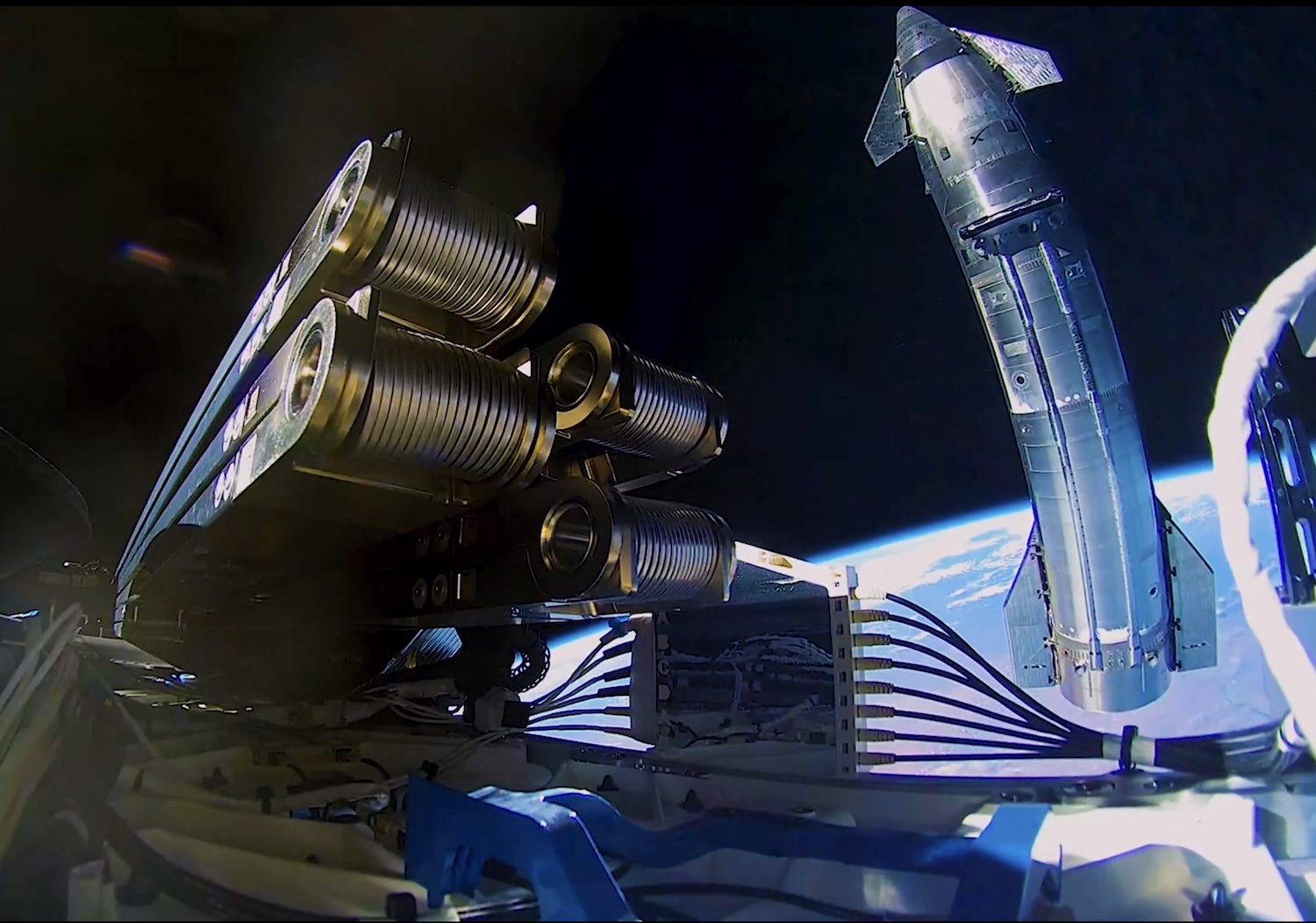
All twenty-six Starlink V three satellites separated successfully from Starship's payload deployer as the rocket soared over South Africa.
V three satellites offer major upgrades
Each Starlink V three weighs two metric tons and adds one terabit per second of capacity, ten times more than older satellites launching on Falcon nine.
Future Starships carry more satellites
Future Starship flights could deliver up to sixty Starlink V three satellites to orbit on a single mission, greatly expanding network capacity and user speeds.
Satellites begin serving customers soon
SpaceX expects the twenty-six V three satellites to integrate into the constellation and begin serving customers within weeks, though widespread benefits require many more launches.
Early splashdown due to caution
SpaceX cut the orbital mission short and brought Starship home early due to the engine issue, splashing down in the northern Pacific Ocean north of Hawaii.
Reentry and splashdown successful
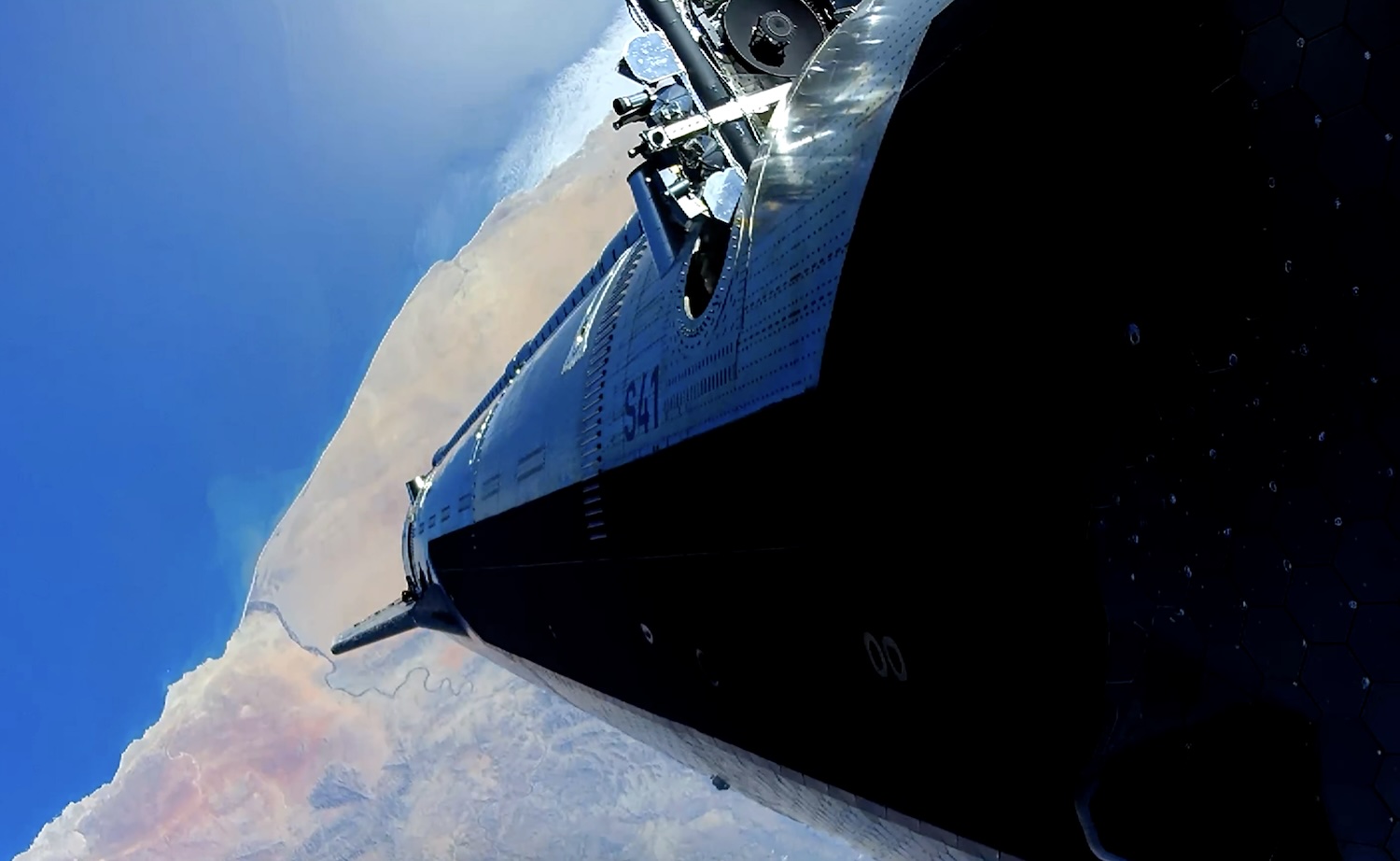
Starship plunged through the atmosphere at temperatures up to two thousand six hundred degrees Fahrenheit, with its heat shield holding up well before splashing down on target.
Raptor three engine still problematic
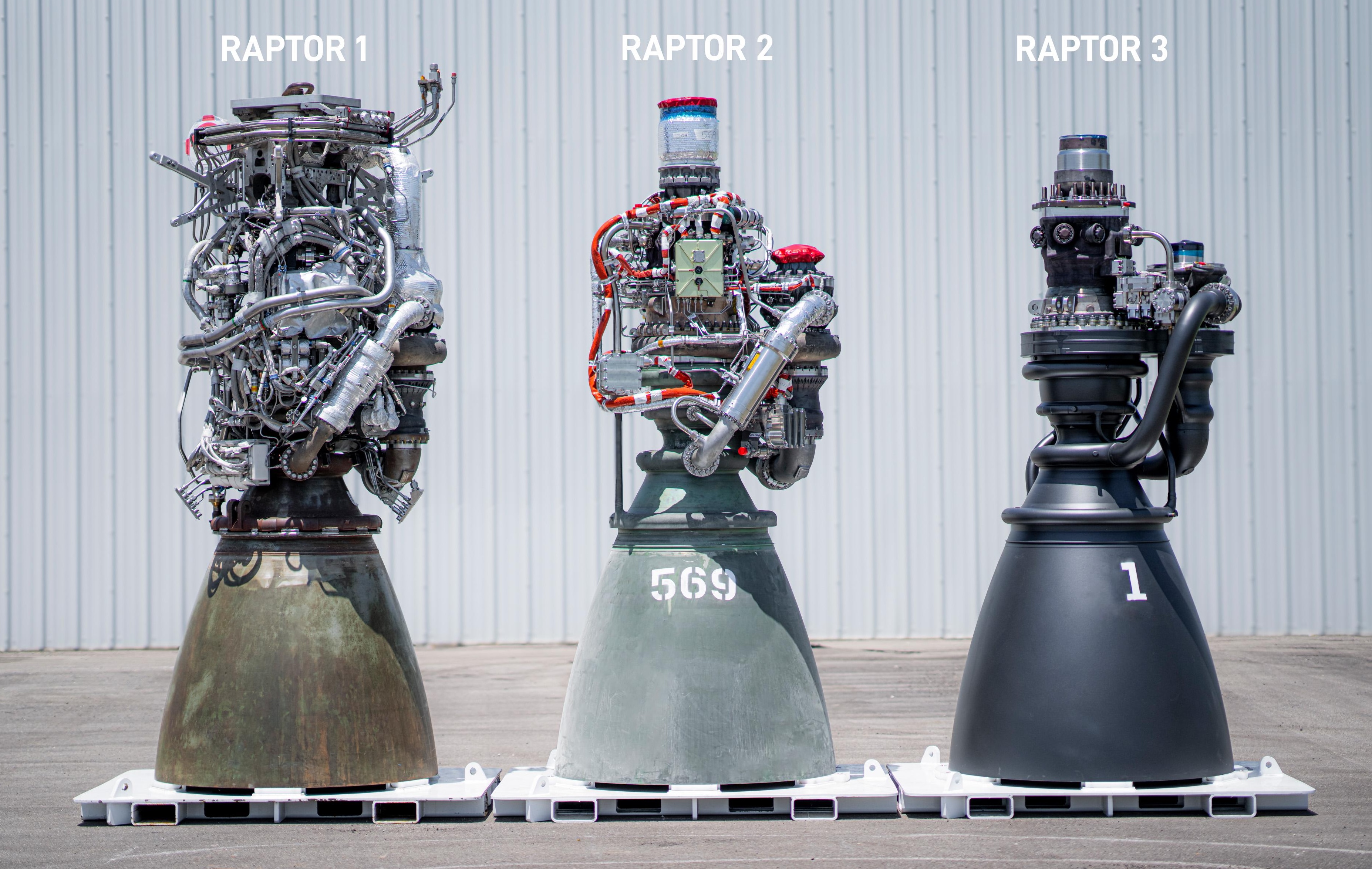
SpaceX has encountered engine problems on all three Starship flights using the new Raptor three variant, which uses lighter design but proves difficult to manufacture and maintain.
“While deleting parts sounds easy in theory, it is actually very difficult to figure out how to do so in practice and requires many iterations.”
FAA clears flight, no investigation needed
The Federal Aviation Administration confirmed all flight events occurred within planned and authorized activities, requiring no formal mishap investigation.
Next goal: land Starship at launch site
SpaceX plans to attempt returning Starship to Starbase for a catch by the launch pad's mechanical arms, requiring additional safety reviews for over-land reentry.
Starship flights expected to accelerate
SpaceX has steady production of Starships and boosters at Starbase, with the next flight possibly launching in October and a new Florida launch pad nearing activation.
In-orbit refueling and Moon missions ahead
SpaceX aims for longer orbital flights, in-orbit refueling demonstrations, and eventually landing astronauts on the Moon under NASA's Artemis program.
The big picture
SpaceX's Starship rocket reached orbit for the first time and deployed twenty-six next-generation Starlink satellites, marking a major step toward routine orbital operations and expanded broadband capacity.