From Ars Technica · · 4m
Starship aims for historic full recovery this weekend
SpaceX prepares to attempt the first full recovery of an orbital rocket system, while the launch industry braces for a capacity crunch.
In brief
SpaceX prepares to attempt the first full recovery of an orbital rocket system, while the launch industry braces for a capacity crunch. SpaceX will attempt to recover both Starship and Super Heavy on November 13 and 14, a first for orbital rockets, as Pentagon loans shore up competitors facing a launch shortage…
Starship set for historic attempt
SpaceX will launch Starship Flight 15 on Friday, November 13 at four forty-five pm CT, attempting to recover both the booster and upper stage for the first time.
No orbital rocket fully recovered before
No orbital rocket has ever been fully recovered with the intent of reusing all of its components. If successful, Starship will mark the first full recovery of an orbital launch system.
The mission timeline
Starship will orbit Earth at about two hundred seventy-five kilometres altitude, complete approximately fourteen orbits over more than twenty-two hours, then attempt upper stage landing on Saturday afternoon.
Starlink satellites aboard
The primary mission will deliver twenty-six Starlink V three satellites to orbit, but the real focus is on landing both the booster and upper stage at the launch site.
Electron reaches one hundred missions
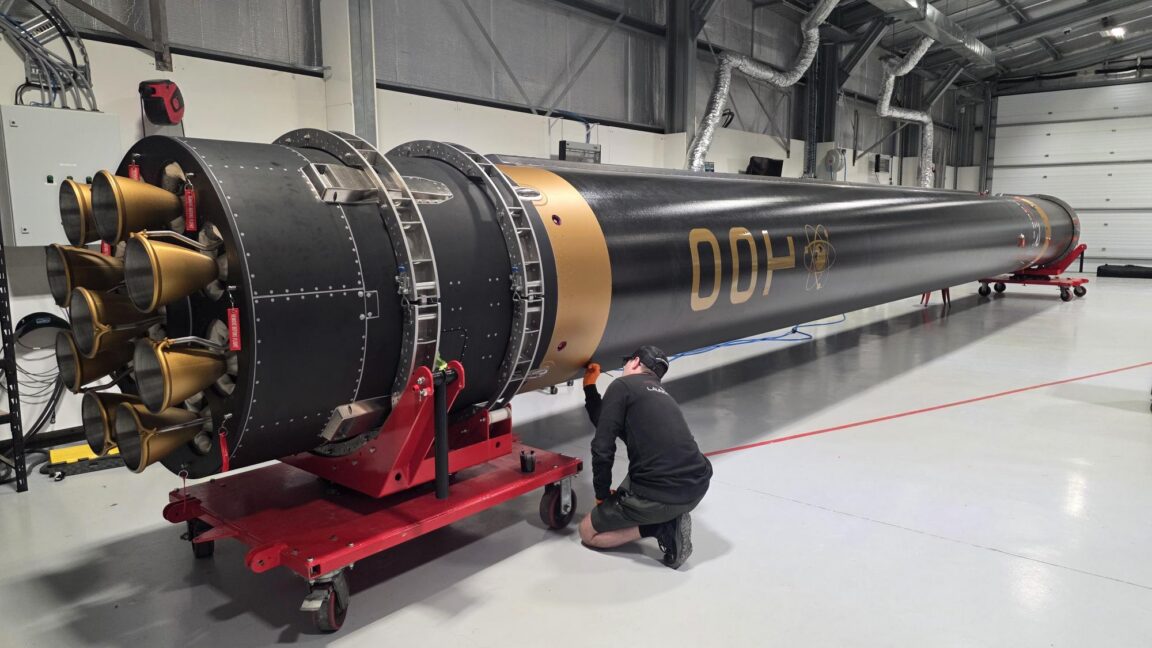
Rocket Lab's Electron will launch its one hundredth mission on November 14 at five thirty UTC from Mahia Peninsula in New Zealand, a milestone for the small rocket that first flew in two thousand seventeen.
Electron's special livery
The mission, named The Mountain God Rises, will deliver an iQPS satellite to low Earth orbit. The anniversary rocket features special gold-and-black livery and marks Rocket Lab as the world's second purely commercial launch business.
Vega C faces uncertain future
Italian rocket builder Avio outlined additional investment needed to increase Vega C's annual launch cadence from four to six and eventually nine flights per year, raising questions about the vehicle's future.
Ariane 6 demands resources
A single Ariane six four launch requires the equivalent of an entire year's worth of solid rocket boosters for Vega C at baseline cadence. This raises questions about whether expanding Vega C makes sense.
Firefly and Synspective sign deal
Firefly Aerospace announced a multi-launch agreement with Japanese synthetic aperture radar provider Synspective for up to ten launches on Firefly's Alpha rocket through two thousand thirty.
Alpha's one-ton capacity
Alpha will deliver two of Synspective's SAR satellites to orbit per mission, deploying up to twenty total satellites. Launches will occur from Wallops Flight Facility in Virginia and Vandenberg Space Force Base in California.
“This landmark agreement reflects growing customer confidence in our Alpha Block II vehicle. With one-ton payload capacity and responsive launch capabilities, Alpha is a natural fit for customers like Synspective seeking direct access to orbit to get their operations up and running sooner.”
Pentagon backs launch competitors
The Pentagon's Office of Strategic Capital announced one hundred fifty million dollar conditional loan commitments to both Stoke Space and Rocket Lab, citing concerns about SpaceX winding down its Falcon rocket program.
Loans target expansion
Stoke Space's loan supports buildout of its second launch pad at Cape Canaveral Space Force Station in Florida. Rocket Lab's loan supports increasing the flight rate of its partially reusable Neutron rocket.
Rocket Lab raises Neutron price
Rocket Lab increased the cost of a dedicated Neutron rocket from fifty-five million dollars to seventy million dollars, citing strong customer demand and a constrained market for launch capacity.
“Neutron is rapidly establishing itself as the backbone of next-generation constellation deployment and government missions in the medium-lift launch class.”
Neutron bookings extend to 2030s
Despite the price increase, new bookings continue for Neutron. Customers' next available launch slots are now in the two thousand thirty s and beyond, reflecting strong international demand.
AST SpaceMobile plans simple rocket
AST SpaceMobile founder Abel Avellan outlined plans for Blacklift, a large rocket tailored solely to launch five Bluebird satellites. It will have twenty metric tons of lift capacity and a reusable first stage.
“Of course rocket engineers are going to get mad with me, but you can simplify it as a big tank feeding engines.”
SpaceX pivots to infrastructure
SpaceX vice president of launch Kiko Dontchev said the company is now fundamentally an infrastructure company building on the ground, in low Earth orbit, and eventually on the Moon and Mars.
“In the last couple years, when I talk about SpaceX, yes, we are a rocket company, but fundamentally we are an infrastructure company at this point.”
AI accelerates Mars timeline
Dontchev said artificial intelligence is critical to accelerating SpaceX's pace of innovation. Without AI, Mars would still be reached, but the company will get there much faster with it.
“Without AI, I think we still would have gotten to the Moon. I think we still get to Mars with SI. We're going to get there so much faster.”
In short
SpaceX will attempt to recover both Starship and Super Heavy on November 13 and 14, a first for orbital rockets, as Pentagon loans shore up competitors facing a launch shortage.