From Ars Technica · · 2m
The $15 billion AI startup reshaping how doctors work
OpenEvidence, an ad-powered medical search engine, has captured nearly two-thirds of US doctors in three years, but faces questions about accuracy and competition from tech giants.
In brief
OpenEvidence, an ad-powered medical search engine, has captured nearly two-thirds of US doctors in three years, but faces questions about accuracy and competition from tech giants. OpenEvidence, a Miami startup founded in 2022, has reached a fifteen billion dollar valuation by becoming the first viral AI tool in…
Two-thirds of US doctors use OpenEvidence
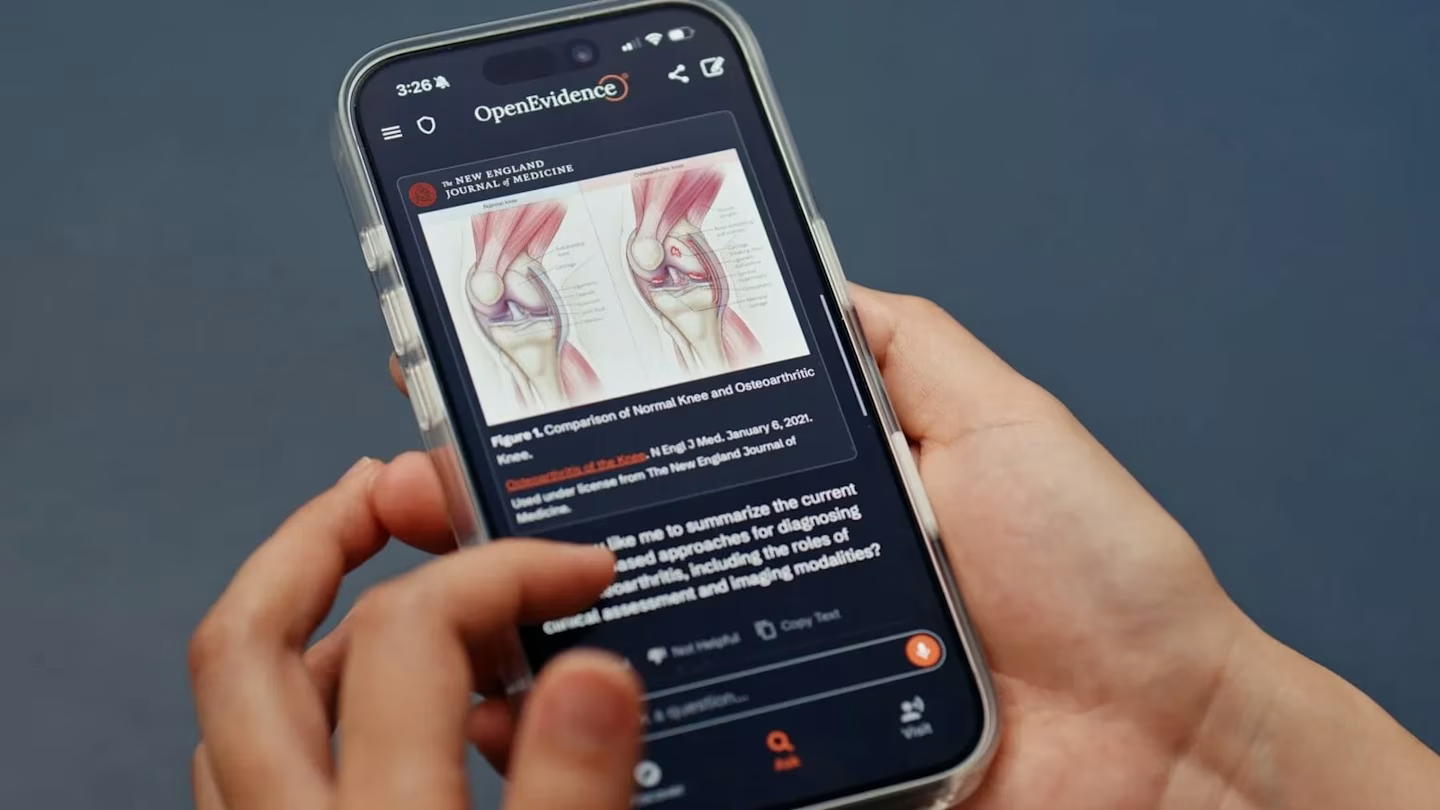
Nearly two-thirds of US doctors are using OpenEvidence, an AI-powered search engine, to help diagnose and treat patients, propelling the Miami startup to a fifteen billion dollar valuation.
Founded in 2022, already processing millions of queries
OpenEvidence, founded by serial entrepreneur Daniel Nadler in 2022, said that many of America's one million physicians processed more than forty-two million prompts last month.
Doctors use it to search medical literature
Doctors are using the company's chatbot to scour medical journals and clinical guidelines to help diagnose and treat patients, with the platform growing largely by word of mouth.
“We're the first viral consumer internet app in healthcare.”
Massive funding from top venture firms
OpenEvidence has attracted nearly one billion dollars in investment in the past eighteen months from backers including Andreessen Horowitz, Blackstone, Thrive Capital, and Sequoia.
Revenue model relies on advertising
OpenEvidence booked one hundred million dollars in ad buys for this year at the end of twenty twenty-five and is on track to generate between four hundred million and five hundred million dollars through ads…
Hospitals integrating it into patient care
OpenEvidence has forged relationships with hospitals including Mount Sinai Health System and Memorial Sloan Kettering Cancer Center, embedding its tool within their electronic health records systems.
Accuracy studies show mixed results
A Mayo Clinic study found OpenEvidence provided accurate recommendations in all five case studies sampled, but other research including a June paper in Nature found it underperformed general-purpose AI models on clinical benchmarks.
Nadler plans drug discovery pivot
Nadler said OpenEvidence will launch clinical trials in the coming weeks and plans to apply AI models to drug discovery, drawing on pre-existing literature to generate novel scientific hypotheses.
“The end game is literature-based drug discovery. The economic value of that as a company is going to dwarf by orders of magnitude whatever we could have charged hospitals or advertisers.”
Competition from OpenAI and Anthropic looms
OpenEvidence faces growing competition from large AI companies including OpenAI and Anthropic, though Anthropic recently partnered with OpenEvidence to bring healthcare tools to one hundred low- and middle-income countries.
The essence
OpenEvidence, a Miami startup founded in 2022, has reached a fifteen billion dollar valuation by becoming the first viral AI tool in healthcare, used by nearly two-thirds of US doctors to diagnose and treat patients, though its accuracy and ad-based model face scrutiny.