From Ars Technica · · 3m
Voyager 1's Golden Record: the details we forgot
A historian rediscovered overlooked features of the message humanity sent to the stars fifty years ago.
In brief
A historian rediscovered overlooked features of the message humanity sent to the stars fifty years ago. Historian Glen Swanson found that the Voyager Golden Record's protective cover had operating instructions repeated on its inside, a backup against wear, and verified that ten duplicate records were made and…
Voyager 1 reaches one light-day
Voyager 1, launched in 1977 to fly by Jupiter and Saturn, crossed into interstellar space in 2012. On November 18, it reached one light-day from Earth, the distance light travels in twenty-four hours.
The Golden Record aboard
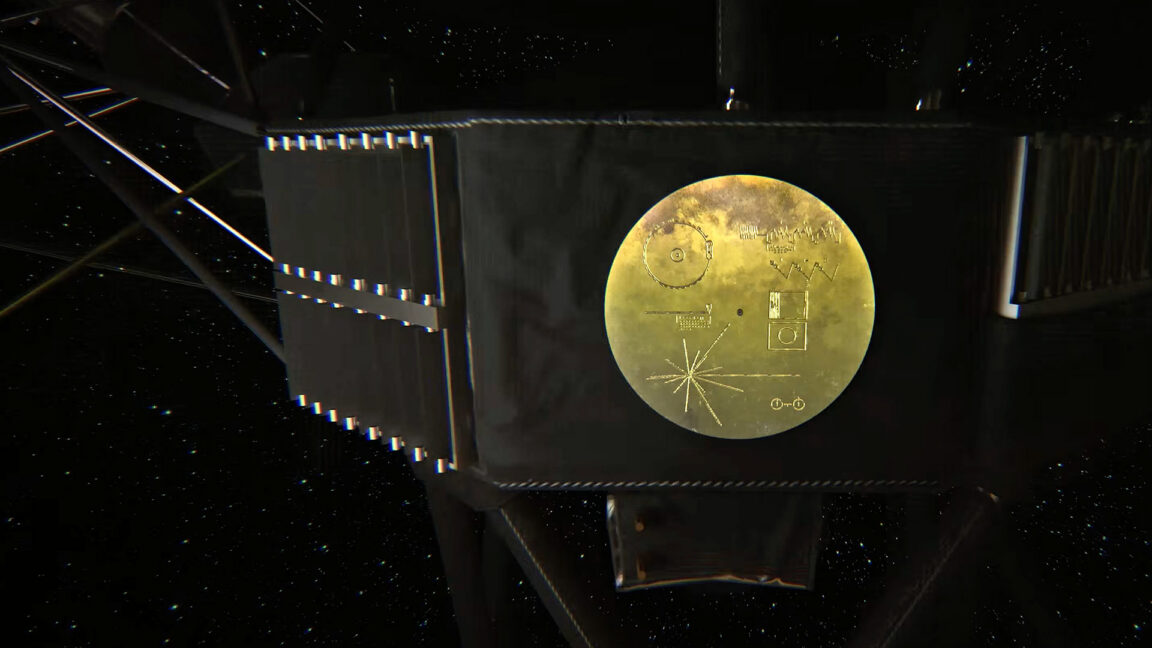
Both Voyager probes carry a commemorative phonograph record as a message from humanity to whoever encounters the spacecraft. The record marks the one hundredth anniversary of the recording medium.
Historian Glen Swanson's discovery
Glen Swanson, former chief historian for NASA's Johnson Space Center in Houston, researched the Golden Record's history and uncovered overlooked details about its creation and the duplicates made almost five decades ago.
Focus on the hardware
Swanson was interested in the physical record and its protective cover rather than its contents.
“So much has been written about the contents of the record, whereas I was more interested in the hardware, the bottle itself.”
The protective cover's design
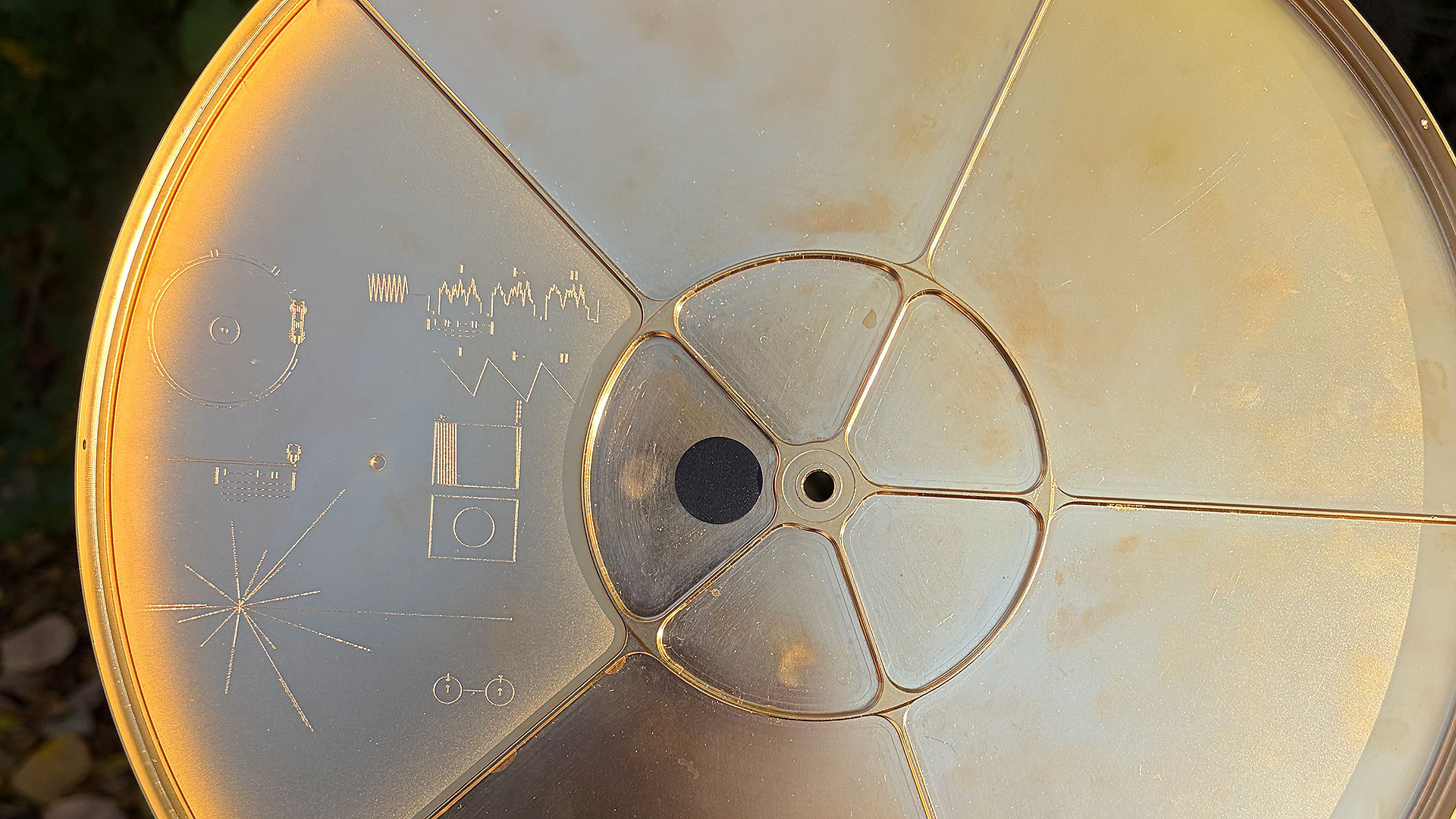
The Golden Record's protective cover is inscribed with a Pulsar map showing the Sun's location and hieroglyphs explaining how to play the record and access photos also contained on the disc.
The wear problem
The designers recognized that the cover's outside would wear down over time. Even small amounts of dust would eventually erode the inscriptions, potentially making them unreadable and leaving the disc unplayable.
Instructions on the inside too
Swanson discovered that the designers repeated the operating instructions on the inside of the protective cover as a backup. If the outside wore away, whoever found Voyager could still access the instructions.
Ten copies were made
Initially, only three Golden Records were made: one for each spacecraft and a flight backup. About a month after launch, NASA ordered ten extras made, though the reasoning for that number is unclear.
Where the duplicates are held
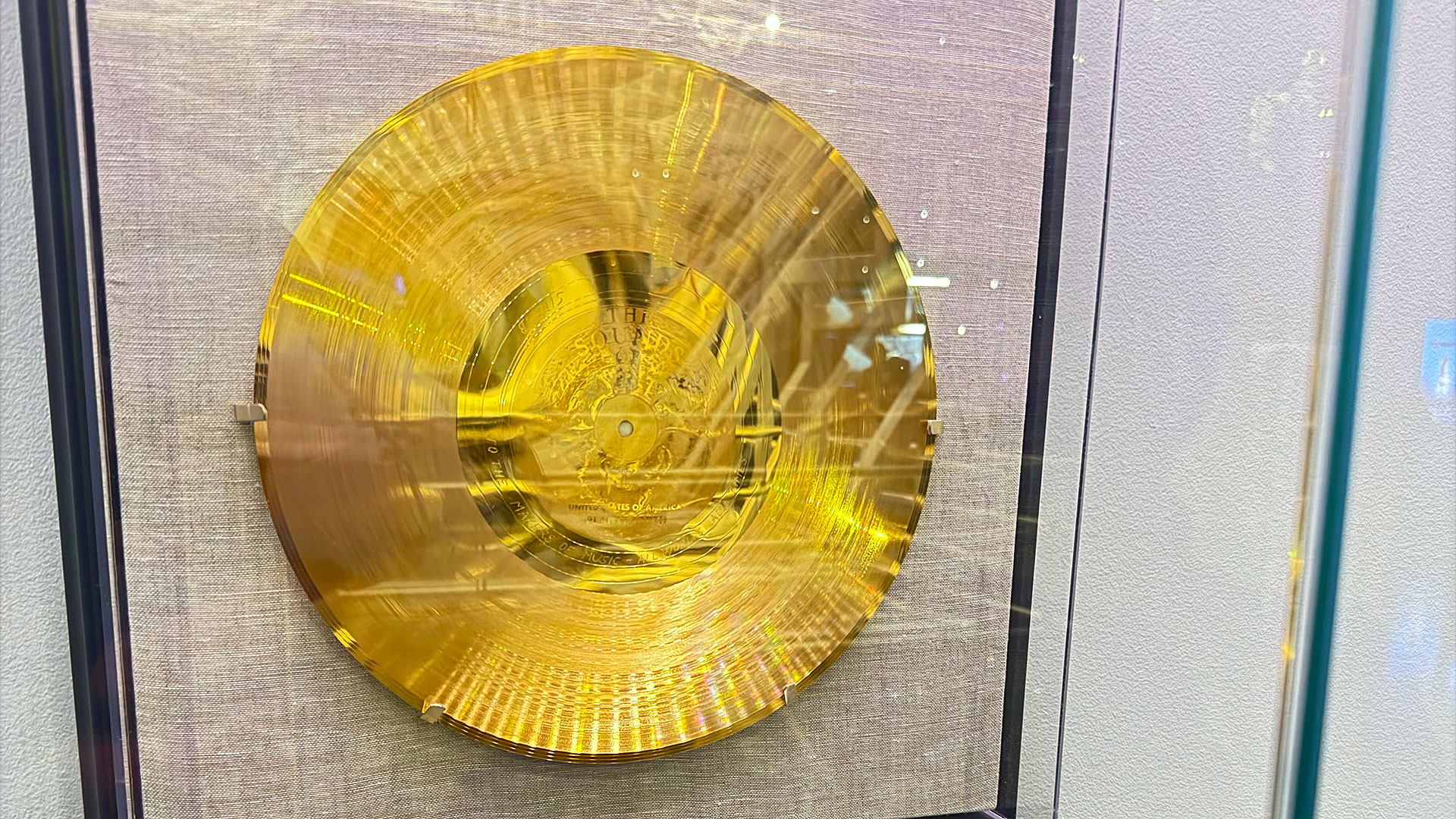
Swanson verified that original duplicates are held at the United Nations in New York; the US Library of Congress; NASA Headquarters and the Smithsonian National Air and Space Museum in Washington, DC; Johnson Space Center…
Replicas and the future
No complete original versions have been sold due to rights and material issues. Swanson and Lomberg are working on a full-size replica of the copper record to be released with their book, though it will…
In short
Historian Glen Swanson found that the Voyager Golden Record's protective cover had operating instructions repeated on its inside, a backup against wear, and verified that ten duplicate records were made and distributed to institutions worldwide.
Read the TL;DR — this story on one card.