From Ars Technica · · 3m
Watching fights teaches mice to fight better
Male mice who watched other mice battle learned enough to hold their own against stronger opponents, suggesting violent observation may be an adaptive survival strategy.
In brief
Male mice who watched other mice battle learned enough to hold their own against stronger opponents, suggesting violent observation may be an adaptive survival strategy. Male mice learned to fight more effectively by watching other mice battle, with brain changes mirroring those of actual fighters, according to…
Quick answers
- Could this apply to humans?
- These brain circuits are extremely conserved, especially in regions showing robust changes in inhibitory tone. For animals around aggression, being ready to fight is highly adaptive, a principle that may extend to human beings.
- What is the key takeaway from Watching fights teaches mice to fight better?
- Male mice learned to fight more effectively by watching other mice battle, with brain changes mirroring those of actual fighters, according to research published in Nature.
Watching violence may teach survival
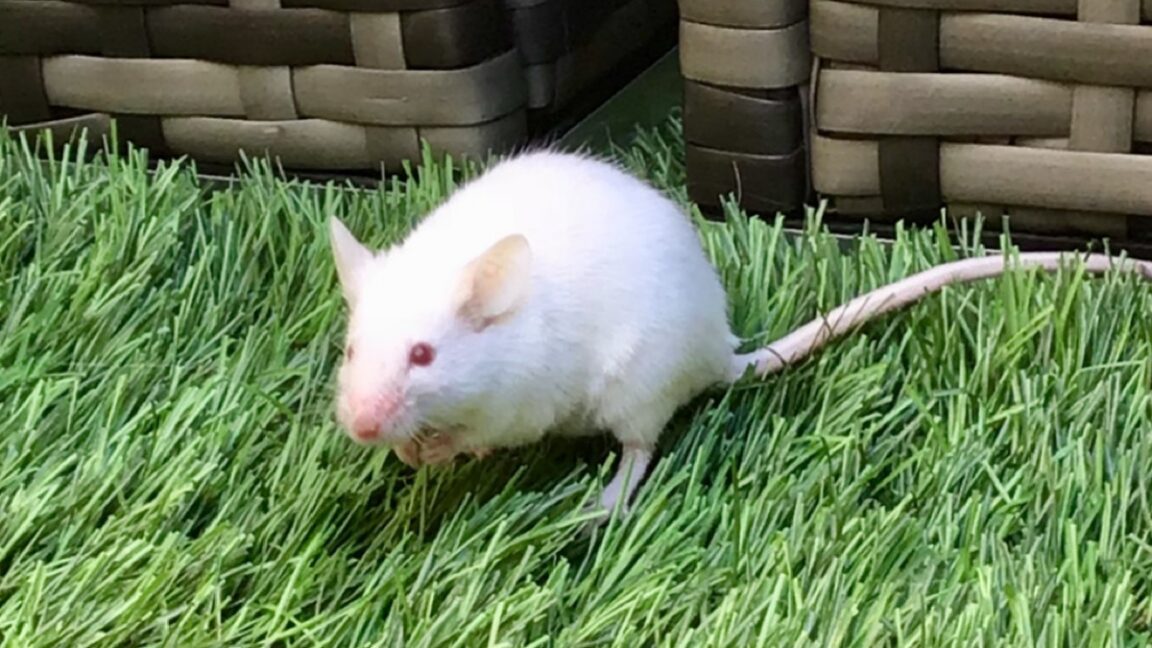
Scientists debate whether watching violent events makes us more aggressive or serves an adaptive survival strategy. Male mice who watched other mice fighting learned enough to better protect themselves against stronger opponents.
The experiment: three groups of mice
Researchers assigned male mice to three groups over eight days of training with three ten-minute sessions daily.Fighters battled each other, spectators watched from behind a transparent barrier, and novices played with stuffed mice in isolation.
Fight night: measuring behavior and brain
On day nine, all mice faced a stronger opponent in three four-minute rounds. Researchers filmed fights from above and engineered mice's brain cells to glow green when active and red when inhibited, tracking twelve interconnected…
Spectators outperformed novices
Spectator mice spent less time with backs turned toward opponents and attacked faster than novices, using similar moves to fighters.They were not as skilled as actual fighters, but learned enough through observation to perform better.
Brain changes mirrored fighting experience
Spectator mice's brains altered to resemble fighter mice's brains across all twelve interconnected regions. During training, spectator inhibitory cells resembled fighters', but on fight night both cell types more closely resembled those of fighting mice.
Why attack is so sticky
Witnessing aggression leaves a circuit trace that changes how animals behave in future conflicts, similar to the trace left by fighting itself. Attack is specifically salient and arousing, driving attention and a specific plasticity mechanism.
“Witnessing aggression leaves a circuit trace that changes how an animal behaves in its next conflict, and that trace looks similar to the one left by fighting itself.”
Could this apply to humans?
These brain circuits are extremely conserved, especially in regions showing robust changes in inhibitory tone. For animals around aggression, being ready to fight is highly adaptive, a principle that may extend to human beings.
“Although it's difficult to draw a one-to-one parallel, these circuits are extremely conserved, especially these brain regions that seem to show this robust change in inhibitory tone.”
Next: female mice and artificial induction
Researchers plan to test whether female mice watching male mice fight changes their mating preferences. They also aim to artificially induce the same brain activity changes and corresponding behavior through targeted stimulation.
The takeaway
Male mice learned to fight more effectively by watching other mice battle, with brain changes mirroring those of actual fighters, according to research published in Nature.
Read the TL;DR — this story on one card.