From Ars Technica · · 4m
When AI becomes math's oracle
Mathematicians grapple with AI systems that solve problems but cannot explain how, threatening the certainty that has defined the field for millennia.
In brief
Mathematicians grapple with AI systems that solve problems but cannot explain how, threatening the certainty that has defined the field for millennia. As AI systems solve mathematical problems without explanation, mathematicians face an existential shift from seeking proof and insight to accepting results they cannot…
Quick answers
- What is big math?
- Big math is mathematics too large for human minds to solve alone. It includes problems with billions of variables, from building the Burj Khalifa to controlling the lunar module.
- What is the key takeaway from When AI becomes math's oracle?
- As AI systems solve mathematical problems without explanation, mathematicians face an existential shift from seeking proof and insight to accepting results they cannot understand.
Math's new challenge
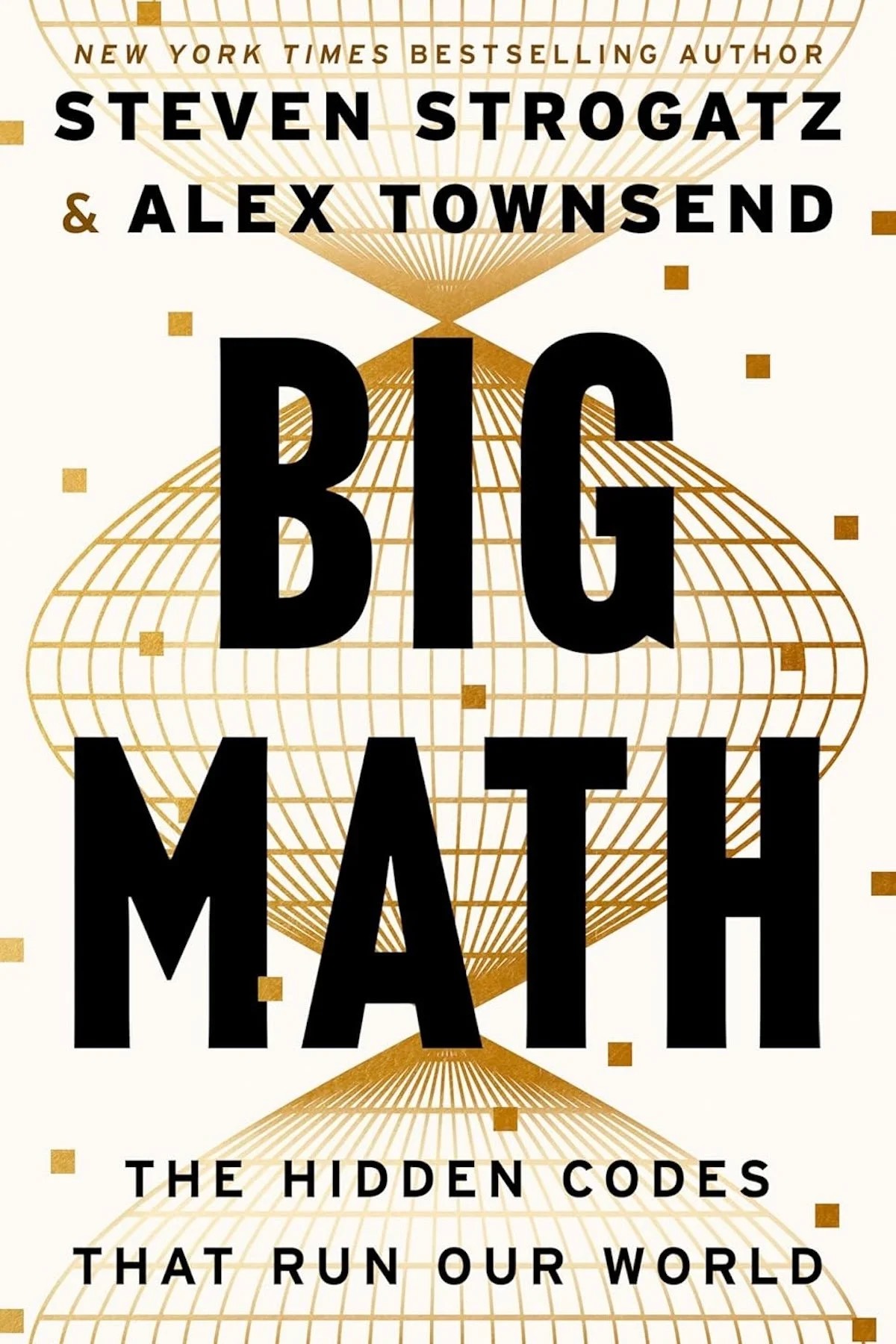
Applied mathematicians Steven Strogatz and Alex Townsend explore how AI is transforming mathematics in their new book Big Math: The Hidden Codes That Run Our World.
What is big math?
Big math is mathematics too large for human minds to solve alone. It includes problems with billions of variables, from building the Burj Khalifa to controlling the lunar module.
Linearity makes scale possible
Linear problems can be scaled to immense size and remain solvable. Non-linear problems resist pure math but yield to computers. Trillions of parameters are typical in large language models.
Gerrymandering and fairness
Moon Duchin used mathematics to generate thousands of fair electoral maps, proving Alabama's claim that two Black-majority districts were impossible was wrong. The Supreme Court later ruled partisan gerrymandering legal.
Computers as servants
For decades, computers were tools that extended human capability, like microscopes or telescopes. Mathematicians programmed them to do exactly what they were told, nothing more.
Computers become scouts
In the nineteen fifties, computers began exploring unknown mathematical territory. Enrico Fermi and colleagues ran a numerical experiment on non-linear systems without knowing what they would find.
The Fermi-Pasta-Ulam shock

The experiment showed energy in a non-linear system did not decay to entropy as expected. Instead, ninety-eight percent of energy returned to its original mode, a recurrence phenomenon that led to soliton theory.
From scout to oracle
AI now shows mathematicians results they cannot understand and cannot explain. Google Translate works brilliantly but has not discovered new linguistic principles. AlphaFold solved protein folding without revealing new physics.
Wolfram's irreducibility
Stephen Wolfram argues most natural systems are computationally irreducible, meaning no simple theory explains them. We may have restricted ourselves to transparent systems because they are the only ones we could understand.
Checking without understanding
If AI systems become truly opaque, mathematics may work like medicine. The FDA approves drugs without requiring knowledge of how they work. Doctors do not need to know how aspirin works to prescribe it.
The epistemic loss
Mathematics has prided itself on absolute proof and certainty for millennia. Euclid's proofs from three hundred BC remain true today. Accepting opacity means surrendering the eternal certainty that defines pure mathematics.
“We're the only subject that has absolute proof. We have certainty.”
The culture of struggle
Mathematicians value the journey of understanding, the aha moment when patterns emerge after hard work. This productive struggle builds resourcefulness, companionship and human joy that AI solutions bypass entirely.
Young mathematicians in crisis
Strogatz, near the end of his career, can be philosophical about AI's rise. But young mathematicians who dreamed of the subject face people saying the field is over, even gloating about mathematics becoming obsolete.
Individual voices and beauty
Mathematicians have distinct styles visible in the questions they ask and how they explain themselves. The focus on answers over journey risks losing the aesthetic element and human individuality that gives mathematics soul.
AI as teacher
Strogatz finds AI can be an effective explainer. Perhaps machines will help people understand mathematics better than ever. Recreational mathematicians and puzzle solvers can still find joy in discovery, even if not making great breakthroughs.
Training AI to ask questions
AI systems are not yet good at asking questions, but they could be trained to do so. Graduate students struggle with question-asking too, yet mentors help them learn. The same approach might work for machines.
Practical benefits and confusion
AI offers transformative possibilities in energy, climate, medicine and physics. For many people this is a joyful time. Yet there is genuine loss and grief. Strogatz calls it very confusing, the only honest assessment.
The Faustian bargain
Strogatz and Townsend end their book with Faust. Goethe's version is ambiguous: if we keep striving to build something bigger than ourselves, maybe we can be redeemed. But it remains a very dangerous game.
“letting our power grow without losing our soul”
What it means
As AI systems solve mathematical problems without explanation, mathematicians face an existential shift from seeking proof and insight to accepting results they cannot understand.