From Autosport · Jake Boxall-Legge · · 1m 20s
Mercedes' Sepang Pace Deficit Explained
Mercedes' W17 update struggled at Sepang due to track surface issues and tyre heat.
In brief
Mercedes' W17 update struggled at Sepang due to track surface issues and tyre heat. Mercedes' W17 underperformed at Sepang because of rough track surface causing tyre heat and aerodynamic issues. Originally reported by Autosport.
Mercedes' W17 Update at Sepang
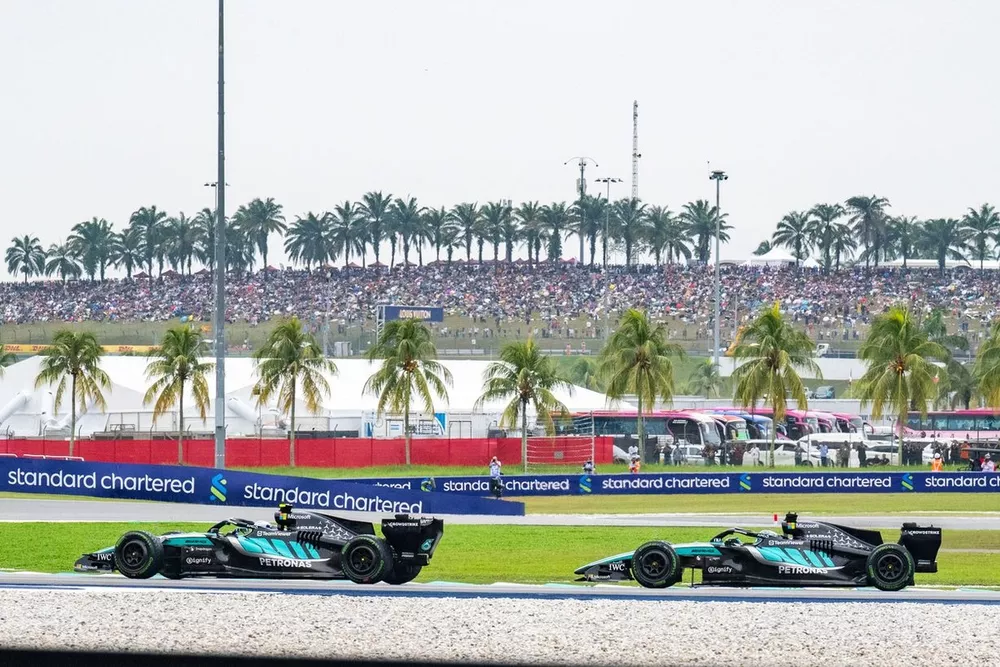
Mercedes introduced a revised floor and sidepod package for F1's first visit to Sepang in nine years but struggled to unlock top-line pace.
Drivers' Unusual Inputs
Drivers had to use unusual throttle inputs in slow corners to get the car to bite due to track temperature and surface interactions.
Tyre Heat Problem
Sepang's rough surface caused excess tyre heat through mechanical strain as tyres filled gaps in the track.
Aerodynamic Impact
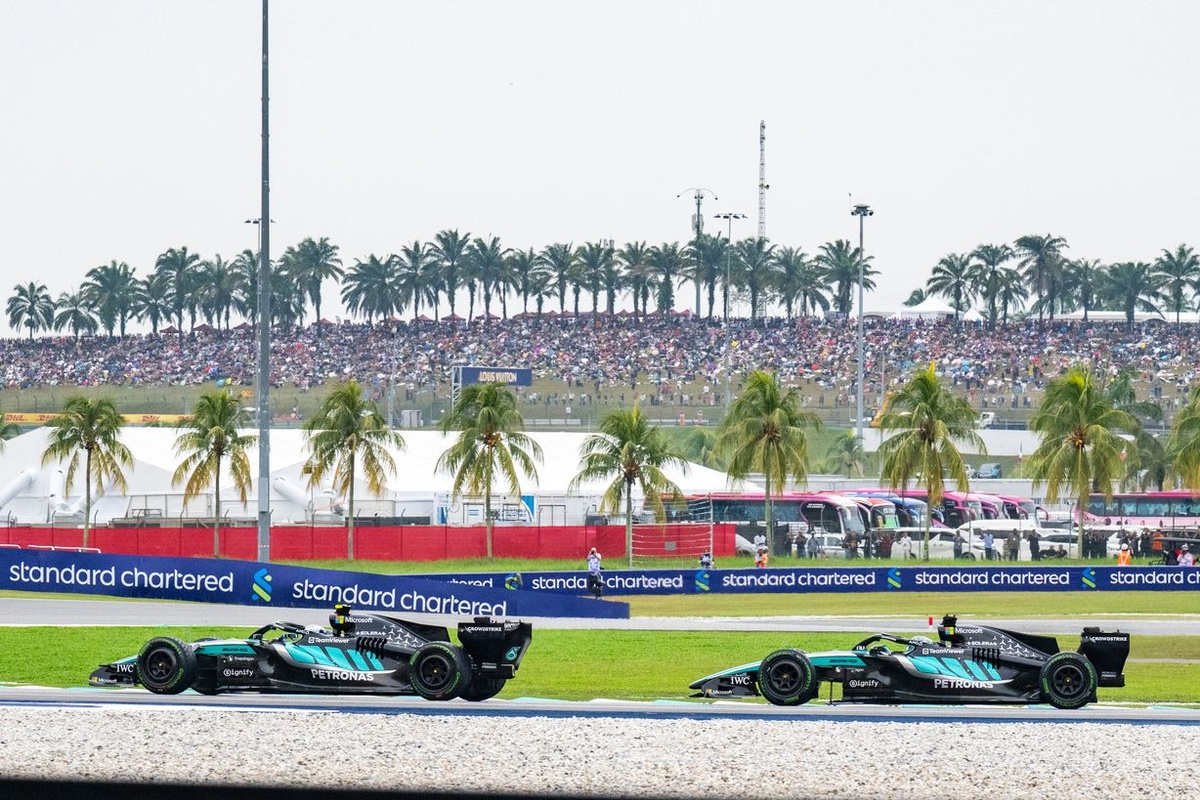
Track surface texture altered airflow under the car, causing turbulence and separation in the boundary layer.
Mercedes' Response
Mercedes will work on understanding the update's performance for Singapore and next year's car development.
George Russell's Power Unit
George Russell retired from Bahrain GP due to a powertrain mechanical failure, losing 15 points.
Tyre and Aerodynamic Challenges
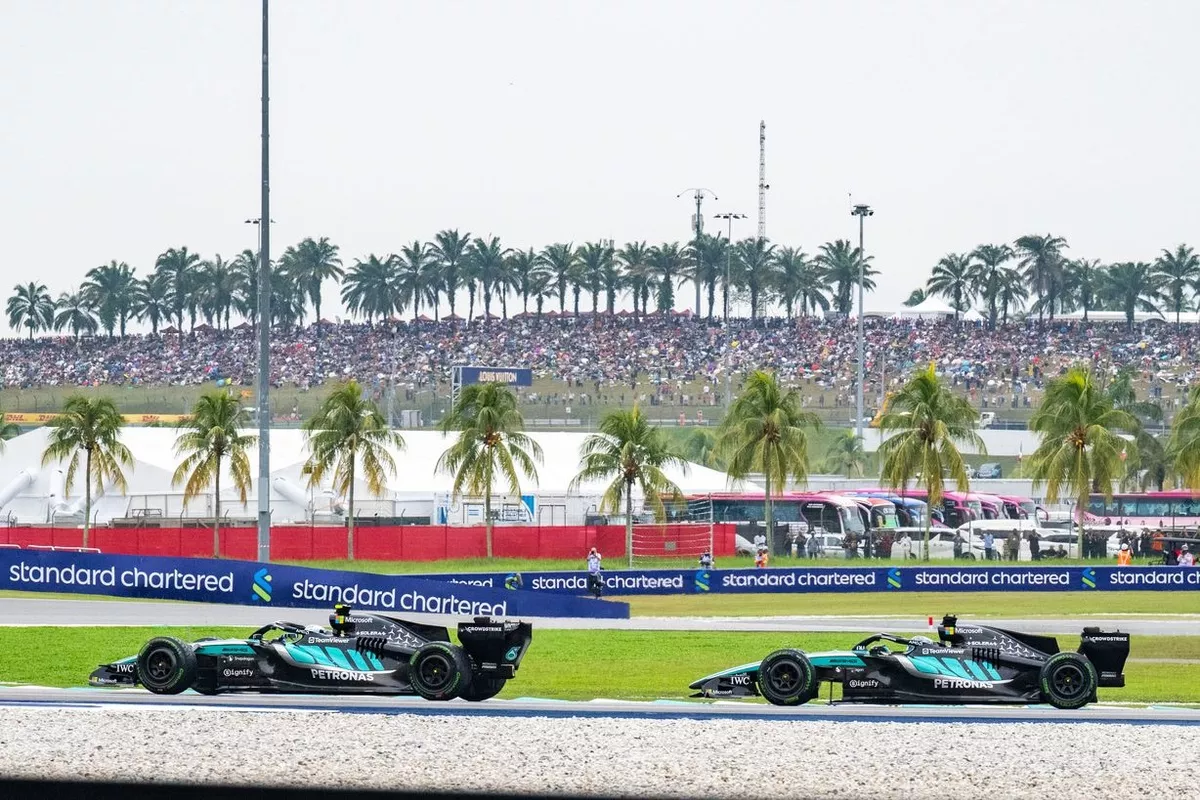
Sepang's surface caused both tyre heat issues and aerodynamic problems affecting Mercedes' performance.
Next Steps for Mercedes
Mercedes will investigate the root cause of the powertrain failure and improve W17 performance for Singapore.
The big picture
Mercedes' W17 underperformed at Sepang because of rough track surface causing tyre heat and aerodynamic issues.