From BBC News · · 1m 20s
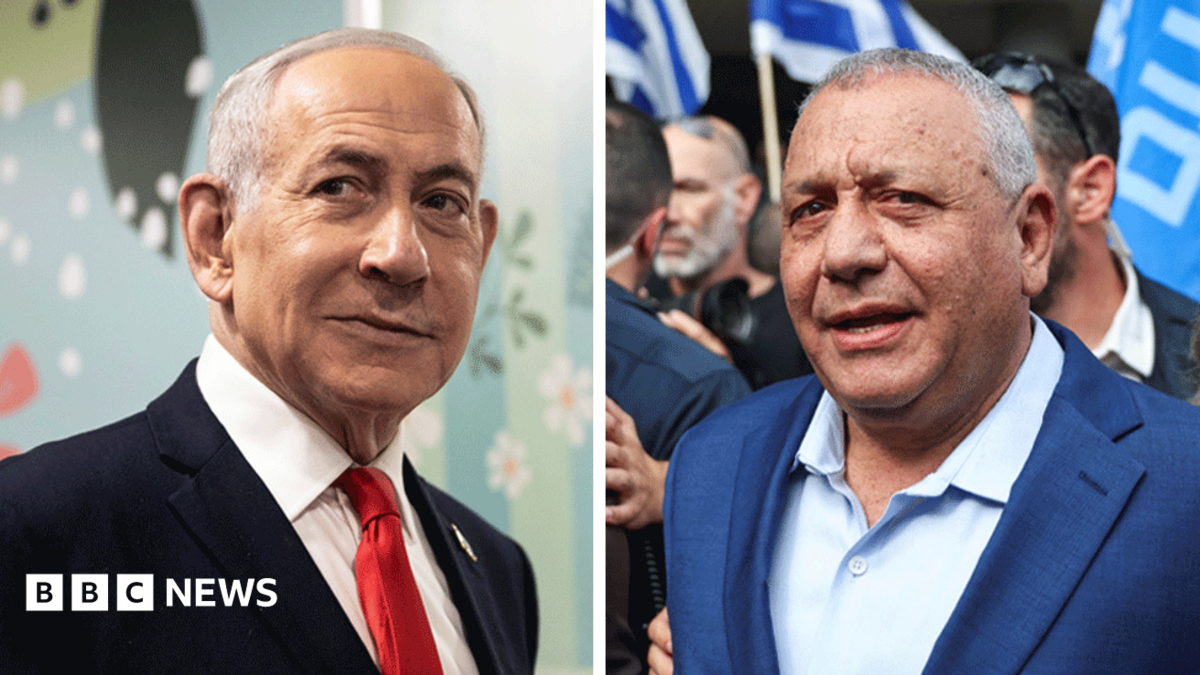
Netanyahu and Eisenkot begin unity talks
Israel's two election rivals open negotiations on a power-sharing deal to break the parliamentary deadlock after October's inconclusive vote.
In brief
Israel's two election rivals open negotiations on a power-sharing deal to break the parliamentary deadlock after October's inconclusive vote. Benjamin Netanyahu and Gadi Eisenkot have begun talks on a national unity government with a rotating premiership to resolve Israel's election deadlock. Originally reported by…
Election leaves both sides short

Benjamin Netanyahu's bloc won fifty three seats in October's election, while Gadi Eisenkot's bloc won forty eight. The one hundred twenty seat Knesset requires a majority.
Netanyahu proposes rotating premiership

On Saturday, Netanyahu proposed a national unity government and said he would agree to Eisenkot becoming prime minister first, with Netanyahu serving as alternate prime minister.
“my responsibility as a leader obligates me to put everything aside, including the principle of the largest party”
Eisenkot invites accelerated talks
Former army chief Eisenkot responded by inviting Netanyahu to genuine and accelerated negotiations. He has a week before a December sixth deadline to form an administration.
“If Likud is ready for genuine unity, I am ready to assess the seriousness of its intentions over the next twenty four hours.”
Arab parties hold potential balance
Two Arab-led alliances won nineteen seats combined after a surge in Arab voter turnout. All but one Jewish party pledged not to work with them, limiting Eisenkot's coalition options.
Netanyahu cites existential danger

Netanyahu said he was proposing unity because of the magnitude of existential danger and the possibility that a government will be formed without capacity to deal with it.
The takeaway
Benjamin Netanyahu and Gadi Eisenkot have begun talks on a national unity government with a rotating premiership to resolve Israel's election deadlock.
Read the TL;DR — this story on one card.