From BBC News · · 1m 40s
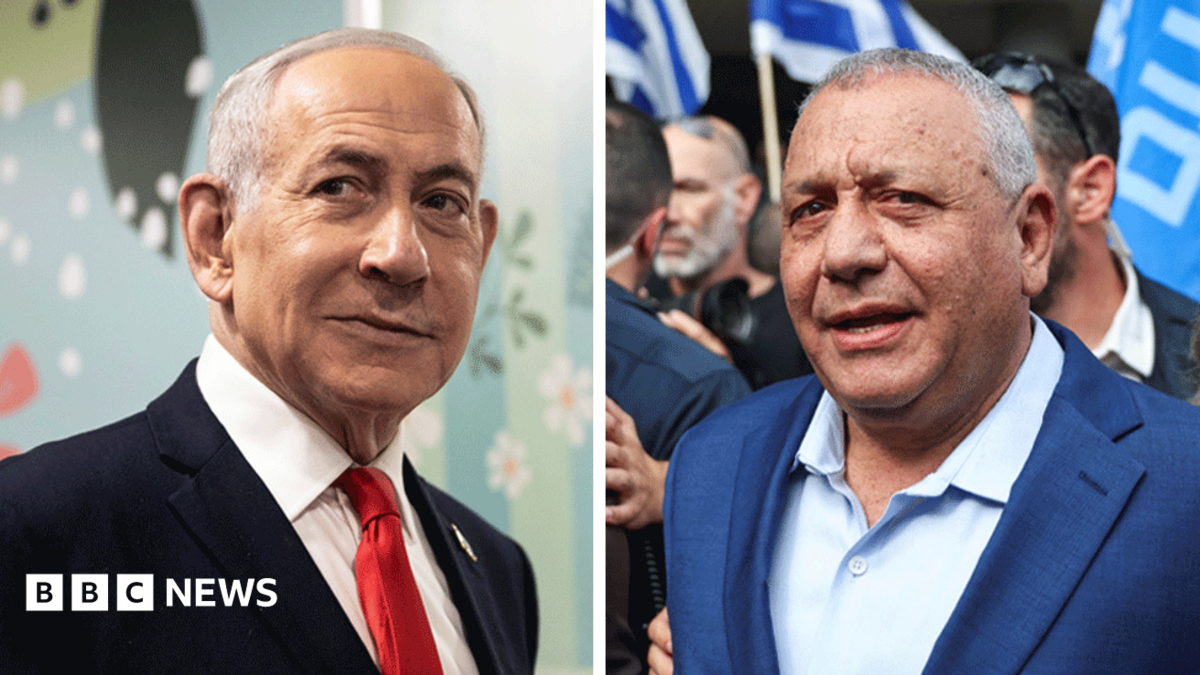
Netanyahu offers to cede PM role to break Israeli deadlock
After October's election left no party with a majority, Benjamin Netanyahu agrees to let opposition leader Gadi Eisenkot serve as prime minister first in a rotating unity government.
In brief
After October's election left no party with a majority, Benjamin Netanyahu agrees to let opposition leader Gadi Eisenkot serve as prime minister first in a rotating unity government. Netanyahu agreed to let opposition leader Eisenkot become prime minister first in a rotating unity government to resolve Israel's…
Election left no clear winner

In October's election, Netanyahu's bloc won fifty three seats and Eisenkot's centrist Yashar party with three other Jewish opposition parties won forty eight seats. The Knesset has one hundred twenty seats total.
Netanyahu offers rotating PM role

On Saturday, Netanyahu said he would agree to Eisenkot becoming prime minister first as part of a rotating national unity government, initially serving as alternate prime minister himself.
“my responsibility as a leader obligates me to put everything aside, including the principle of the largest party”
Eisenkot has one week to form government
Eisenkot has until December sixth to form an administration. He has already agreed coalition deals with Yisrael Beiteinu and The Democrats, and Naftali Bennett's Beyachad party supports a unity government.
Talks begin Sunday morning
Netanyahu and Eisenkot are due to meet on Sunday morning. Eisenkot said if Likud is ready for genuine unity, he is ready to assess the seriousness of its intentions over the next twenty four hours.
“If Likud is ready for genuine unity, I am ready to assess the seriousness of its intentions over the next 24 hours”
The bottom line
Netanyahu agreed to let opposition leader Eisenkot become prime minister first in a rotating unity government to resolve Israel's post-election deadlock.
Read the TL;DR — this story on one card.