From CBS News · Ahmed Shawkat · · 1m 20s
Ancient Egyptian warhorse given royal burial 3,000 years ago
Archaeologists in Egypt's Nile Delta discovered a complete horse skeleton buried with care, revealing military life in a New Kingdom fortress.
In brief
Archaeologists in Egypt's Nile Delta discovered a complete horse skeleton buried with care, revealing military life in a New Kingdom fortress. A carefully positioned horse burial and nearby chariot harness pieces show that ancient Egyptians honored their warhorses with ceremonial interment. Originally reported by CBS…
Complete warhorse skeleton unearthed
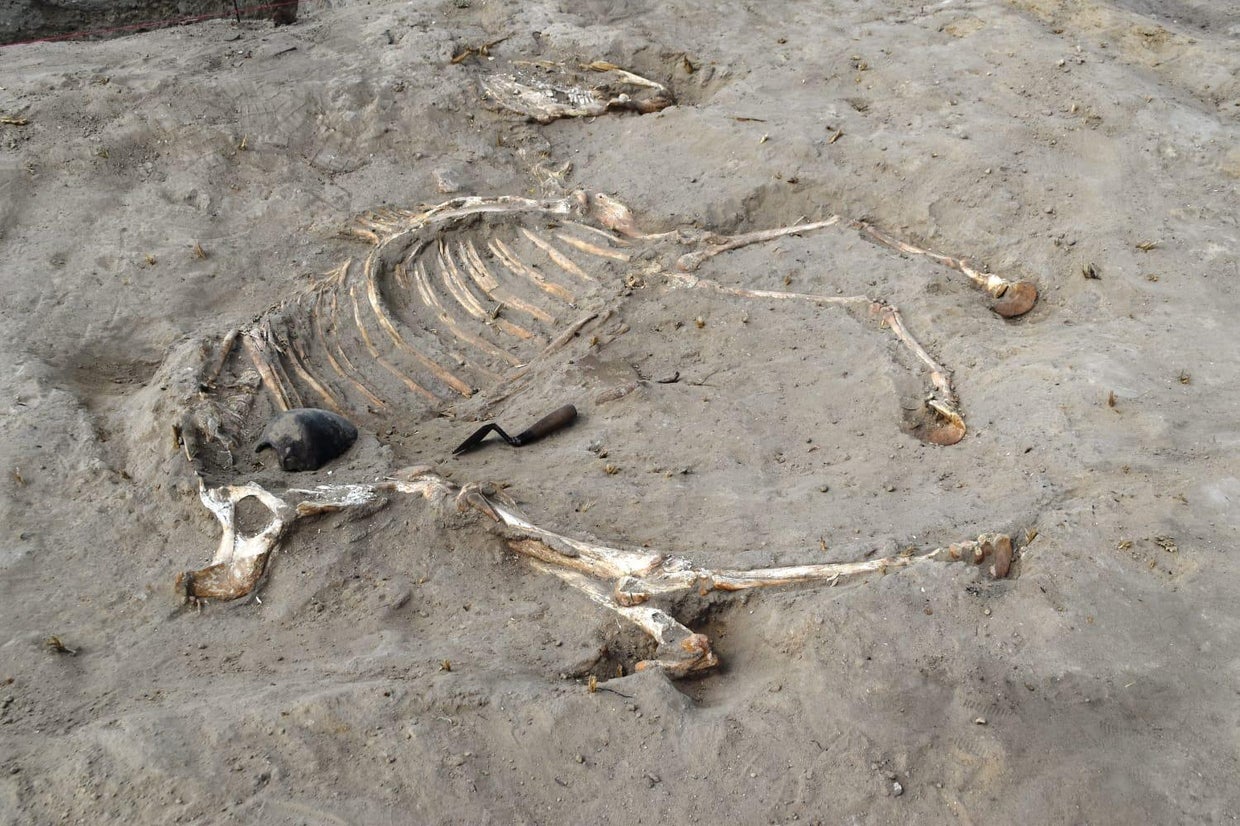
Archaeologists discovered the full remains of a young male horse at Tell Al-Abqain in Egypt's Nile Delta, buried with deliberate care over 3,000 years ago.
Military fortress protected Egypt from Libya
The site at Tell Al-Abqain was built during the New Kingdom (1570-1069 B.C.) to defend Egypt against attacks by Libyan tribes in the northern Beheira province.
Horse was bred for speed and warfare
The horse belonged to a medium-sized breed known for speed and agility, likely used to pull war chariots during military campaigns in the New Kingdom.
Burial position shows ceremonial respect
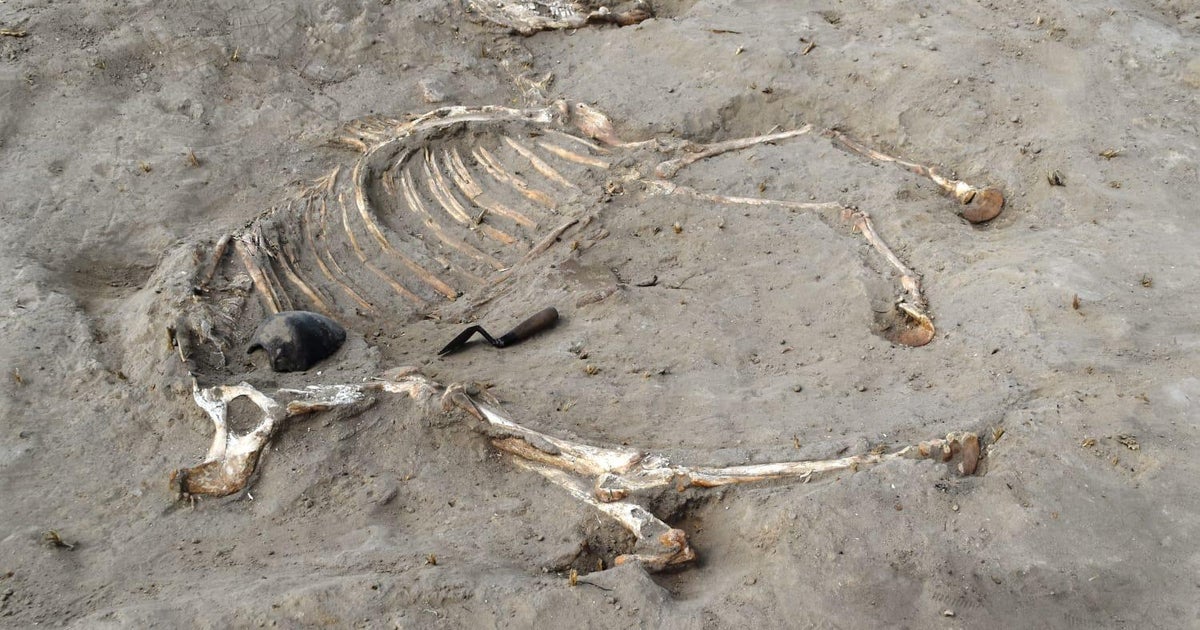
The horse's body position, head direction, and orderly arrangement indicate it received an honorific burial, suggesting the animal was valued and deliberately honored.
Chariot harness pieces confirm military role
Archaeologists found cylindrical alabaster and limestone pieces nearby that formed part of a horse's chariot harness, proving the site's military purpose.
Fortress reveals organized military life
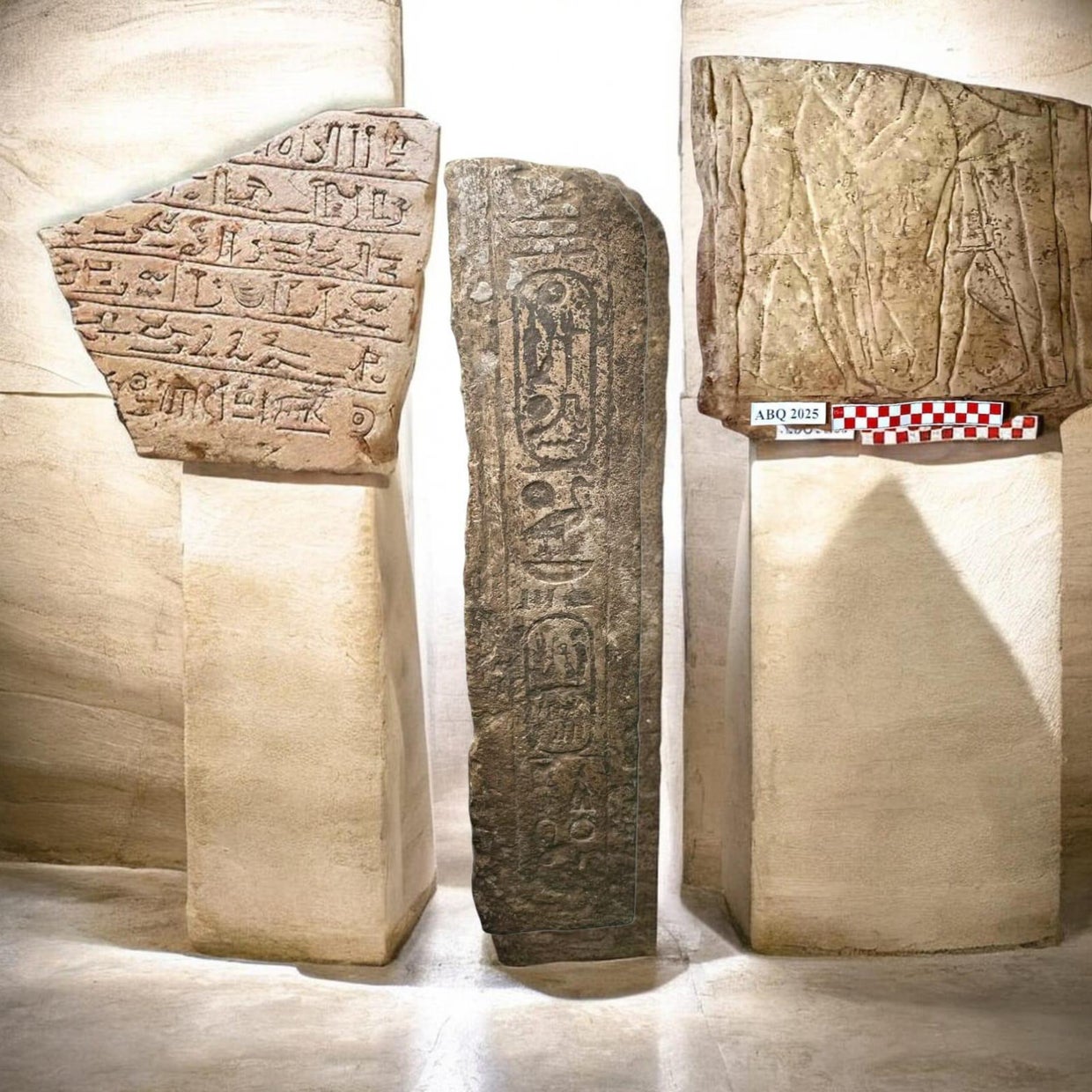
Excavations uncovered a planned residential complex with grain silos, pottery ovens, religious amulets, and a limestone stela depicting a Libyan prisoner with bound hands.
The big picture
A carefully positioned horse burial and nearby chariot harness pieces show that ancient Egyptians honored their warhorses with ceremonial interment.


