From CNBC · Annie Palmer · · 4m
AI shopping agents hit a retail wall
OpenAI, Meta and Google's shopping agents promise to simplify online buying, but Amazon, eBay and others are blocking them, creating a fragmented and frustrating experience.
In brief
OpenAI, Meta and Google's shopping agents promise to simplify online buying, but Amazon, eBay and others are blocking them, creating a fragmented and frustrating experience. AI shopping agents from major tech companies face retailer blocks and technical failures that threaten to stunt their growth despite analyst…
Muse fails to buy wipers
Maia Bittner asked Meta's Muse AI agent to buy windshield wipers from AutoZone. Seventeen hours later, AutoZone canceled the order due to an unspecified error.
“Honestly, the most reliable path now is you ordering on Amazon yourself.”
Tech giants launch shopping agents
OpenAI, Meta, Google and Instinct have introduced personal AI agents that promise to take the hassle out of browsing and buying online over the past year.
Retailers split on allowing agents

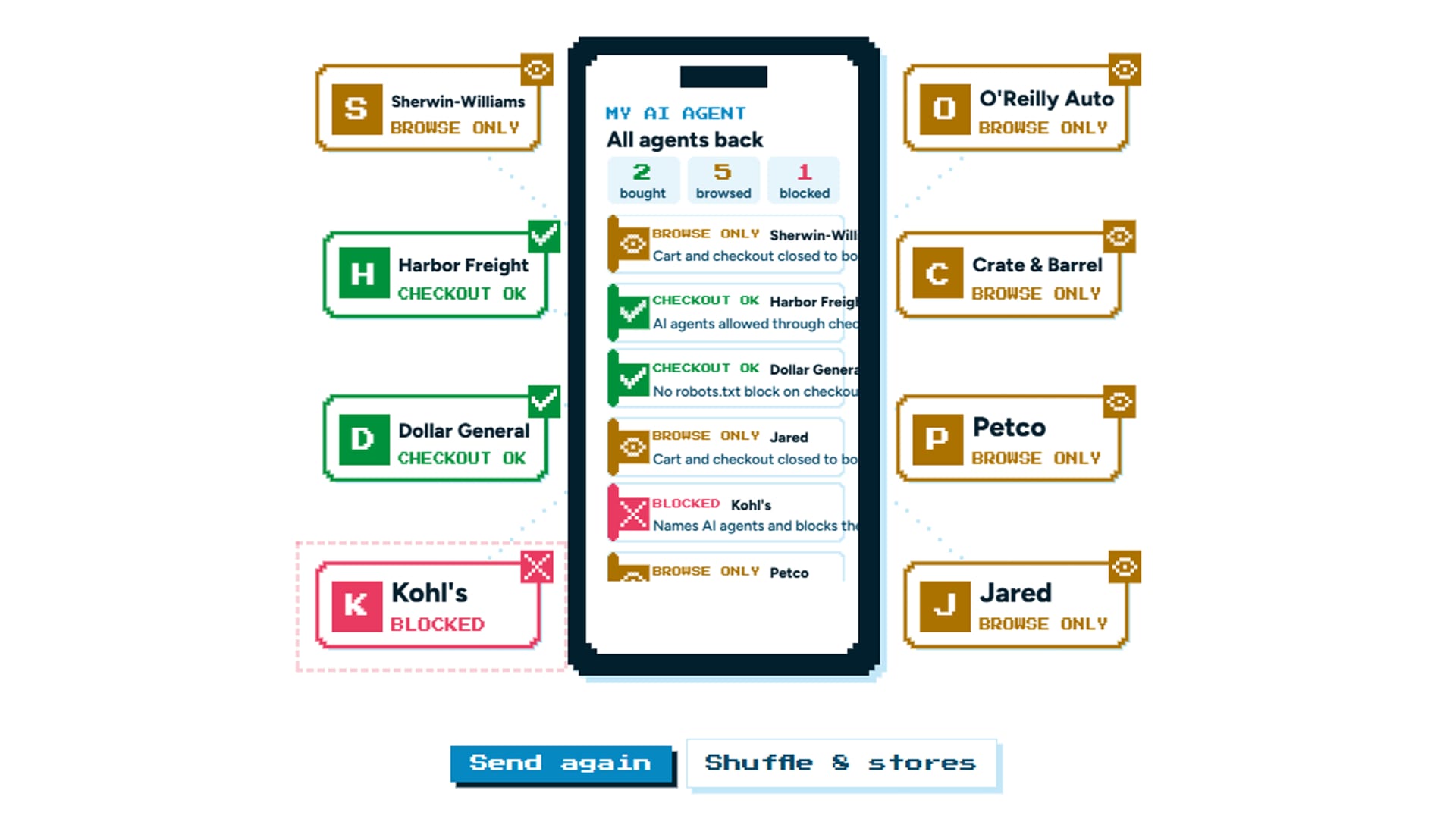
Walmart and Sephora opened their sites to agents. Amazon, eBay, United Airlines and Kohl's limit agent actions or block them outright. Others added terms saying they are not liable for AI purchase errors.
Fragmented experience limits choice
A consumer using an agent to shop will not see the full set of options because some websites are unavailable, according to Emily Pfeiffer, principal analyst at Forrester.
“It's a very mixed bag.”
Amazon blocks most aggressively
Amazon walled off its site entirely from agents. It blocked Elon Musk's Grok Bot from placing orders and prevented Meta's Muse from shopping on its platform in September.
Agents fail basic shopping tasks
A Visa study instructed twenty two models from twelve AI labs to carry out shopping tasks.
Retailers fear fraud and bot activity
Many retailers approach agents cautiously because they are concerned about fraudulent bot activity. Skyfire is arming retailers with data to identify which bots visit their site and verify human consent.
Liability remains unclear
American Express said it would protect eligible customers from charges related to AI agent error. Stripe protects some agent purchases. JPMorgan Chase blocked external agents citing security concerns. Best Buy deems users responsible.
“Best Buy is not responsible for conduct, errors, actions, or inaction by any Digital Agent.”
Agents remain a niche tool
Agentic purchases make up just zero point four percent of global e-commerce transactions and zero point two percent of value, according to Bain and Company research published earlier this month.
But adoption is growing fast
Roughly a quarter of Muse's ten million users are shopping online via an AI agent with an average spend of two hundred dollars per order, Meta CEO Mark Zuckerberg said in October.
Instinct CEO calls for collaboration
Instinct CEO Noah Shinn told CNBC that the average transaction value among its users exceeds five hundred dollars per person. He said tech companies and retailers need to collaborate to solve problems.
“We can obviously move very fast and certain businesses cannot. So, how can we collaborate with them?”
McKinsey forecasts trillion dollar market
U.S. revenue from agentic commerce could reach up to one trillion dollars by twenty thirty, according to analysts at McKinsey and ICSC who forecast in April.
The one thing
AI shopping agents from major tech companies face retailer blocks and technical failures that threaten to stunt their growth despite analyst forecasts of up to one trillion dollars in U.S. revenue by twenty thirty.
Read the TL;DR — this story on one card.