From CNBC · Spriha Srivastava · · 3m
Nvidia's gamble: can it survive without Jensen Huang?
Jensen Huang's resignation exposes how much of Nvidia's dominance rests on one man's relationships and vision, raising hard questions about corporate governance.
In brief
Jensen Huang's resignation exposes how much of Nvidia's dominance rests on one man's relationships and vision, raising hard questions about corporate governance. Jensen Huang's departure from Nvidia raises questions about whether the company's success depends on his technology and strategy or on his personal…
Quick answers
- The core question: technology or relationships?
- Without Huang, competitors could try to persuade those suppliers to allocate more capacity to them. The question is how much of Nvidia's advantage comes from technology versus Huang's relationships.
- What is the key takeaway from Nvidia's gamble: can it survive without Jensen Huang??
- Jensen Huang's departure from Nvidia raises questions about whether the company's success depends on his technology and strategy or on his personal relationships with suppliers and industry leaders.
Huang's departure shifts the question

When Jensen Huang quit as Nvidia CEO, the conversation immediately turned to whether Nvidia could survive without him, not whether it had the technology or talent.
Huang's influence went far beyond Nvidia
Dylan Patel of SemiAnalysis told CNBC that Huang persuaded executives at smaller component suppliers to commit capacity to Nvidia, helping it secure the majority of supply chain capacity.
The core question: technology or relationships?
Without Huang, competitors could try to persuade those suppliers to allocate more capacity to them. The question is how much of Nvidia's advantage comes from technology versus Huang's relationships.
The benefits of a rockstar CEO
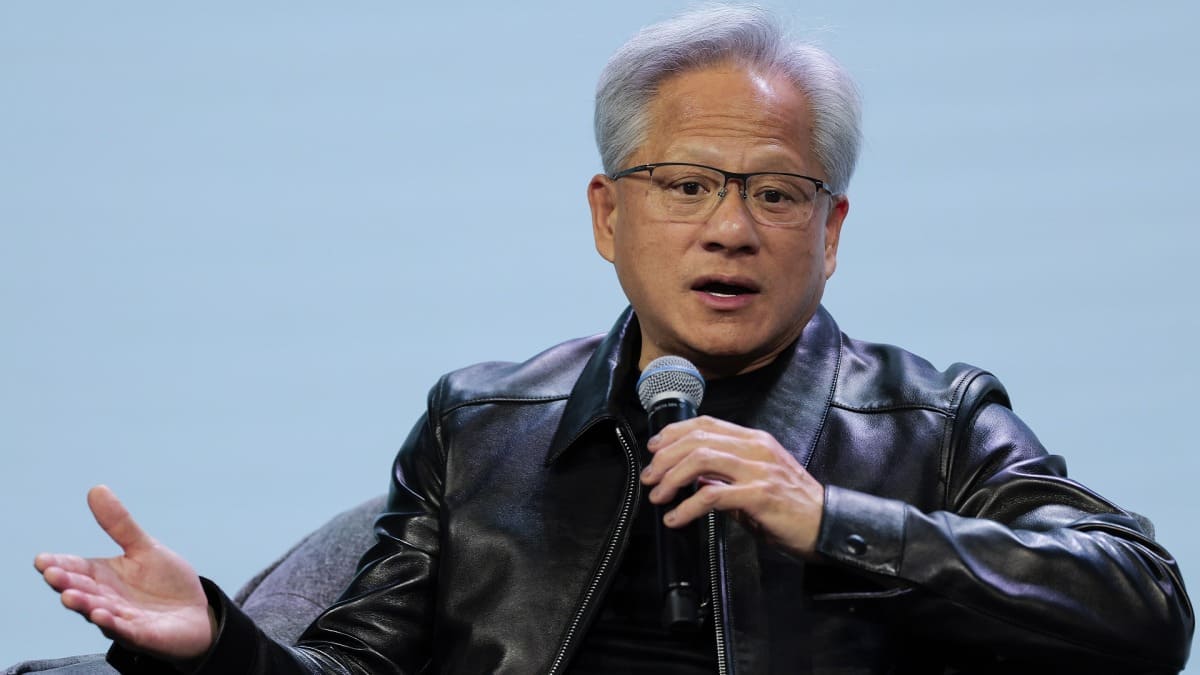
Charismatic leaders attract investors, open doors and give companies new identities. Huang shaped the conversation about AI's future and made Nvidia central to it, wearing his trademark leather jacket on world stages.
Huang was seen as irreplaceable
Eric Ross said Huang is the company. Bernstein's Stacy Rasgon distinguished between capable executives who could run operations and Huang's vision, which was harder to replace.
“is the company”
Huang played multiple roles at once
Duncan Clark noted Huang had become a bridge between Silicon Valley, Asia and Washington, and one of the most prominent voices for the wider AI industry. One person cannot replace all those roles.
Nvidia's board emphasizes continuity
Interim CEO Colette Kress, who has been with Nvidia since 2013, is backed by an experienced leadership team. New chair Harvey Jones said operations, customer commitments and product roadmap will continue without interruption.
A governance failure in plain sight
Duncan Clark described Nvidia's situation as a governance failure. When one charismatic leader becomes the face of everything, it becomes harder to convince others that anyone else can take over.
Boards need stronger oversight of powerful CEOs
Steve Sedgwick argued that powerful leaders can come to believe normal rules do not apply to them. Without strong governance to challenge them and prepare for departure, consequences for a company can be far greater.
“When you have a 'Rockstar' CEO you need way more governance, NOT less”
The test ahead for Nvidia and other boards
Linda Ford of The Chartered Governance Institute said Nvidia showed what happens when leadership is built around one person. Nvidia must now prove the business Huang built can stand on its own.
In short
Jensen Huang's departure from Nvidia raises questions about whether the company's success depends on his technology and strategy or on his personal relationships with suppliers and industry leaders.