From Digital Camera World · · 1m 40s
Meta Ray-Ban Display Glasses: Smart But Unsettling
Meta Ray-Ban Display Glasses offer practical AI features but raise privacy concerns with their neural band interface.
In brief
Meta Ray-Ban Display Glasses offer practical AI features but raise privacy concerns with their neural band interface. Meta Ray-Ban Display glasses provide real-time translations and camera functions but require a neural band for interaction, raising privacy questions. Originally reported by Digital Camera World.
First impressions

I tested Meta Ray-Ban Display glasses and found them light and stylish, though the neural band felt unusual.
“They are light, and the frames look okay given the tech inside.”
Neural band interface
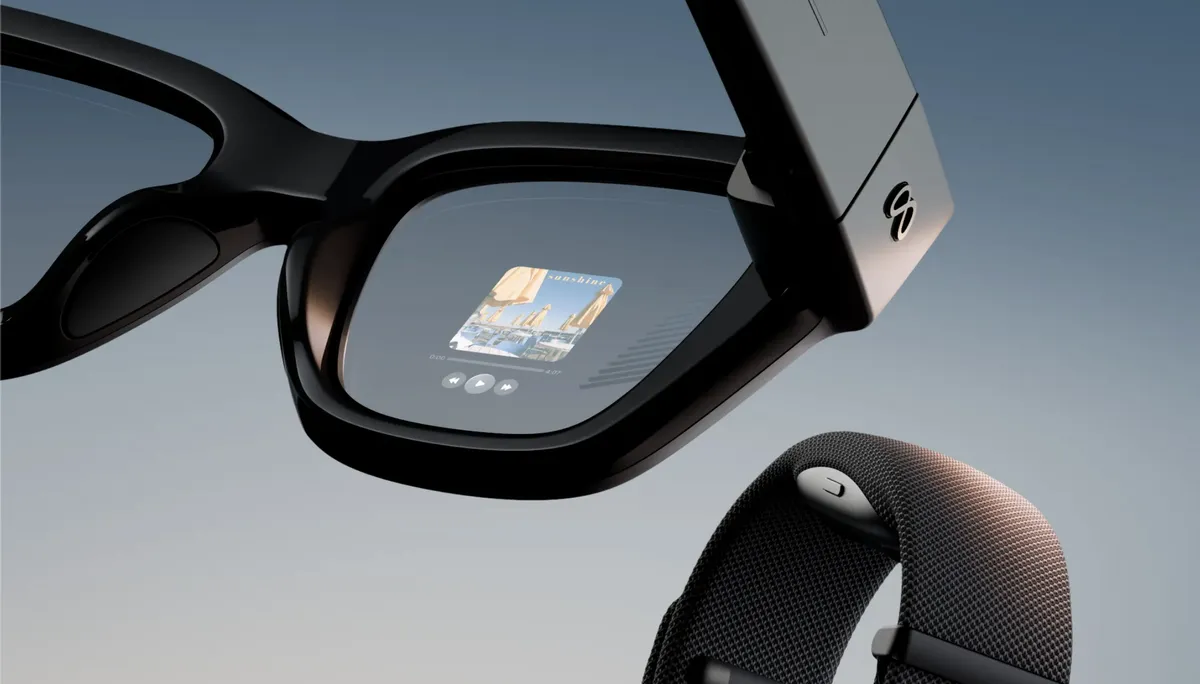
The neural band on the wrist communicates with the glasses using hand gestures to interact with the device.
“It detects the movements that form your interactions with the user interface.”
AI translation features
The glasses provide real-time translations of foreign languages and subtitles for spoken content.
“It also means the glasses are capable of a lot more genuinely cool tricks, like putting subtitles in your view using AI translation.”
Camera functionality
The glasses include a 12MP camera for vertical images, with optional landscape shooting in newer models.
“There is a 12MP camera, set for vertical images.”
Privacy concerns

Meta collects user interactions to train its AI, potentially seeing what you view without your personal gallery.
“It's a significant distinction, but it does technically mean that someone working at Meta HQ may end up seeing more or less what you saw.”
Comparison to Google Glass
The glasses are cheaper than Google Glass but lack the display feature that Google Glass had.
“They're cheaper than Google Glass.”
Demo limitations
The unconnected demo showed translation and camera features but couldn't link to personal accounts or play music.
“I tried to play the music of Ariane X by voice, but Meta couldn't.”
Practical use cases

The glasses help with navigation, translations, and reviewing photos without needing to check a phone.
“One of the key demonstrations projected directions onto the display to help me find a nearby subway station.”
Price and accessibility
The glasses cost $799 or £749, making them more affordable than premium phones but still expensive.
“It is 600 x 600 pixels, which makes it capable of displaying a phone-like interface three icons wide.”
User experience
The interface requires learning hand gestures, but the glasses offer a more intuitive experience than voice commands.
“It took me no more than a minute to grasp this but a few more to start to remember which of my first three fingers I should be tapping with my thumb in some situations.”
Future potential
The glasses could become more useful with improved AI and better integration with personal devices.
“I'd need to spend longer with them to fully answer whether these are significantly more useful than either the glasses without the display or the Google Glass of over ten years ago.”
Conclusion
Meta Ray-Ban Display glasses are practical but raise privacy concerns with their neural band interface.
“They are cheaper than Google Glass.”
The short version
Meta Ray-Ban Display glasses provide real-time translations and camera functions but require a neural band for interaction, raising privacy questions.



:quality(85):upscale()/2026/10/14/804/n/1922564/8763d39b6acfc7781e3948.32564939_.png)