From Digital Camera World · · 1m 40s
NASA color trick reveals hidden ancient art
A decades-old NASA technique for mapping Mars now helps archaeologists see faded rock paintings invisible to the naked eye.
In brief
A decades-old NASA technique for mapping Mars now helps archaeologists see faded rock paintings invisible to the naked eye. Decorrelation stretch, a NASA color science tool, can reveal details in faded images by statistically untangling colors, making it possible to recover archaeological discoveries without taking…
NASA's color untangling trick
NASA developed software that finds colors statistically tangled together in photos, then untangles them to reveal hidden details. Regular saturation tools only stretch visible contrast.
“Most color tools only stretch the contrast that you can already see.”
Decorrelation stretch explained
The technique, called decorrelation stretch, was invented at NASA's Jet Propulsion Laboratory in the 1990s to map lava flows in Hawaii. It remaps image colors using statistical math from the Karhunen-Loève Transform.
From Mars to ancient rock art
Mathematician Jon Harman saw Mars images processed with decorrelation stretch at a rock art conference around 2005 and realized it could reveal faded rock paintings. He built a plugin called Dstretch for image processing software.
Tools for everyone now
Harman created a Dstretch plugin for ImageJ costing $50 and a smartphone app for $20. NASA color science that once existed only in papers is now affordable and accessible to anyone.
“It's astonishing when you think about it: a serious piece of NASA color science that you might have expected would only ever exist in scientific papers has ended up as an affordable app.”
Discoveries without new photos
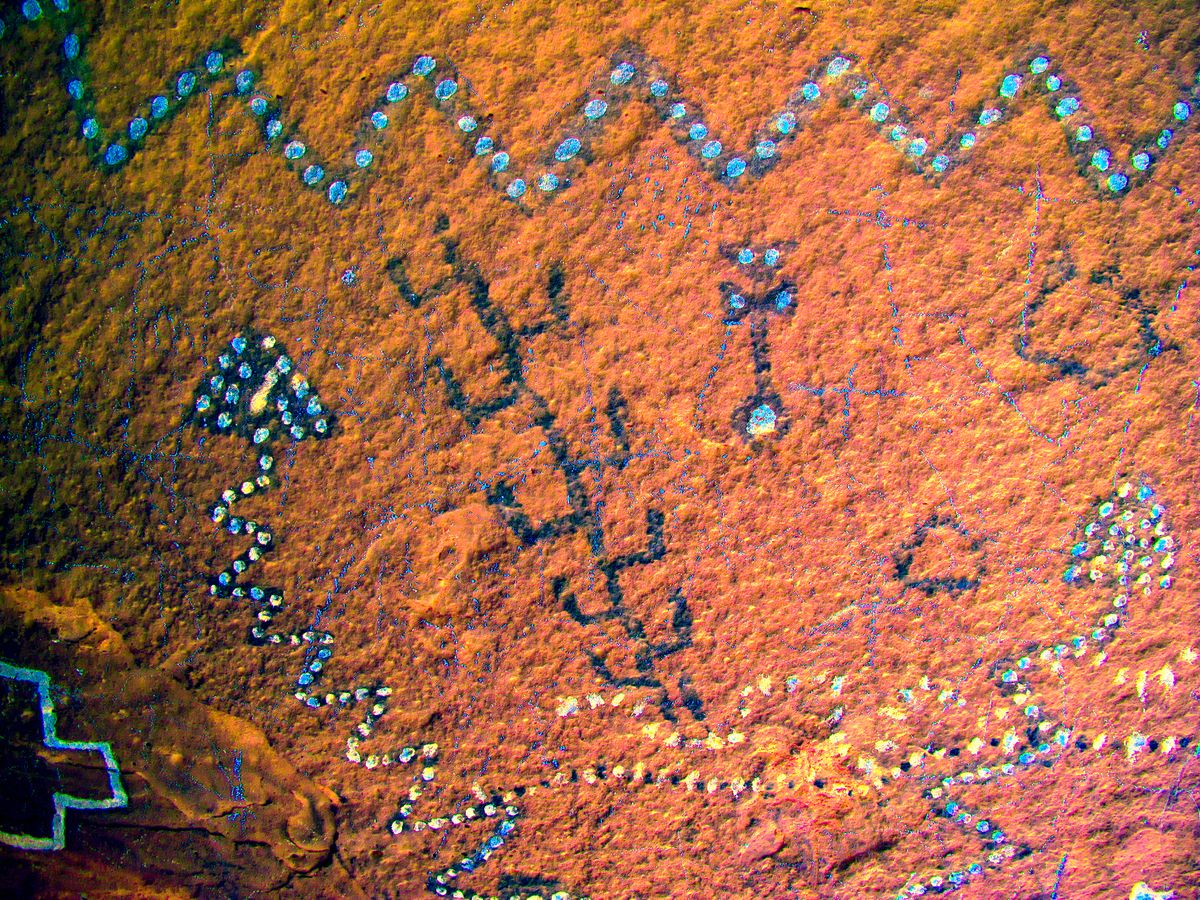
Dstretch has uncovered around 200 faded paintings at Angkor Wat, unknown figures at Norwegian rock art sites, and ancient Egyptian tomb images. All discoveries came from processing existing photos, not new photography.
Before and after transformation
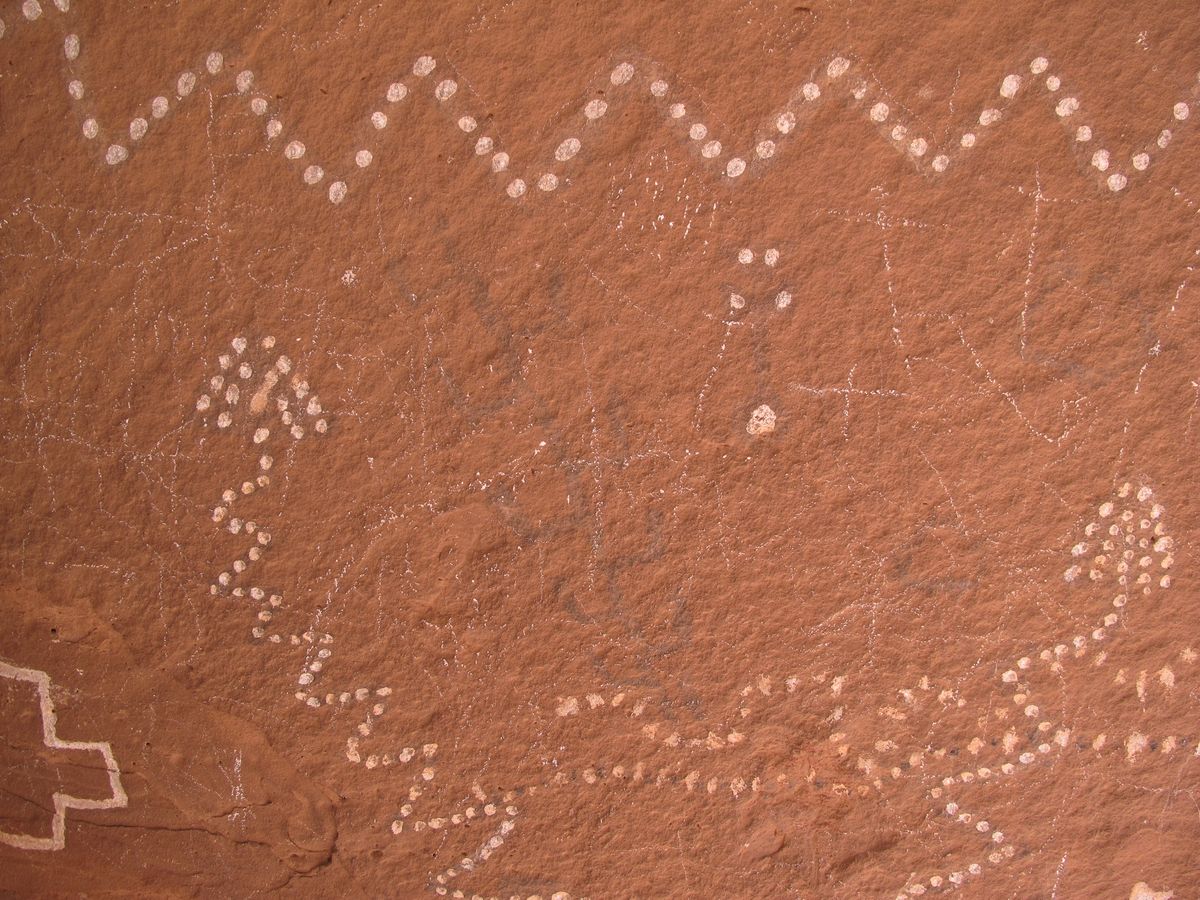
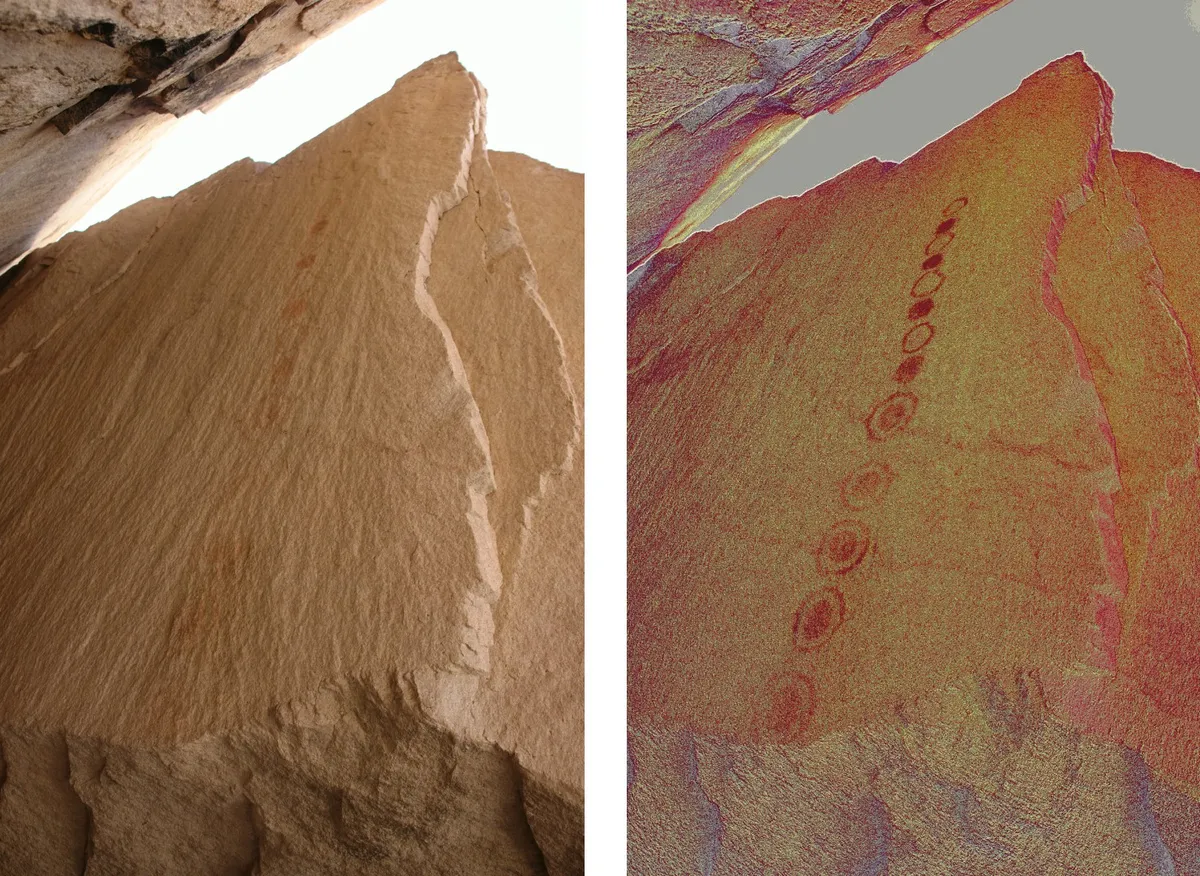
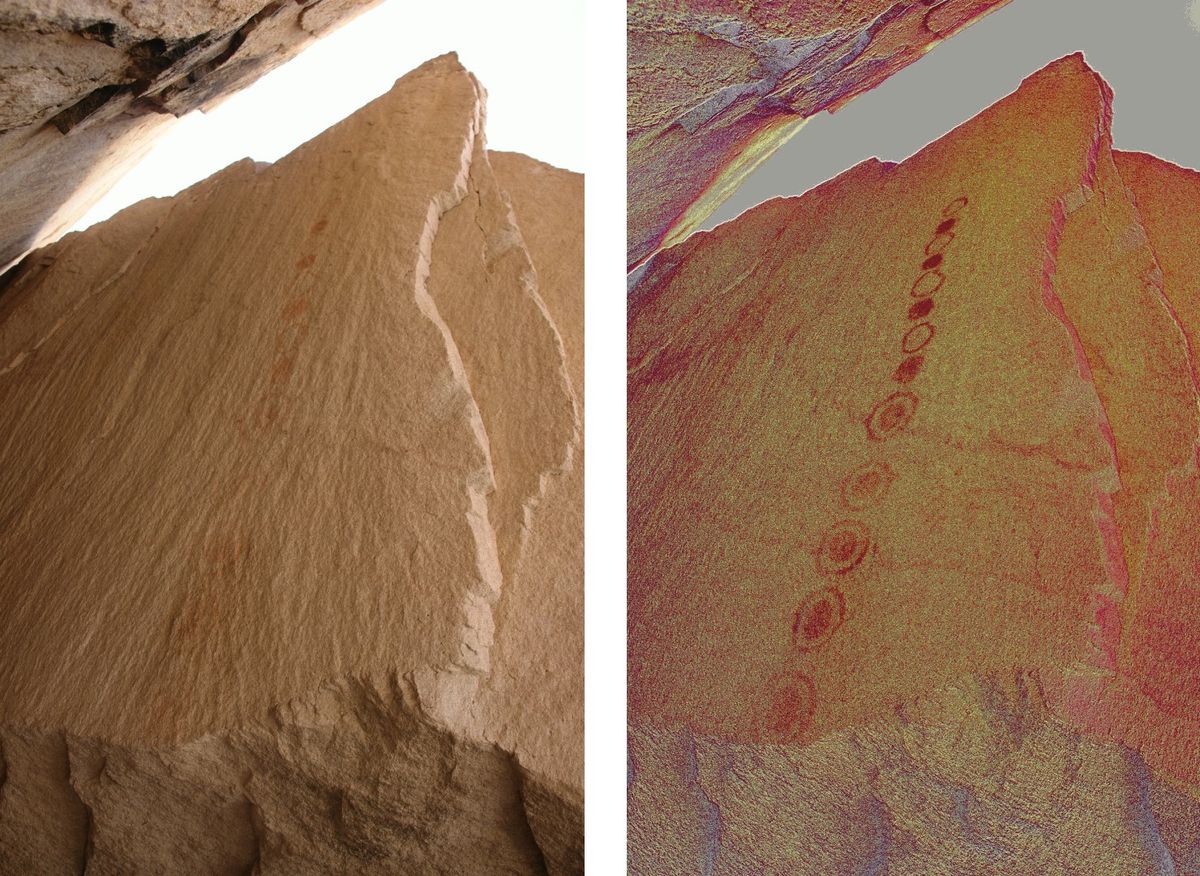
At Keyhole Canyon in Nevada, reddish dots on an untreated photo became a clear vertical line of circular petroglyphs after processing. Similar transformations reveal zigzag lines and animal figures in rock panels worldwide.
The short version
Decorrelation stretch, a NASA color science tool, can reveal details in faded images by statistically untangling colors, making it possible to recover archaeological discoveries without taking new photos.