From Foreign Affairs · Eghosa E. Osaghae · · 4m
Africa becomes the world's terror epicenter
The continent accounts for over half of global terrorism deaths, driven by state collapse, youth unemployment, and competition for rare minerals.
In brief
The continent accounts for over half of global terrorism deaths, driven by state collapse, youth unemployment, and competition for rare minerals. Africa now hosts more than half of global terrorism deaths and three of the four deadliest jihadi groups, a shift driven by weak states, youth desperation, and external…
The world moved on from terror
Twenty-five years after nine eleven, the United States and European allies shifted focus to China, Ukraine, and the Middle East, away from transnational extremism.
But Africa's terror is growing

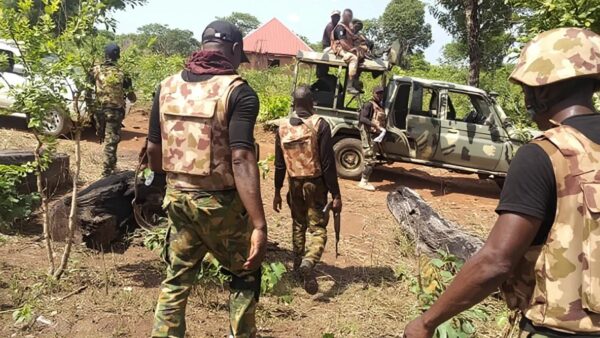
Africa accounts for more than fifty percent of all global terrorism-related deaths over the past five years, according to United Nations and Global Terrorism Index reports.
The deadliest jihadi groups
Three of the four deadliest jihadi groups in the world are now based in Africa: ISIS, Jamaat Nusrat al-Islam wal-Muslimin, and al-Shabab.
Six African nations most affected
Six of the ten countries most affected by terrorism are in Africa: Burkina Faso, the Democratic Republic of the Congo, Mali, Niger, Nigeria, and Somalia.
The Sahel's deadly growth

The Sahel experienced a seventeen percent growth in terrorist attacks between two thousand seventeen and two thousand twenty-five, with a record four thousand forty-three terrorism deaths in two thousand twenty-three alone.
Terror spreads beyond the Sahel
Terrorist activity now extends to western, central, and southern Africa including Benin, the Central African Republic, Mozambique, and Togo, many with little previous history of jihadi violence.
A global security risk emerges
Terrorist groups pose a growing danger to global security. As China and Russia increase efforts for economic and military leverage in Africa, they undermine international counterterrorism initiatives.
Youth without opportunity
People under thirty make up nearly seventy percent of Africa's population. More than two hundred seventy million African children are not in school in two thousand twenty-six.
Nigeria's out-of-school crisis
Nigeria has nearly twenty million youth out of school, the highest of any country in the world, creating a vast pool of potential recruits for extremist groups.
Persistent youth joblessness
Continental youth unemployment averages eighteen percent, but reaches more than seventy-five percent in countries like Djibouti where skilled employment opportunities are severely limited.
Extremist groups grow larger
Al-Shabab has more than fifteen thousand fighters and Jamaat Nusrat al-Islam wal-Muslimin has around six thousand, drawing from disaffected young Africans with few alternatives.
Politicians enable terrorist groups
Political leaders have built ties to bandit and terrorism groups to secure power. Nigerian state governors employed Boko Haram to intimidate election opponents.
External support fuels extremism
The nineteen seventy-nine Iranian Revolution spurred Shiite movements across Africa. Iran sponsored schools, mosques, and scholarships, creating lasting networks like Ibrahim al-Zakzaky's Islamic Movement of Nigeria.
Middle Eastern funding of Salafism
Qatar, Saudi Arabia, Turkey, and other Middle Eastern powers have funded Salafi extremism across Africa, which espouses violent imposition of Islamic law on everyone.
Transnational terror networks form
Al-Shabab was founded by Somali supporters of the Afghan mujahideen in the late nineteen eighties and pledged allegiance to al-Qaeda in two thousand twelve.
ISIS expands across Africa
ISIS has added numerous African groups to its network including Islamic State Sahel Province, Islamic State West Africa Province, Islamic State Central Africa Province, and Islamic State in Somalia.
Transnational benefits and costs
International affiliations bring African groups funding, weapons including drones, training in suicide bombing and IEDs, and foreign fighters. In return, they provide piracy, smuggling, trafficking, and illegal mining.
Minerals drive the new scramble
Russia exploited power vacuums left by U.S. and French withdrawal between two thousand twenty-two and early two thousand twenty-five, using defense pacts and mercenary forces to access minerals.
Lithium disputes aid terrorists
In Congo's Manono district, American, Australian, and Chinese firms dispute lithium deposits, making counterterrorism harder as international players refuse to coordinate and terrorists exploit rivalries.
Good governance kills terrorism
Former UN Secretary-General Ban Ki-moon said in two thousand fifteen, "Good governance is what will kill terrorism." Northern Ireland's Good Friday Agreement and Colombia's FARC peace deal show governance reforms work better than military operations.
“Good governance is what will kill terrorism.”
What to remember
Africa now hosts more than half of global terrorism deaths and three of the four deadliest jihadi groups, a shift driven by weak states, youth desperation, and external powers competing for minerals.
Read the TL;DR — this story on one card.