From Fortune · Emma Burleigh · · 2m
AI boom raises the question: do workers deserve a cut?
As companies cash in on AI productivity gains, some executives are rethinking whether employees should share the benefits.
In brief
As companies cash in on AI productivity gains, some executives are rethinking whether employees should share the benefits. Companies are capturing major productivity gains from AI, but some leaders now argue workers deserve a share of those benefits through better work, mental health support, or direct compensation…
AI is making workers more productive
U.S. employees who frequently use AI report higher burnout rates than those who do not, according to two thousand twenty-six data from Quantum Workplace. Companies are racing to capitalize on efficiency gains.
PepsiCo challenges the ROI obsession
Athina Kanioura, global chief strategy and transformation officer and CEO of PepsiCo Latin America, argues that requiring a business case for every AI application risks overlooking benefits that are harder to quantify.
“death by a thousand cuts”
Indeed redirects AI gains to creativity
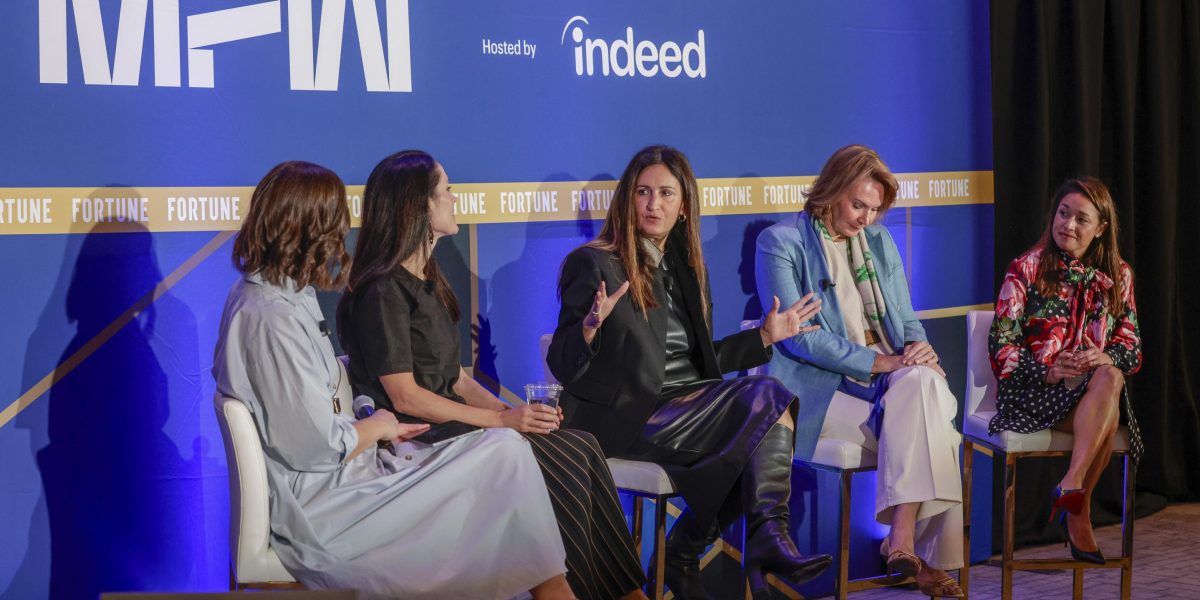
At Indeed, AI is helping software engineers write fifty percent more code and saving employees six hours a week, according to chief revenue officer Maggie Hulce.
“We're moving faster, we can innovate faster, we can invent faster, we can do fun work more and more”
Dropbox worries about cognitive atrophy
Dropbox chief people officer Melanie Rosenwasser said the eight billion dollar cloud company is examining the risk of cognitive atrophy as workers increasingly outsource their thinking to AI.
“When you outsource your thinking to AI, you become less intelligent in the process”
Dropbox experiments with analog offsites
Dropbox has experimented with device-free analog offsites and brought in a breath-work specialist for its executive team. Rosenwasser referenced research from MIT professor Eric So on the risks of outsourcing thinking.
“So we need to be very deliberate about how we're using these tools”
Bristol Myers Squibb weighs the split
At Bristol Myers Squibb, EVP and chief people officer Amanda Poole is weighing how much of the productivity gained from automating joyless work should go back to employees to support their well-being.
Bristol Myers Squibb explores a well-being quotient
The company has begun exploring a well-being quotient to decide how to split productivity gains between the business and its workforce. Poole said the company has not yet solved how to divide the gains.
“Let's say we're going to get twenty percent productivity: What part are we going to take back as a company, and what part are we going to give back?”
The question remains unresolved
As AI productivity gains accelerate, companies are still determining whether and how to share those benefits with employees through better work, mental health support, or direct compensation.
The one thing
Companies are capturing major productivity gains from AI, but some leaders now argue workers deserve a share of those benefits through better work, mental health support, or direct compensation.