From Fortune · Nick Lichtenberg · · 3m
Andreessen tells Fed: AI won't fix the economy
The venture capitalist warns the Federal Reserve that artificial intelligence will disappoint both optimists and pessimists by failing to boost productivity where it matters most.
In brief
The venture capitalist warns the Federal Reserve that artificial intelligence will disappoint both optimists and pessimists by failing to boost productivity where it matters most. Marc Andreessen told the Federal Reserve that AI will disappoint both utopians and doomers by failing to drive meaningful economic growth…
Andreessen's warning to the Fed
Marc Andreessen told the San Francisco Fed on Monday that both utopians and doomers will be disappointed by AI's real-world economic impact, specifically its scope and magnitude.
“Both utopians and the doomers are going to be disappointed”
The task force and its charge
Fed Chairman Kevin Warsh set up the Productivity and Jobs Task Force to assess how super intelligence will affect growth, prices and jobs.Andreessen co-leads it with Stanford economist Charles Jones and Microsoft executive Asha Sharma.
Baumol's cost disease explained
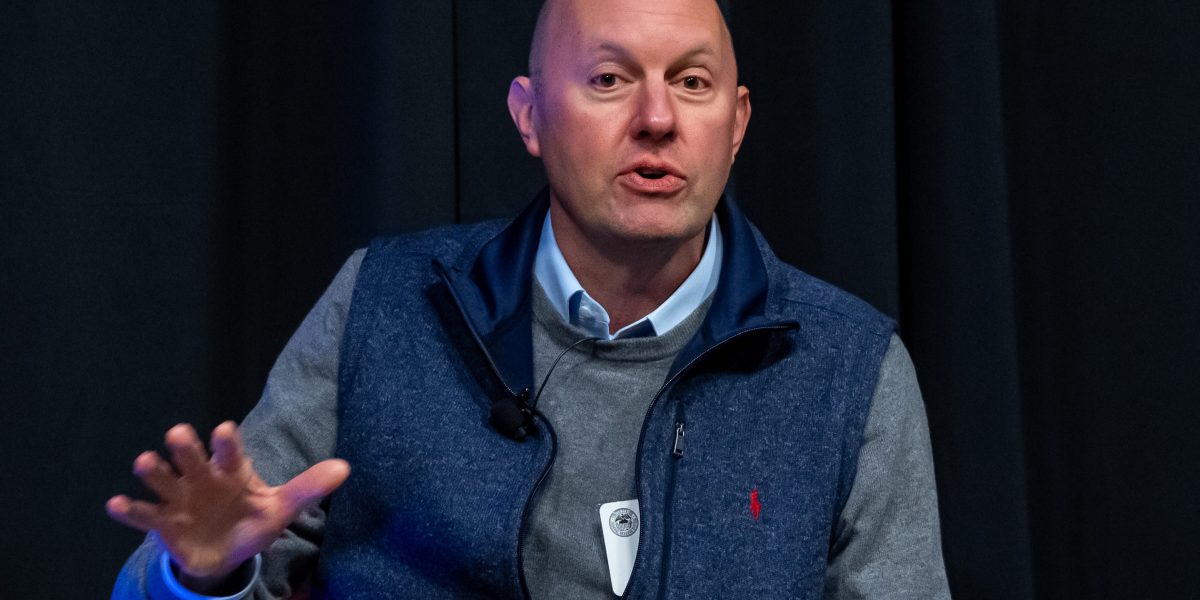
Andreessen described William Baumol's cost disease: flat-screen TVs get cheaper every year while hospital bills, tuition and rent keep rising. He argues AI won't cure it and could make it worse.
Andreessen's venture firm and AI boom
Andreessen Horowitz raised more than fifteen billion dollars in new funds in January as venture firms raced to keep up with the AI boom. Andreessen is Silicon Valley's best-known accelerationist.
Three Fed scenarios for AI
Fed board staff evaluated three scenarios.In one, AI lifts productivity and gains are broadly shared.In another, growth runs above average but automation raises unemployment.In the third, AI disappoints after investment and stocks fall.
Fast sectors versus slow sectors
Andreessen splits the economy in two.Fast sectors like consumer electronics and media adopt technology quickly and have rapidly falling prices.Slow sectors like health care, education, housing and law are legally prevented from rapid change.
Why slow sectors can't change
Machines cannot get an MD or prescribe medication. They cannot get admitted to the bar. Slow sectors pair restricted supply with subsidized demand, so prices can only go up.
“The machine cannot get an MD, cannot prescribe medication. The machine cannot get admitted to the bar.”
Healthcare's growing share of GDP
As prices crash in fast sectors, they shrink as a share of GDP and slow sectors take over.
The stagnation scenario
Andreessen said this could mean the AI revolution won't destroy jobs, but productivity growth and economic growth may not grow very much. The country may simply continue to stagnate.
Policy matters more than technology
Andreessen called himself extremely optimistic about AI as a magic formula for productivity. But he said policy decisions matter way more than what the technology is capable of, because without them the technology will simply…
Baumol's sixty-year-old diagnosis
Economist William Baumol worked this out in the nineteen sixties. A string quartet needs the same four musicians and playing time as in Mozart's day, but they must be paid modern wages, so live music…
Baumol's projection for healthcare
In his two thousand twelve book The Cost Disease, Baumol projected that if health costs kept growing at their recent pace, they would rise from fifteen percent of the average person's income in two thousand…
Providence Hospital's AI experience
Erik Wexler, CEO of nonprofit hospital system Providence, said AI tools that listen to appointments and write notes are saving some physicians two to four hours a day.
“life-changing”
Warsh's earlier case for AI
Before becoming Fed chair, Warsh wrote in the Wall Street Journal that AI will be a significant disinflationary force, increasing productivity and bolstering American competitiveness.
The Fed's next move
Warsh has asked his task forces for recommendations by year end.The Fed's next rate decision comes December ninth.
The one thing
Marc Andreessen told the Federal Reserve that AI will disappoint both utopians and doomers by failing to drive meaningful economic growth in sectors where productivity gains matter most.
Read the TL;DR — this story on one card.