From Fortune · Nick Lichtenberg · · 4m
From consulting to socks: how he saved the family mill
Lawson Glidden left 80-hour weeks in tech to run his family's struggling textile business. Profits have quadrupled since 2018.
In brief
Lawson Glidden left 80-hour weeks in tech to run his family's struggling textile business. Profits have quadrupled since 2018. Lawson Glidden quit tech consulting in 2018 to lead Minus33, his family's merino-wool company in New Hampshire. Since then, profits have roughly quadrupled and revenue has grown two point five…
The sock inspector
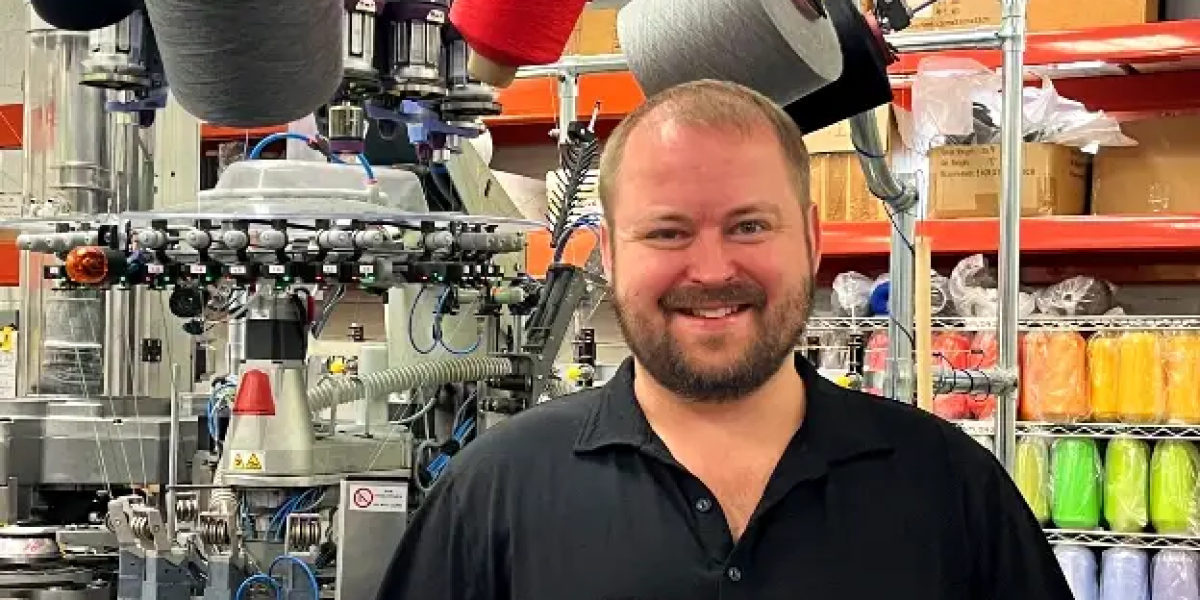
Lawson Glidden, thirty-nine, is president of Minus33, a merino-wool base layer and sock maker in Ashland, New Hampshire. He wears the company's products almost entirely and checks quality control after hikes.
“If my sock doesn't fit just right, then when I get back from my hike, I go to the sock department, and I check in on our QC boards.”
Five generations of textiles
Minus33 is the latest version of a textile business Glidden's family has run in Ashland since nineteen sixteen. His father, a textile engineer, built it into a fifty million dollar company in the nineteen nineties.
The collapse
By around two thousand two, the family's mill was a zero-dollar, three-person company. U.S. textile mills employed about five hundred thousand people in January nineteen ninety but only about two hundred ninety-eight thousand by January…
The consulting years
Before returning home, Glidden was a senior technical consultant for a regulatory-software company, working eighty-hour weeks. One year he calculated he had spent the equivalent of a full month on airplanes.
Coming home
In two thousand eighteen, Glidden's father called and asked if he wanted to work at the family business. He accepted. Two years later, he was president of Minus33.
The numbers
Since joining Minus33 in two thousand eighteen, Glidden said profits have roughly quadrupled and revenue is up about two point five to three times.
Learning to make socks
When Glidden arrived, he bought sock machines and learned to program and run them. Minus33 started manufacturing in the U.S. in two thousand nineteen. He programmed and designed the machines himself.
The sock philosophy
Glidden makes socks that hug the foot like a second skin to eliminate friction, using less nylon and more wool.
Why they look plain
Glidden's socks look smaller on the shelf than competitors' because they fit better, not because they are stuffed with synthetic material. He rejects the idea of adding decorative elements to boost sales.
“I've got sweaty feet, and I just kept making socks until I no longer got blisters and I was comfortable all day.”
The founder's advantage
Glidden's advice to other founders is to use the product every single day. If you do, customer complaints become your complaints and you fix them yourself.
“Use your product every single day. If you use it every single day, then your customer's complaints become your complaints.”
Life in the Lakes Region
Ashland, a town of fewer than two thousand people, sits in New Hampshire's Lakes Region. Squam Lake is five minutes away. Boston is an hour and a half down the highway.
“Yes, I live where people go on vacation.”
The shotgun strategy
When the New York customers disappeared as apparel production moved overseas, Glidden's father tried multiple ventures: joint ventures overseas, a steam laundry, snowmobile jackets.
Word of mouth
Glidden's father made merino-wool base layers for his hunting buddies. They told him to sell them. Minus33 grew by word of mouth for about fifteen years before Glidden arrived.
The marketing ladder
When Glidden arrived, Minus33 was almost entirely B2B and almost nobody knew it existed. He built marketing in rungs: pay-per-click advertising in two thousand nineteen, a rebuilt website in two thousand twenty, third-party marketplaces.
“I like to say that our website could have just been, 'Congratulations, you found us.'”
Taking control on Amazon
Glidden moved Minus33 from Amazon's program where the platform buys inventory and resells it to the one where Minus33 owns inventory and Amazon sells it. That change raised profitability by a lot.
“Instead of being at the whims of Amazon and Walmart and Target and whatever they decide for their purchase, you can decide what's for sale, what the advertising is.”
No debt, many small bets
Glidden runs Minus33 without borrowing money.He prefers many small bets sized so a miss never means a layoff.
The inventory rule
In two thousand nineteen, Glidden set a rule: the company cannot double in size without two years' worth of inventory. When COVID hit, competitors ran out of product and Minus33 doubled in size.
Seventy-two shareholders
Minus33 has no venture capital board. Seventy-two individual shareholders, most of them family, get dividends based on their stakes. Glidden owns about five percent after working to increase his share.
The family's return
Twenty years ago, many shareholders thought the company was going away. Now returning customers grow every year by thirty percent or whatever, and the family is thrilled to hand off shares to their kids again.
“I don't believe I could do anything to lose their adoration and love at this point. Now it's coming back like a rocket ship.”
What to remember
Lawson Glidden quit tech consulting in 2018 to lead Minus33, his family's merino-wool company in New Hampshire. Since then, profits have roughly quadrupled and revenue has grown two point five to three times.