From Fortune · Nick Lichtenberg · · 3m
Gen Z isn't giving up on wealth. It's just asking parents for help.
A new U.S. Bank report shows young people still want traditional wealth-building, but the math has changed so much that parents now feel obligated to bankroll their kids' futures.
In brief
A new U.S. Bank report shows young people still want traditional wealth-building, but the math has changed so much that parents now feel obligated to bankroll their kids' futures. Gen Z isn't abandoning wealth-building for crypto and meme stocks. Instead, they're staying on the traditional path but leaning heavily on…
Gen Z isn't giving up on wealth
U.S. Bank's 2026 Wealth Report shows young people are still building wealth the traditional way, leaning on stock markets and brokerage accounts rather than crypto or meme stocks.
The financial nihilism myth
Despite the meme circulating in finance coverage, only 12% of Gen Z and 14% of Millennials actually hold cryptocurrency. Seventy-six percent of Gen Z still say traditional investing is the best path to long-term wealth.
The math doesn't work anymore

Median home prices sit around 430,000 dollars while median household income is closer to 85,000 dollars. Young people need 130,000 to 150,000 dollars in annual income to afford a home, making parental help increasingly necessary.
Parents now feel guilty
Parents used to resent grown children asking for money, but now they feel obligated to help because the economy is so much harder than 30 years ago. The stigma around financial support is fading.
“I've got to help them because it is so much harder than it was 30 years ago.”
A house worth millions
One U.S. Bank executive bought her home in Maplewood, New Jersey for 253,000 dollars in her 20s. It's now worth 2.1 million dollars. The house didn't change, but the price did.
“the house didn't change, so it's like how does somebody in their 20s start out with a $2.1 million house?”
Two-thirds skip the down payment
Millennials and Gen Z are now starting wealth-building with brokerage accounts instead of home down payments. Parents and grandparents increasingly step in to help with housing while young people invest in stocks.
Parental obligation is surging
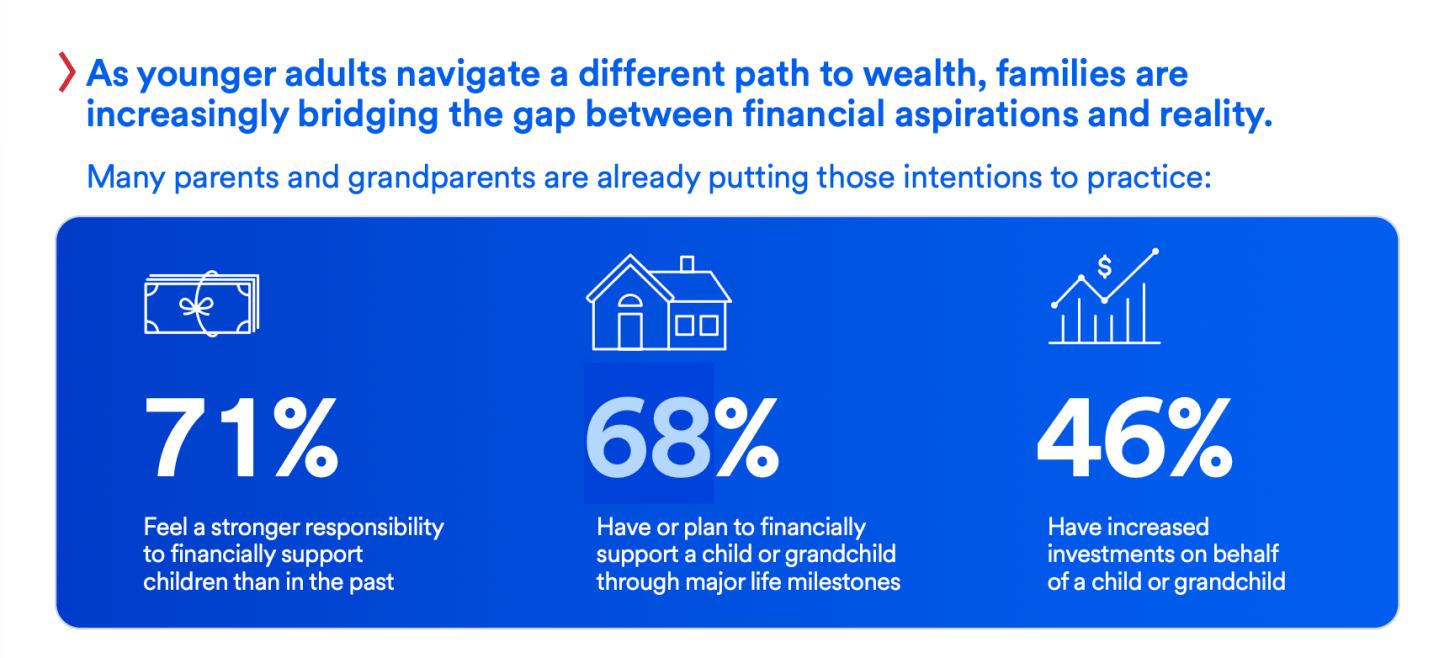
Seventy-one percent of parents say they feel more responsible for supporting their children financially than parents did in the past. Sixty-eight percent have already provided or plan to provide support for major milestones.
Gen Z parents feel it most
Eighty-three percent of Gen Z parents and 84 percent of Millennial parents report feeling heightened responsibility to support their children financially, compared with just 52 percent of Boomer parents.
Young people feel stuck
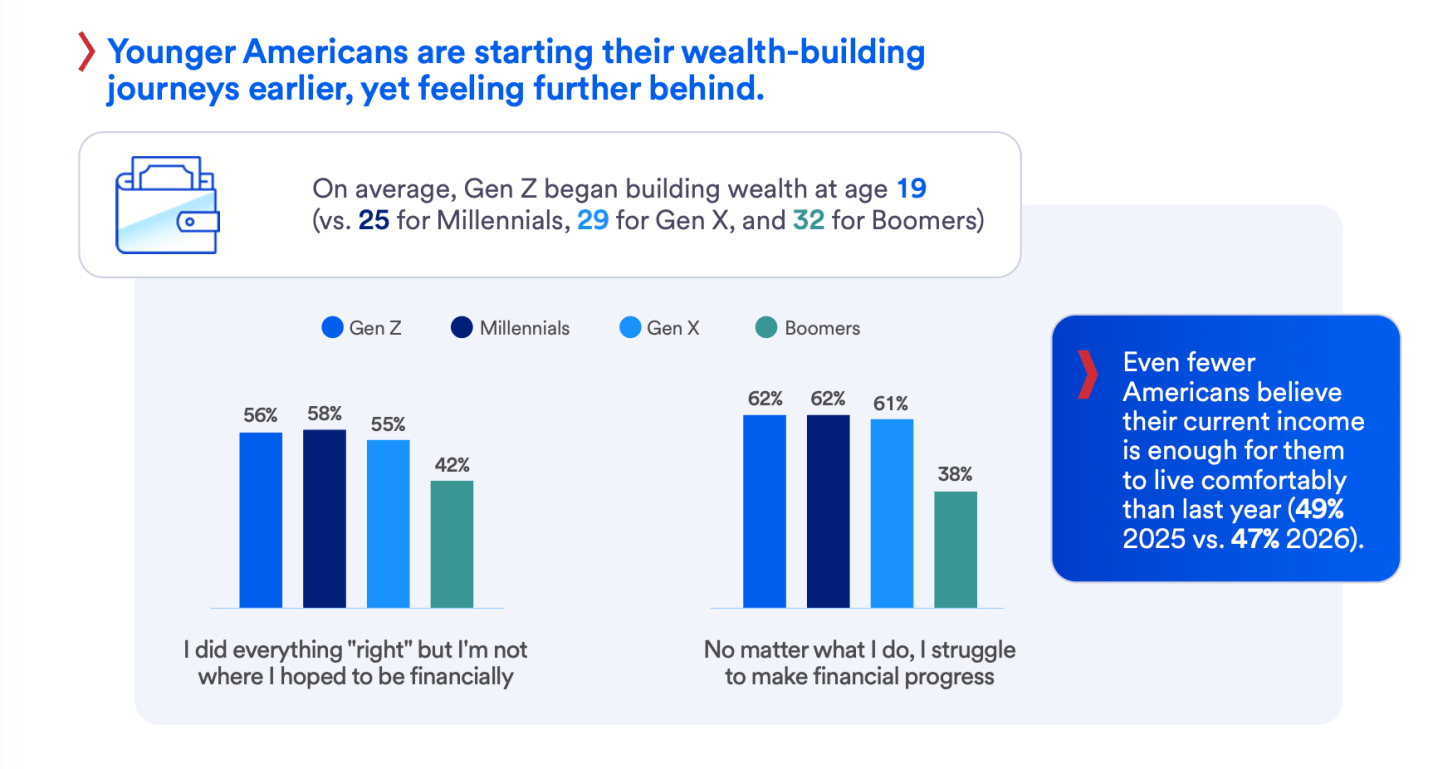
Fifty-six percent of Gen Z say they did everything right financially but aren't where they expected to be. Sixty-two percent say they struggle to make financial progress no matter what they do.
Homeownership dreams are fading
Eighty-six percent of Americans still call homeownership a marker of financial success, but only 22 percent of Gen Z non-homeowners think they'll own within five years. Twenty-nine percent have already given up.
The gender gap in confidence
Women start building wealth slightly earlier than men at 27 versus 28, but only 26 percent felt confident when they started compared with 41 percent of men. Yet 31 percent of Gen Z women now feel prepared, the highest share of any female cohort.
First generation wealth builders
Forty-four percent of Americans have no family financial role model or inheritance expectation. They prioritize saving, budgeting and debt paydown before taking investment risk, and 71 percent of their parents feel obligated to help them get ahead.
The old rules still apply
Gen Z isn't abandoning traditional wealth-building. It's leaning harder on family to stay in the game because the economic math changed and parents feel obligated to help their kids keep up.
The bottom line
Gen Z isn't abandoning wealth-building for crypto and meme stocks. Instead, they're staying on the traditional path but leaning heavily on parental financial support because housing and other milestones have become unaffordable without it.