
From Fortune · Nick Lichtenberg · · 4m
How the baby boom broke American marriage
A new study links the divorce surge of the 1970s to the sheer size of the boomer generation, with ripples still felt across housing, happiness and Gen X childhoods.
In brief
A new study links the divorce surge of the 1970s to the sheer size of the boomer generation, with ripples still felt across housing, happiness and Gen X childhoods. Economist Tereza Ranošová argues the baby boom's size created a marriage market shock in the nineteen seventies, triggering divorces that reshaped…
Boomers dominate housing
Empty-nest boomers own 28% of U.S. homes with three or more bedrooms, compared with 16% for millennial parents, according to Redfin analysis of Census data. The first-time homebuyer age has jumped to 40.
A marriage market shock
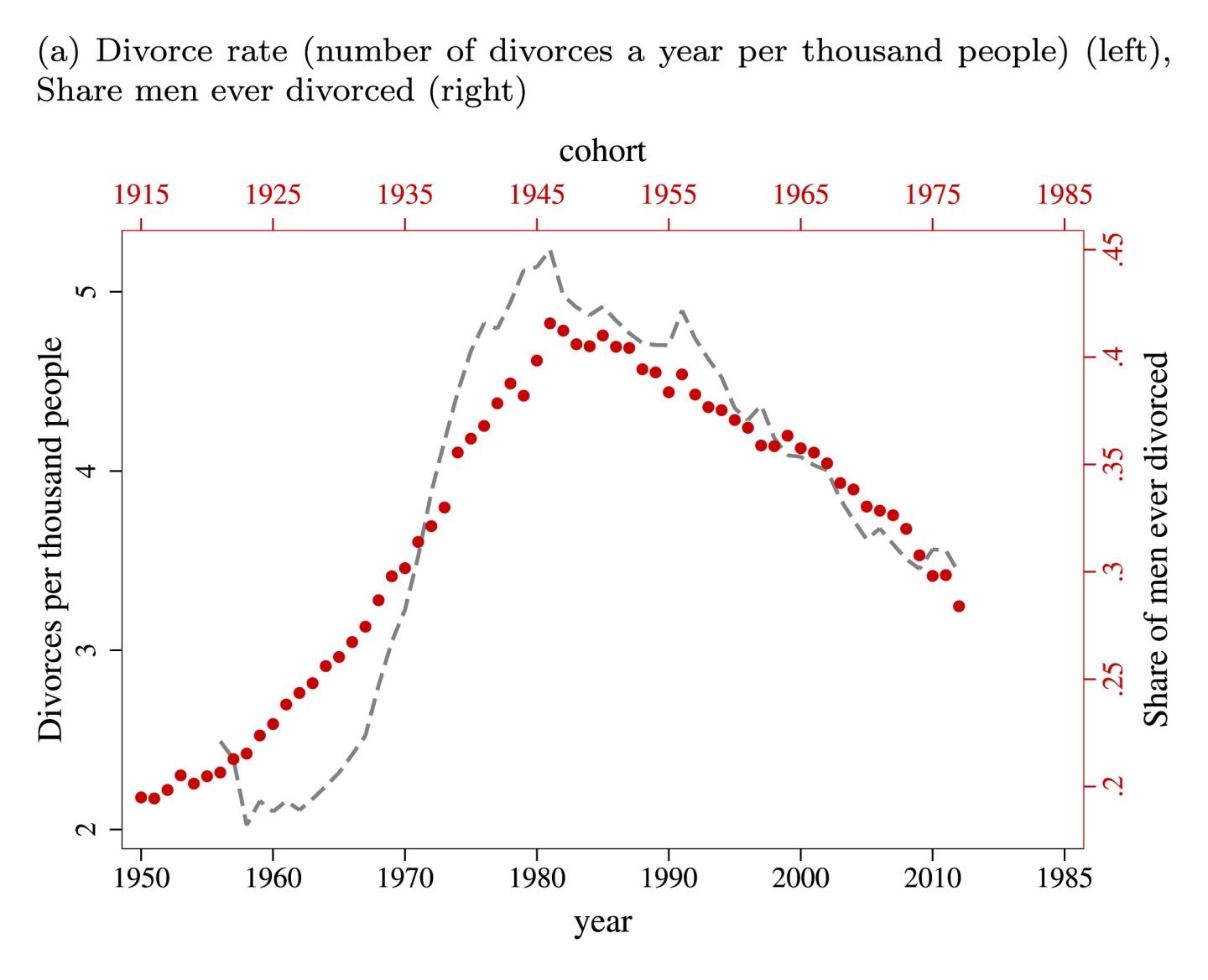
Economist Tereza Ranošová argues in the European Economic Review that the baby boom created a supply shock in the marriage market of the nineteen seventies.The U.S.divorce rate more than doubled between 1960 and 1980.
Why men left their wives
As men typically match with younger women, the boom's huge cohorts reaching marrying age gave Silent Generation men an unusually large supply of younger women.
The mismatch made divorce worthwhile
Young women were abundant and desperate for options, making it more worthwhile for them to match with already married men. When younger women are abundant, some men divorce to rematch with them, Ranošová writes.
“When younger women are abundant, some divorce to rematch with them.”
A third of divorces explained

Ranošová found evidence that some marriages ended in divorce and remarriage.She estimates the boom brought about a third at most of the divorces, with shifting social norms making divorce possible once the norm was broken.
“I would say likely about a third at most.”
Gen X grew up in divorce
In 1960, 73% of American children lived with two parents in their first marriage. By 1980 it was 61%. Nearly every alternative rocker of the era came from what was called a broken home.
The half-divorce myth was real for Gen X
Before 1950, fewer than 2% of children lived with a single parent who was divorced, separated or never married.By 2000, nearly 25% did.
Divorce became the norm
The divorce rate peaked around 1980, and each marriage cohort since has done better.By 2024, the refined divorce rate was down to 14.2 per 1,000 married women.What stuck from the 1970s was the norm.
Fewer marriages, less happiness
The divorce boom's longest legacy may be fewer marriages. University of Chicago economist Sam Peltzman found Americans' happiness score ran at roughly plus twenty points from 1972 through 2018, then crashed 22.2 points in 2020.
A segregated happiness society
Married Americans scored roughly 31 points higher on Peltzman's happiness scale than unmarried ones for 50 years.After 2020, the unmarried went from near break-even to minus 15.We have a segregated happiness society, Peltzman said.
“We have a segregated happiness society. I can't see that persisting without consequences.”
The pig exits the python
The boomer generation of 76 million set the terms of every market it entered: marriage in the 1970s, then housing, and now care as the bulge reaches the years when it needs looking after.
The takeaway
Economist Tereza Ranošová argues the baby boom's size created a marriage market shock in the nineteen seventies, triggering divorces that reshaped American family life and left lasting effects on housing, happiness and generational attitudes toward marriage.
Read the TL;DR — this story on one card.