From Fortune · Orianna Rosa Royle · · 1m 50s
McConaughey spent a desert weekend reading 20 years of bad reviews
The Oscar winner separated useful criticism from personal attacks, then learned the lesson applies to every discipline and every leader.
In brief
The Oscar winner separated useful criticism from personal attacks, then learned the lesson applies to every discipline and every leader. Matthew McConaughey read two decades of negative reviews in the desert and concluded that only constructive criticism from genuine fans is worth learning from. Originally reported by…
McConaughey's desert review retreat
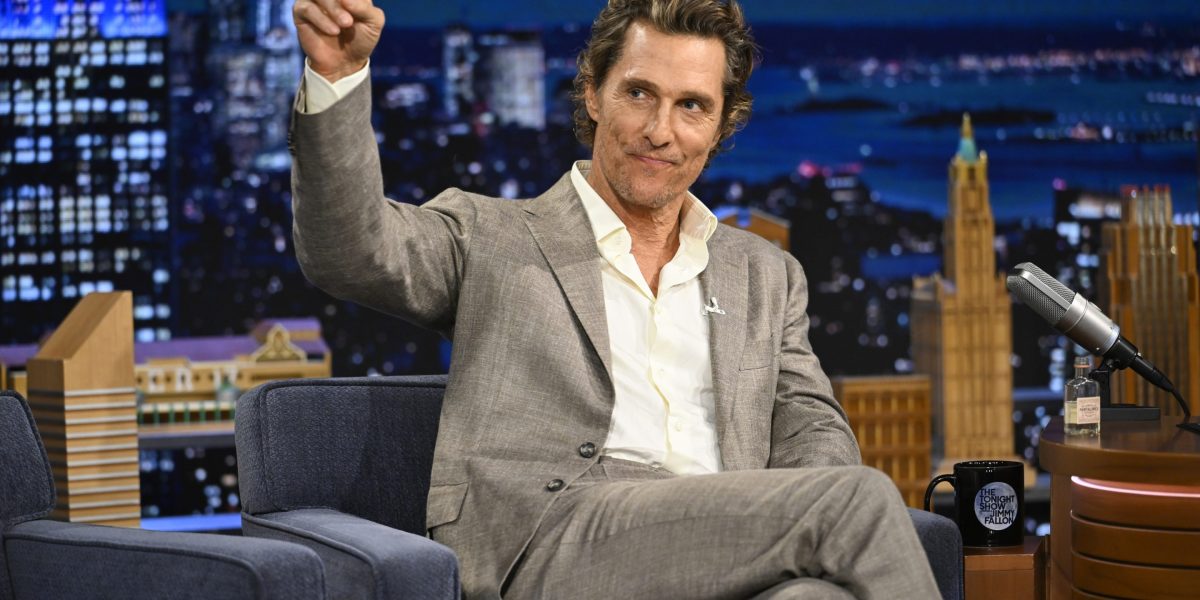
Matthew McConaughey, an Oscar winner with an estimated two hundred million dollar net worth, spent a weekend in the desert reading twenty years of negative reviews about himself.
“I took them on as a thick book… not all the positive, the negative ones, and I sat with them.”
Two kinds of critics emerged
McConaughey identified critics who disliked him personally from the start, regardless of the film, versus those offering genuine constructive feedback about his performance.
“Some of the reviews, what I learned is that, from the very first sentence, this person has it out for me.”
Learning from real critics
The useful reviews came from fans who wanted more from his work. They applauded some things but highlighted where he fell short, offering genuine learning opportunities.
“This person got a point. They're actually a fan of mine, and they didn't get from my performance what I was actually hoping they would've got.”
Separating noise from signal
McConaughey concluded that some critics will always dislike you, but others offer real feedback worth learning from. The key is knowing which is which.
“Some are going to write bad about you or wish you the worst no matter what, because they just don't like you from afar.”
The desert trip timing
McConaughey's team told Fortune the West Texas desert trip near Marfa happened around two thousand eighteen or two thousand nineteen while he was writing Greenlights.
Other leaders embrace feedback
Jason Bateman reads all reviews for his television and film work because they shape how he performs for audiences. Jensen Huang, Nvidia's CEO, criticizes everything his staff shows him.
“I am doing these projects for public consumption, so it matters to me what the public thinks about them.”
Testing feedback in hiring
Gagan Biyani, CEO of Maven and cofounder of Udemy, gives candidates live critiques during interviews. He calls it the most telling part of the process and often decides hiring.
“If this is their nightmare, the candidate freezes up or even gets offended. That highlights straight away that they are not a fit for the company.”
Feedback separates the fit from the rest
Biyani found that candidates who get excited by criticism are more likely to join his company, while those who freeze or take offense signal they are not a cultural fit.
“If this is exciting, they are more likely to join.”
The bottom line
Matthew McConaughey read two decades of negative reviews in the desert and concluded that only constructive criticism from genuine fans is worth learning from.