From Fortune · Nicholas Gordon · · 3m
Nvidia CEO's affair sparks China chip crackdown
Jensen Huang's resignation and a scandal over chip smuggling prompt the U.S. to tighten export controls on advanced semiconductors to Southeast Asia.
In brief
Jensen Huang's resignation and a scandal over chip smuggling prompt the U.S. to tighten export controls on advanced semiconductors to Southeast Asia. The U.S. Department of Commerce tightened chip export controls to Southeast Asia after a scandal involving Nvidia's CEO, closing loopholes that let Chinese firms access…
Huang resigns as CEO
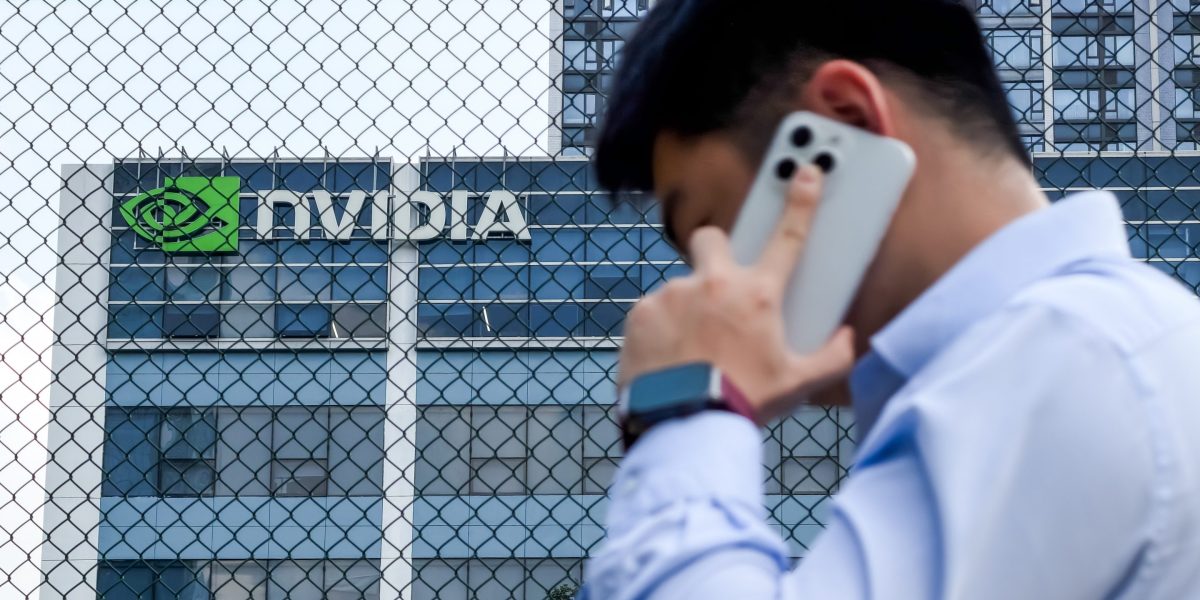
Jensen Huang resigned as Nvidia's CEO on Thursday, removing a major voice opposing U.S. restrictions on chip sales to China.
Huang's stance on China policy
Huang had argued that U.S. chip restrictions would encourage China to build its own semiconductor industry, and that keeping Chinese companies dependent on U.S. technology was better policy.
The scandal emerges
Huang had an affair with Alice Huang, a former executive at Megaspeed, a Singaporean company suspected of funnelling controlled chips to China, damaging his credibility on export controls.
Commerce tightens the rules
On Monday morning, the U.S. Department of Commerce released an interim final rule closing a loophole that allowed Chinese companies to access AI chips through overseas data centers.
New countries targeted
The rule expands export controls to Indonesia, Malaysia, Singapore, Thailand, and Brazil, requiring licenses to export advanced AI chips to data centers in those countries.
Remote access deadline
Data centers already serving Chinese companies have ninety days from the rule's effective date to obtain a license, effectively closing the remote access loophole.
Congress pushes harder
Congress is debating several bills to codify and expand export controls. Hanna Dohmen at Georgetown's Center for Security and Emerging Technology said the Huang scandal adds momentum to pass them.
“The Huang scandal adds momentum to push those bills through, and the chance of those passing are likelier than ever.”
Remote Access Security Act
The first bill seeks to close the remote access loophole, giving Commerce authority to license and penalize foreign companies accessing advanced U.S. AI chips from abroad. The House passed it in January.
Chip Security Act
The second bill requires advanced chips to ship with security measures like location tracking to prevent diversion. It also requires exporters to promptly disclose evidence of smuggling.
AI Overwatch Act
The third bill would treat advanced chips like weapons, requiring the administration to notify Congress before any sale to China or other adversaries, which could block the deal.
MATCH Act
The fourth bill largely bans deep ultraviolet lithography tools across China and imposes broader restrictions on facilities associated with major Chinese chipmakers like SMIC and CXMT.
Southeast Asia caught in middle
Singapore and Malaysia face pressure from the U.S. to prevent chip smuggling while wanting to become data center hubs. Malaysia's Prime Minister Anwar Ibrahim sees data centers as a future industry.
China builds its own chips
China is developing its own semiconductor ecosystem. DeepSeek has led the drive to get Chinese AI models running on Huawei's Ascend processors instead of relying on Nvidia chips.
Huawei chips lag behind
Huawei's Ascend processors are not as good as the best Nvidia AI processors, particularly for training models. China may lack the capacity to meet all its AI computing power needs domestically.
H200s in Hong Kong
Roughly six hundred thousand H200s are reportedly gathering dust in Hong Kong. If Chinese companies cannot access Nvidia chips overseas, Beijing may allow those chips to flow into China.
The bottom line
The U.S. Department of Commerce tightened chip export controls to Southeast Asia after a scandal involving Nvidia's CEO, closing loopholes that let Chinese firms access advanced processors remotely.
Read the TL;DR — this story on one card.