From Fortune · Clare Whitton · · 4m
San Gennaro at 100, Little Italy fades from the map
New York's oldest Italian festival marks a century as the neighborhood that birthed it empties of Italian Americans.
In brief
New York's oldest Italian festival marks a century as the neighborhood that birthed it empties of Italian Americans. The Feast of San Gennaro celebrates its centennial as Little Italy shrinks and Mayor Zohran Mamdani's omission of the neighborhood from a city map raises questions about how to honor immigrant legacies…
A century of celebration begins
The Feast of San Gennaro, founded in 1926, is the largest and longest-running Italian festival in the United States. It celebrates its one hundredth anniversary this year on Mulberry Street in Manhattan.
Millions came seeking a better life
Between eighteen eighty-one and nineteen twenty, over four point five million Italians immigrated to America. Thousands from southern Italy settled on Manhattan's Lower East Side to form Little Italy.
They faced suspicion and discrimination
Italian immigrants encountered overcrowded tenements, difficulty finding work, racial discrimination and suspicion of their southern Italian Catholic practices. Irish Catholics and local Protestants viewed Italian religious processions as too pagan and idolatrous.
A saint from Naples inspires a feast
In nineteen twenty-six, parishioners of the Church of the Most Precious Blood, built in nineteen oh four on Baxter Street, organized a tribute to San Gennaro, a popular holy figure from southern Italy venerated for centuries.
San Gennaro's ancient story
An early Christian bishop, Gennaro was beheaded outside Naples on September nineteenth in AD three hundred five during the Diocletian Persecutions. Southern Italians attributed miracles to him, including extinguishing Mount Vesuvius in sixteen thirty-one.
Blood that liquefies on feast days
Since at least thirteen eighty-nine, two vials purportedly containing San Gennaro's blood have been venerated in Naples for their inexplicable ability to liquefy on his feast days. Italians viewed liquefaction as a sign of protection and solid blood as a looming catastrophe.
The first New York feast in nineteen twenty-six
The inaugural Feast of San Gennaro featured a three-foot statue of the saint hoisted on men's shoulders. Devotees tacked dollar bills to his body. A purported bone fragment of Gennaro was placed in a reliquary hung around the saint's neck.
Police try to stop the procession
In nineteen twenty-eight, New York Police Commissioner Joseph Warren prohibited the procession, arguing that dollar bills pinned to the statue represented the profanation of sacred religious symbols. A New York Supreme Court judge reversed the decision on religious liberty grounds.
“profanation of sacred religious symbols”
Outsiders embrace the feast after the war
After World War II, non-Italians began attending the feast. By nineteen forty-nine, thousands of people of various ethnic backgrounds watched Italians dance to folk songs beneath colored string lights casting green, white and red along the streets.
Attendance explodes across decades
In the nineteen sixties, chartered buses brought Italians from states as far away as Maine and Ohio. By the nineteen seventies, the feast had three million visitors a year. Young men climbed greased-up steel poles for cash prizes until safety concerns ended the practice in the nineteen eighties.
Mafia and tourism strain the neighborhood
In two thousand seven, some Little Italy residents petitioned Mayor Michael Bloomberg to cancel the festival, citing tourist strain and mafia interference. In nineteen ninety-six, nineteen members of the Genovese crime family were arrested for gambling, collecting dues from vendors and stealing money off Gennaro's statue.
Mayor Mamdani omits Little Italy from map
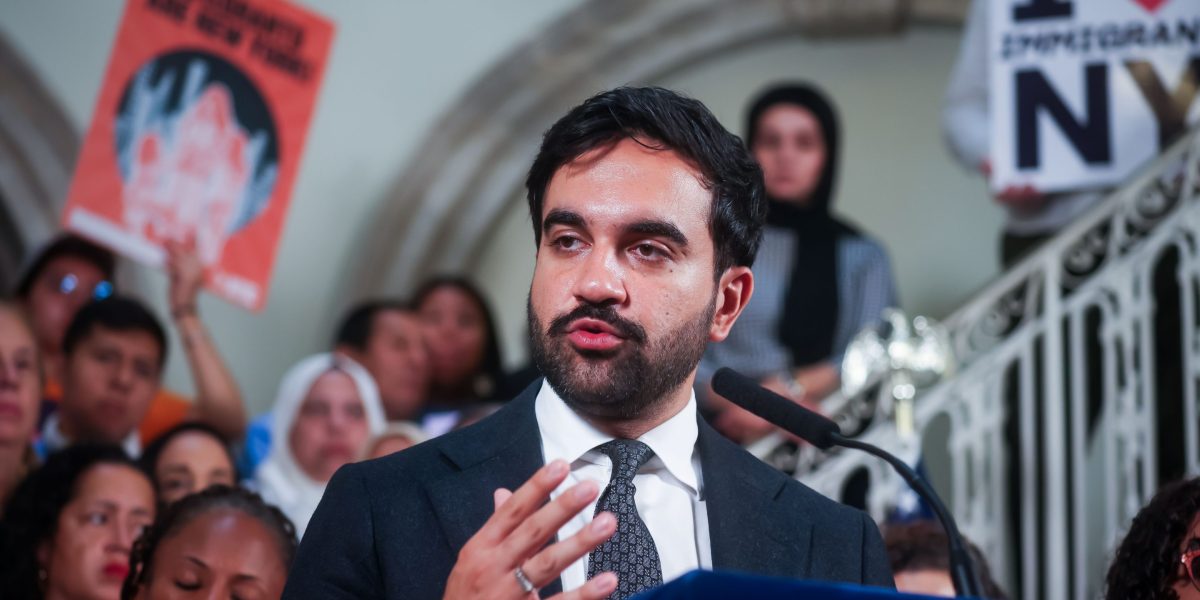
Two months before the centennial, Mayor Zohran Mamdani omitted Little Italy from a map of the city's immigrant enclaves, sparking immediate backlash. While Mamdani vowed to reinsert the neighborhood, some argued the omission reflected the dwindling number of Italians living along Mulberry Street.
A centennial amid questions of legacy
The one hundredth festival is dedicated to Italian Americans who contributed to New York's birth. The centenary raises a question: How should immigrants who built the city be honored as descendants have left their old neighborhoods for different parts of the country?
The headline
The Feast of San Gennaro celebrates its centennial as Little Italy shrinks and Mayor Zohran Mamdani's omission of the neighborhood from a city map raises questions about how to honor immigrant legacies.