From Fortune · Nick Lichtenberg · · 4m
Wall Street's 'silly season' meets a hiking Fed
Bearish forecasters, wild single-day swings, and a Fed poised to hike for the first time since 2023 all land in the same week.
In brief
Bearish forecasters, wild single-day swings, and a Fed poised to hike for the first time since 2023 all land in the same week. The AI trade has survived on cheap money and unbroken earnings growth; a Warsh-led Fed hiking into a late-stage bubble is the one variable bears were not counting on. Originally reported by…
Crazy days, silly season
Wall Street has run out of sober vocabulary for this market. Analysts are calling it crazy, silly, and late-stage, all in the same week the Fed may start tightening.
The most detailed bear case
Capital Economics screened eight categories of market indicators and found most at or near levels that have historically come right before major peaks.
A 30% crash, penciled in
The firm now expects the S&P 500 to start cracking next year and eventually fall at least 30% from its high, which would rank among the seven worst crashes in a century.
Half a trillion in a day
Microsoft's market value rose $450 billion on July 30. The next day Apple's fell $360 billion, while Amazon gained $388 billion and Meta had dropped $102 billion.
Measured in Houstons
The numbers got so large that economist Owen Lamont converted them. Microsoft's one-day gain equaled 1.04 Houstons of assessed property value; Apple's loss matched 3.6 Hurricane Sandys.
“1.04 Houstons”
Third-wildest day in years
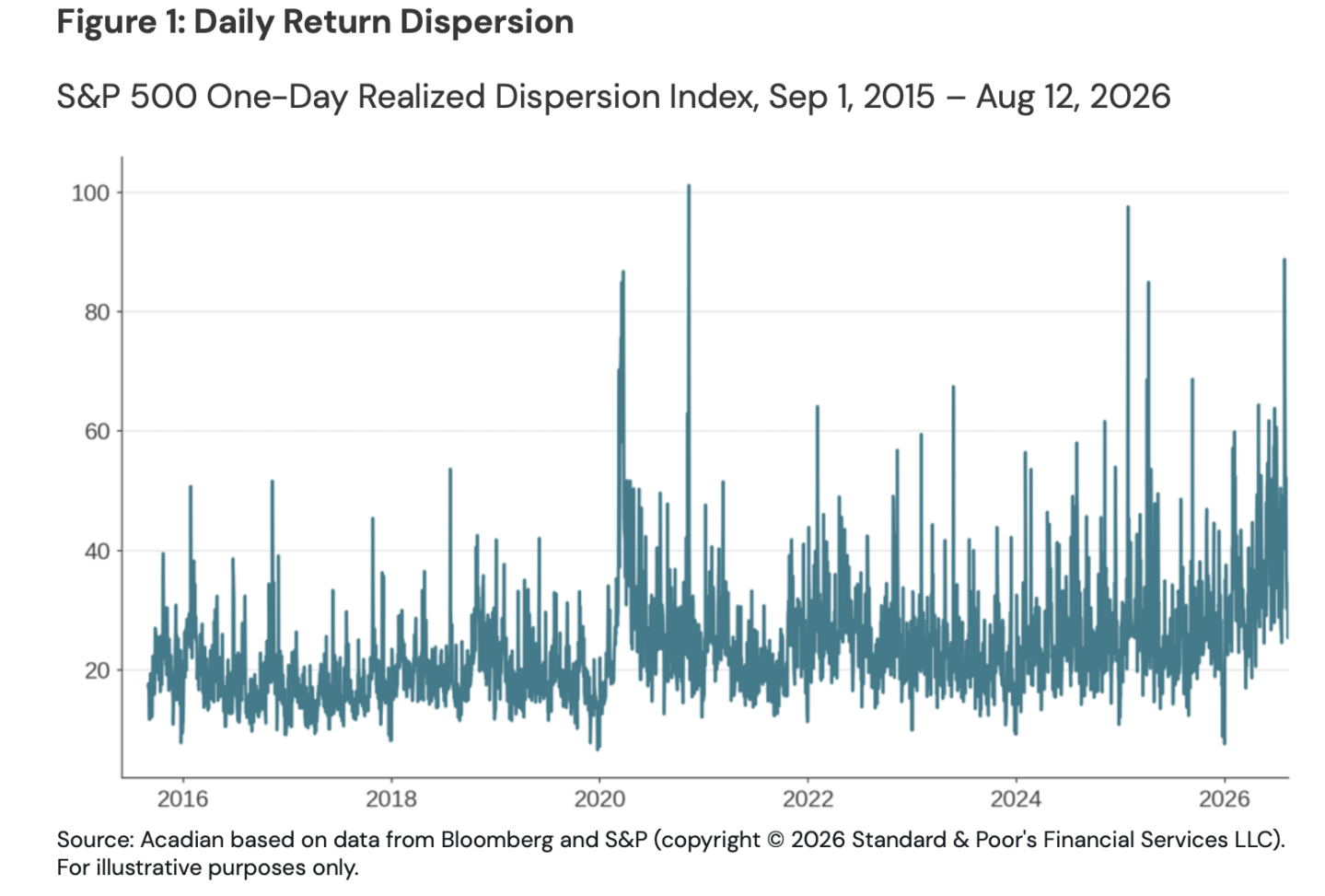
Lamont's dispersion index, which tracks how violently individual stocks swing while the index looks calm, hit its third-highest reading in over 2,850 trading days.
Morgan Stanley says relax
CIO Lisa Shalett called it Wall Street's silly season, the volatile September-October stretch made worse by a midterm cycle, then told clients the risks are already priced.
“markets appear to be pricing them in clear-eyed fashion”
The bull case, in numbers
Forward P/E has fallen from 22.5x in January to about 19.5x with no big equity losses, cushioned by earnings growth above 30%. Targets: 8,000 by year-end, 8,300 by mid-2027.
Rate-insensitive by design
Morgan Stanley's committee argues the AI build-out barely cares about borrowing costs, so a hike or two moves bond yields without slowing hyperscaler capital spending.
“is mostly rate-insensitive”
Wednesday's first hike
The Fed is expected to raise rates for the first time since July 2023, to a 3.75%-4% range. UBS sees a 10-2 vote, with Governors Waller and Bowman dissenting.
Warsh drops the ambiguity
Fed Chair Kevin Warsh avoided forward guidance for months, then delivered 20 separate hawkish observations at Jackson Hole. Hike odds jumped from 35% to nearly 60% within days.
“I would be hard pressed to describe broad financial conditions as restrictive”
Inflation credibility above all
Warsh put the blame for years of high prices on the central bank itself, a line UBS expects almost verbatim on Wednesday. UBS calls his framework the most hawkish since 1933.
“The responsibility for 65 months of sustained, elevated inflation sits squarely with the central bank.”
The data says the opposite
Core CPI fell to 2.4% in August, a post-pandemic low. UBS expects the Fed to cut its inflation forecast and raise its rate forecast at once, which has never happened before.
“That is really, really odd, indeed unique.”
A statistic that bends
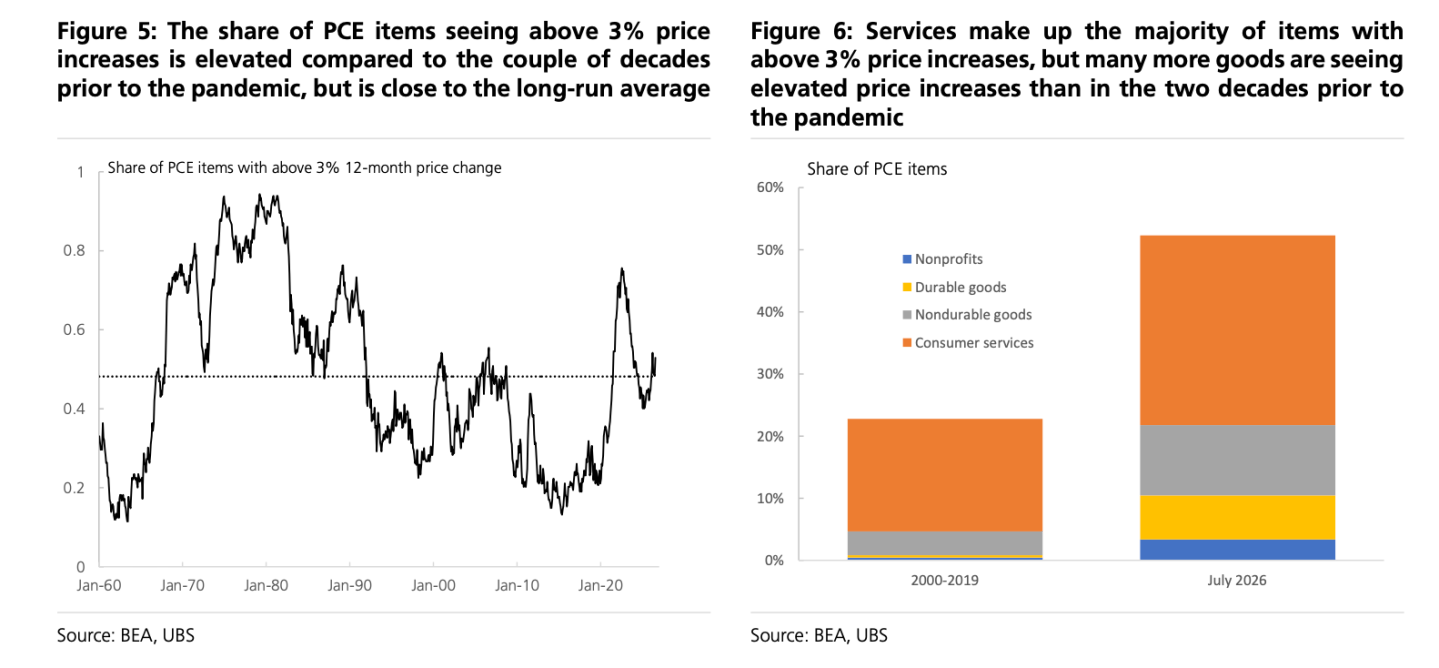
Warsh cited 54% of inflation-basket items rising above 3%. UBS replicated it, found it near the long-run average, and traced the rise to gasoline, airfares, and fund fees.
“worked nicely as a rhetorical device”
1999 is the template
The Fed took rates from 4.75% to 6.5% in eleven months and the S&P 500 then fell by nearly half over two and a half years. A hike Wednesday would be the AI era's first real tightening.
Cash burn and IPOs of doom
The four biggest hyperscalers' combined free cash flow is projected to go negative in 2027 as bond issuance doubles. Anthropic's fall IPO is the equity-issuance tell, this cycle's Pets.com.
“Let's hope that future historians do not look back at the Anthropic IPO and see it as marking the beginning of the collapse of human civilization.”
At a glance
The AI trade has survived on cheap money and unbroken earnings growth; a Warsh-led Fed hiking into a late-stage bubble is the one variable bears were not counting on.