From GitHub · · 2m
MartyPC: A cycle-accurate emulator for early IBM PCs
This open-source emulator recreates 1980s IBM computers with extreme precision, down to individual CPU cycles.
In brief
This open-source emulator recreates 1980s IBM computers with extreme precision, down to individual CPU cycles. MartyPC achieves 99.9997% cycle-accuracy by testing against real 8088 hardware, making it ideal for retro PC development and debugging. Originally reported by GitHub.
An emulator for early IBM PCs
MartyPC emulates IBM PCs, XTs, PCjr, and Tandy 1000 computers. It runs on Windows, Linux, macOS, and even in web browsers.
Built to learn Rust
The project started as a hobby to write an emulator from scratch while learning Rust. It grew far beyond its modest original goals.
Made for retro PC developers

MartyPC's niche is helping programmers write software for the Intel 8088. They can see and measure exact cycle-by-cycle execution of their code.
Tested against real hardware
The developer validated the 8088 CPU emulation against a real chip connected to an Arduino MEGA. Instructions run simultaneously on both and results are compared cycle-by-cycle.
99.9997% cycle-accurate
After extensive testing with the 8088 V2 Test Suite, including prefetch queue exercises, MartyPC achieves near-perfect cycle accuracy.
“MartyPC passes the 8088 V2 Test Suite with 99.9997% cycle-accuracy.”
Hardware research with real tools
The developer investigated the 8253 timer chip with an Arduino, measured DMA timings with an oscilloscope, and built a bus sniffer using a logic analyzer.
Runs demanding PC demos
In April 2023, MartyPC became accurate enough to run 8088 MPH. A month later, it became the first emulator to run every effect in Area 5150.
Emulates CPUs and system hardware
MartyPC includes cycle-accurate Intel 8088 and preliminary NEC V20 emulation. It also emulates the 8255 PPI, 8259 PIC, 8253 PIT, 8237 DMAC, and 8250 UART.
Complete video card support
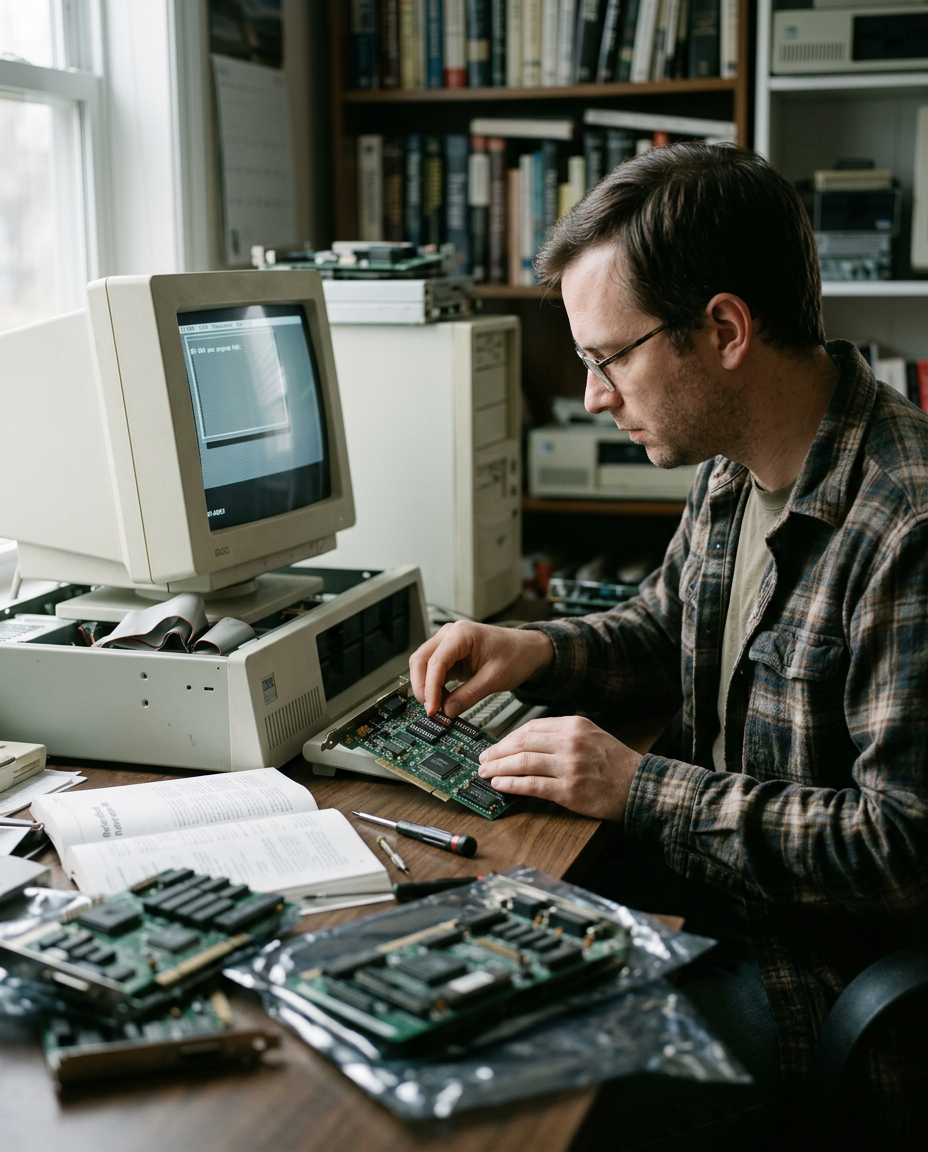
CGA, TGA, MDA, Hercules, EGA, and VGA cards are emulated. CGA uses a unique approach that simulates the entire display field, including overscan.
Sound and storage devices
PC Speaker, Adlib, SN76489, and Disney Sound Source are emulated. Storage includes floppy disk controllers, IBM/Xebec HDC, XT-IDE, and PCjr cartridges.
Dual-head monitor configurations

MartyPC supports dual-video card setups with multi-monitor configurations. Each display viewport can receive independent shader configurations.
Extensive debugging tools
The debugging GUI includes instruction disassembly, CPU state, memory viewer, and peripheral states. Code and memory breakpoints plus instruction and cycle-based logging are supported.
Built on reverse-engineered microcode
The emulator relies on reenigne's work reverse-engineering the 8088 microcode and Ken Shirriff's research on 8086 silicon logic.
“Without his work reverse-engineering the 8088 microcode, this emulator would never have been possible.”
The takeaway
MartyPC achieves 99.9997% cycle-accuracy by testing against real 8088 hardware, making it ideal for retro PC development and debugging.

