From Guitar World · · 2m
How a fan letter made Megadeth a thrash band
David Ellefson reveals the moment a single fan challenge transformed Megadeth's sound forever.
In brief
David Ellefson reveals the moment a single fan challenge transformed Megadeth's sound forever. A fan's casual suggestion to play faster than Metallica caused Megadeth to increase tempos by 50-60 BPM overnight, fundamentally changing their musical identity and Ellefson's bass playing approach. Originally reported by…
From Minnesota to L.A. thrash
In 1983, 18-year-old David Ellefson moved to Los Angeles with just a B.C. Rich bass and a small amp, where he met Dave Mustaine and began writing Megadeth's first two albums.
Playing with a pick for clarity
Growing up unable to afford big amps, Ellefson discovered that playing bass with a pick cut through the mix better, even when bandmates used half-stacks.
“"Playing with a pick gave me a tone that would cut through, even when playing with my buddies who were using half-stacks."”
A fan's challenge changes everything
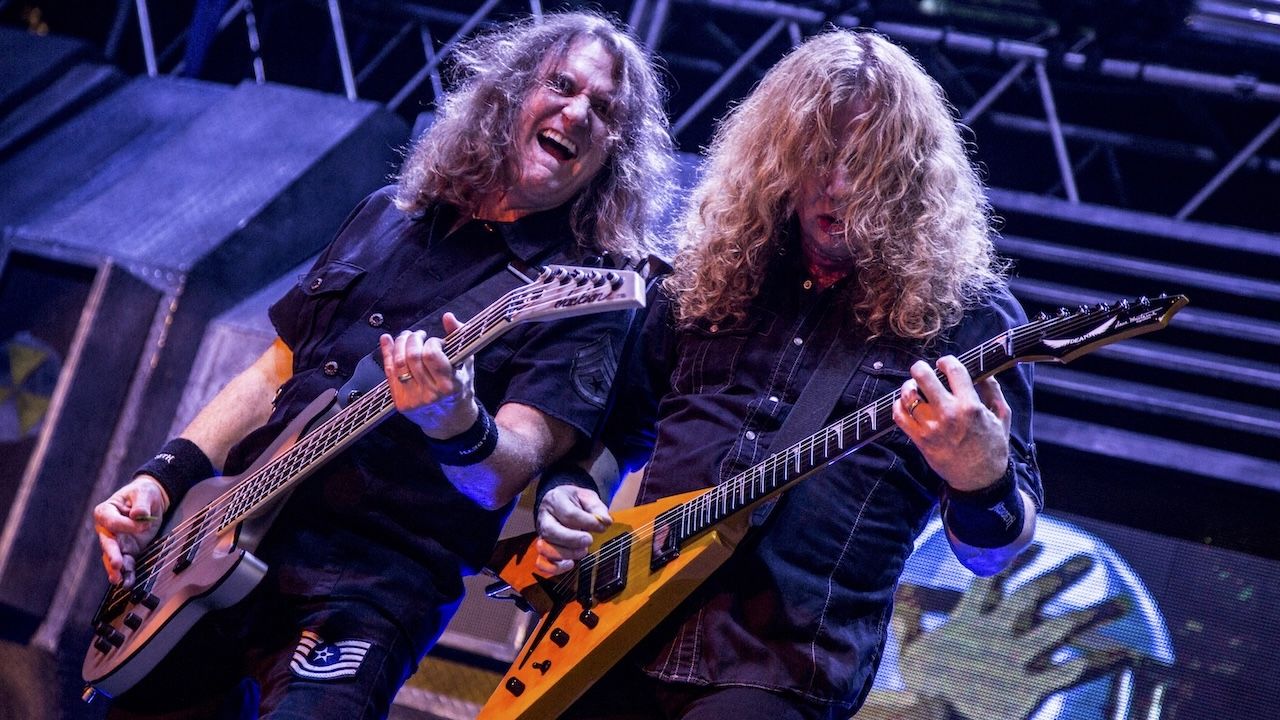
A fan wrote to Dave Mustaine hoping the new music would be faster than Metallica. That night at rehearsal, Megadeth increased all tempos by 50 to 60 BPM and became a thrash band.
“"Right then, we went to rehearsal, all of the tempos sped up by 50 to 60 BPM, and we became a thrash band that night."”
The pick becomes essential
The faster tempos meant Ellefson needed to switch from fingers to pick to keep up, a technique that felt natural to him and allowed him to execute everything the music demanded.
“"The pick is just an all-purpose device that allows me to do everything."”
Jackson bass partnership begins
After seeing Jeff Pilson play a Charvel bass at a Judas Priest show, Ellefson found a Jackson bass at Guitar Center and plugged it in, discovering his signature tone immediately.
“"My tone was born right then and there."”
Recording bass first on Dystopia
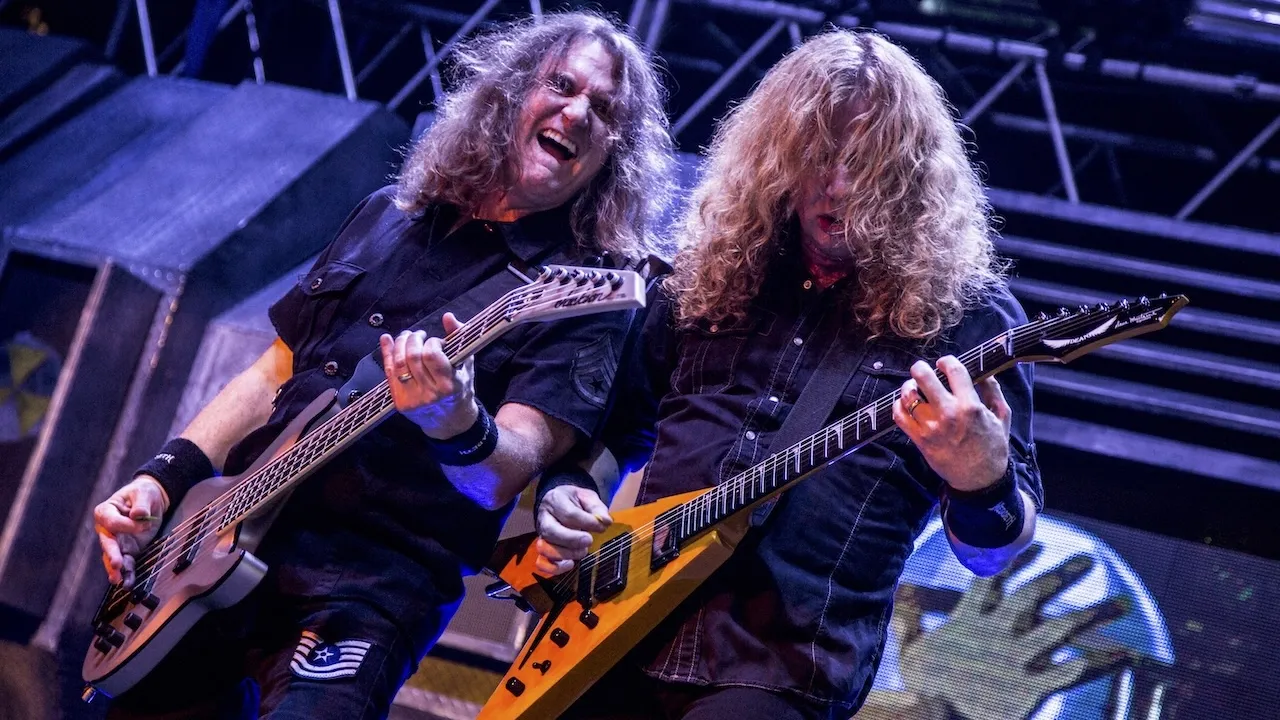
In 2016, Ellefson recorded Megadeth's Dystopia album with just his bass and a metronome, no drums or guitars, making the bass the foundation for all other instruments.
“"By having the bass guitar as the first brick of the building being laid down, the rest of the structure was built on the back of the bass tracks."”
Bass becomes the benchmark
Recording bass separately allowed Ellefson to create a crystal-clear, ripping tone that stood up to drums and heavy rhythm guitar, setting the standard for the entire album.
“"The bass became the benchmark for the rest of the album."”
Guitar riffs become bass lines
On songs like Fatal Illusion, Megadeth would convert difficult guitar parts with hammer-ons and pull-offs into bass lines, requiring Ellefson to lock in immediately or lose the riff entirely.
“"If you land on one of those notes wrong, you'll never get back into it."”
The essence
A fan's casual suggestion to play faster than Metallica caused Megadeth to increase tempos by 50-60 BPM overnight, fundamentally changing their musical identity and Ellefson's bass playing approach.