From Guitar World · · 1m 50s
How to get out of the pentatonic rut
Guitarists can break the minor pentatonic rut by adding chord tones and blues scales.
In brief
Guitarists can break the minor pentatonic rut by adding chord tones and blues scales. Guitarists use chord tones and blues scales to move beyond minor pentatonic soloing in blues music. Originally reported by Guitar World.
Pentatonic rut question
Guitar teachers face frequent questions about escaping minor pentatonic soloing patterns.
“How do I get out of the pentatonic rut?”
Supplement pentatonic
Add chord tones to minor pentatonic for more melodic and chord-friendly soloing.
Chord tones explained
Chord tones are notes from blues progressions that improve solo harmony and melody.
A7 D7 E7 chords
Blues progressions use major chords with b7 that minor pentatonic can't fully cover.
Example 1: Target roots
Play root notes of chords on first beat to create melodic blues phrases.
Example 2: Simple melodies
Create catchy hooks by moving between I and IV chords in blues progressions.
Example 3: Chord tones
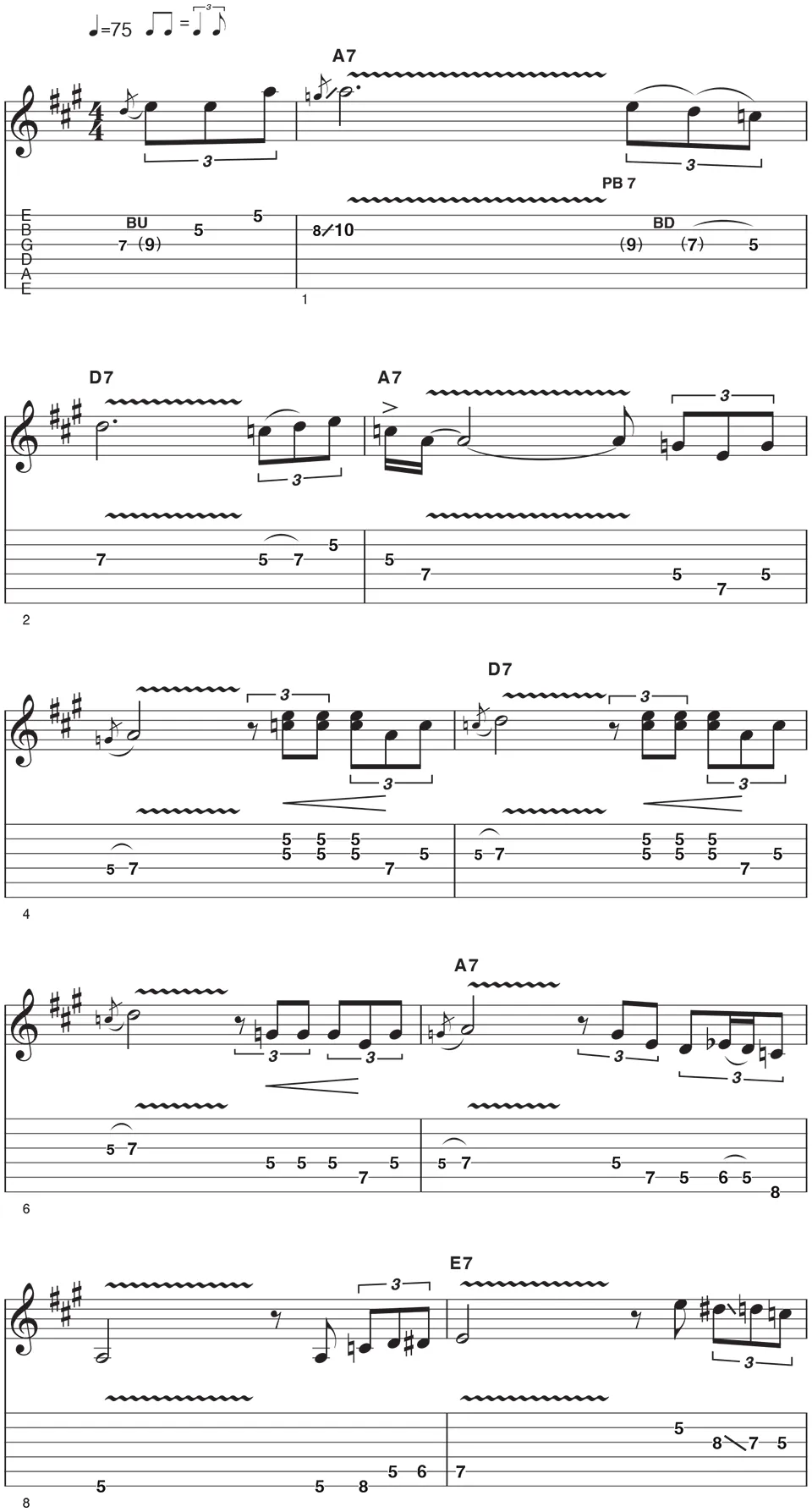
Target A7 chord tones (A C# E G) in first four bars of blues progression.
Example 4: Chord tones
Target D7 chord tones (D F# A C) for next four bars of blues progression.
Example 5: Blues scale
Add b5 (blue note) to minor pentatonic for grit and grease in blues phrases.
Example 6: Swinging 6ths
Use sixth degree intervals for swing and jump blues phrasing.
Example 7: Bending notes
Bend into and out of chord notes for natural phrasing in blues solos.
Example 8: Turnaround
Outline chord changes efficiently in final four bars of blues progression.
Example 9: Strong start
Begin solos with confident, powerful phrases to grab listener attention.
Example 10: Strong finish
End solos with natural resolution to avoid abrupt stops in blues progressions.
The headline
Guitarists use chord tones and blues scales to move beyond minor pentatonic soloing in blues music.