From Guitar World · · 5m
Mick Ronson: the guitarist who made Bowie a star
How a Hull factory worker became glam rock's greatest unsung hero, then faded into obscurity.
In brief
How a Hull factory worker became glam rock's greatest unsung hero, then faded into obscurity. Mick Ronson transformed David Bowie from a struggling singer into a rock icon, but never received proper credit or compensation for his foundational contributions to glam rock's greatest albums. Originally reported by Guitar…
A factory worker becomes a rock legend
In January 1970, drummer John Cambridge found Mick Ronson marking lines on a Hull football pitch and brought him to London to meet David Bowie. Five days later, Ronson was playing on Bowie's BBC radio concert.
Bowie's missing piece arrives
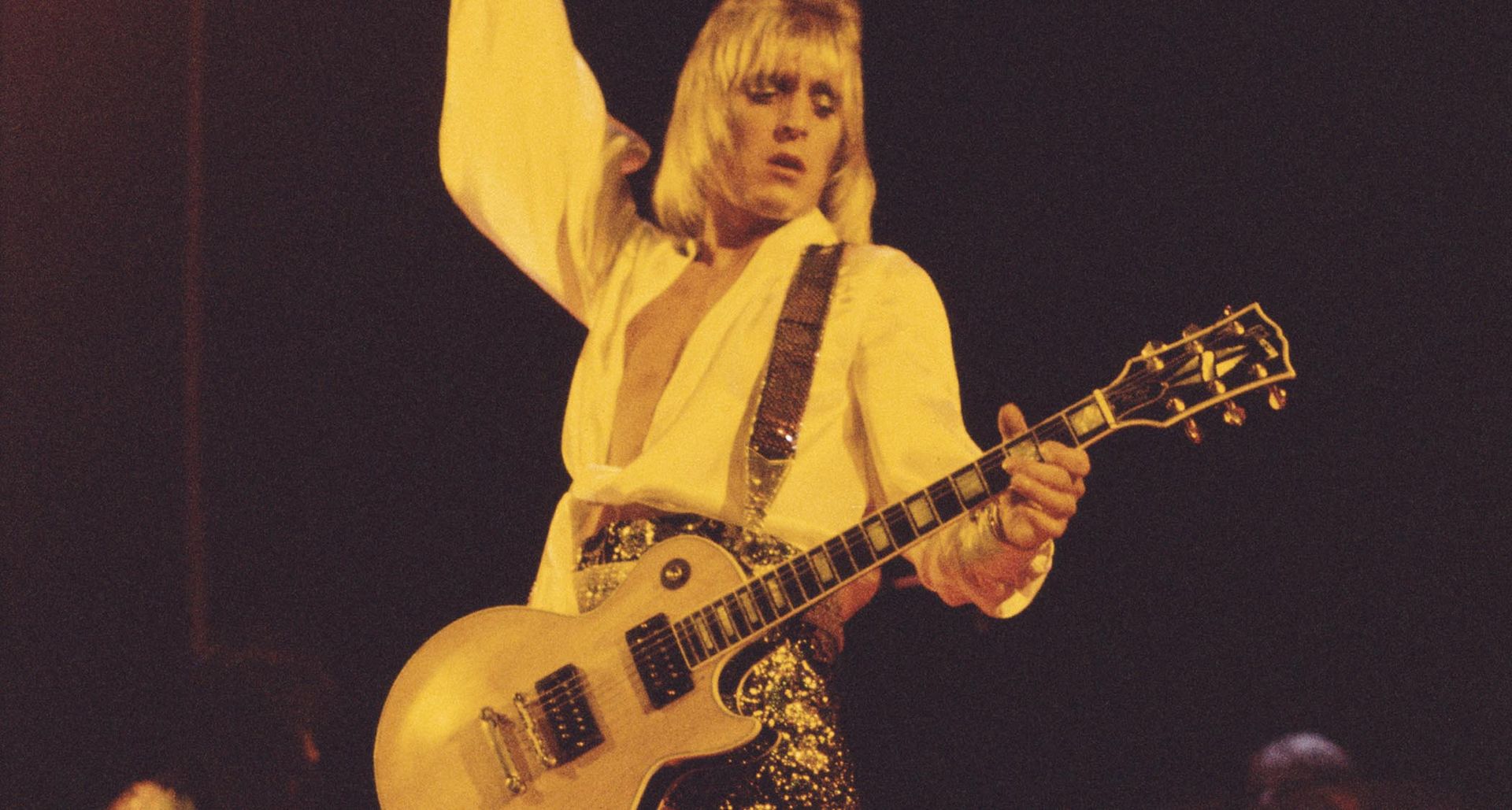
Producer Tony Visconti said Ronson's guitar playing "floored" them. Bowie wanted to make a hard-rock album but lacked that heavy element. Ronson moved into Bowie's apartment and became part of the family.
“He floored us. When David and I met him, we knew he'd fit in looks-wise, but we had no idea what was coming until he picked up his Les Paul”
The Man Who Sold the World
Ronson's first major album with Bowie in 1970 featured his crunching heavy-metal guitar on tracks like She Shook Me Cold and The Width of a Circle. Bowie called him "my Jeff Beck" with a smug smile.
From guitarist to arranger
When producer Tony Visconti left, Ronson stepped in to write string and piano arrangements. He'd watched Visconti work and taught himself by doing, starting with a mini-score for recorders on All the Madmen.
Hunky Dory's secret weapon
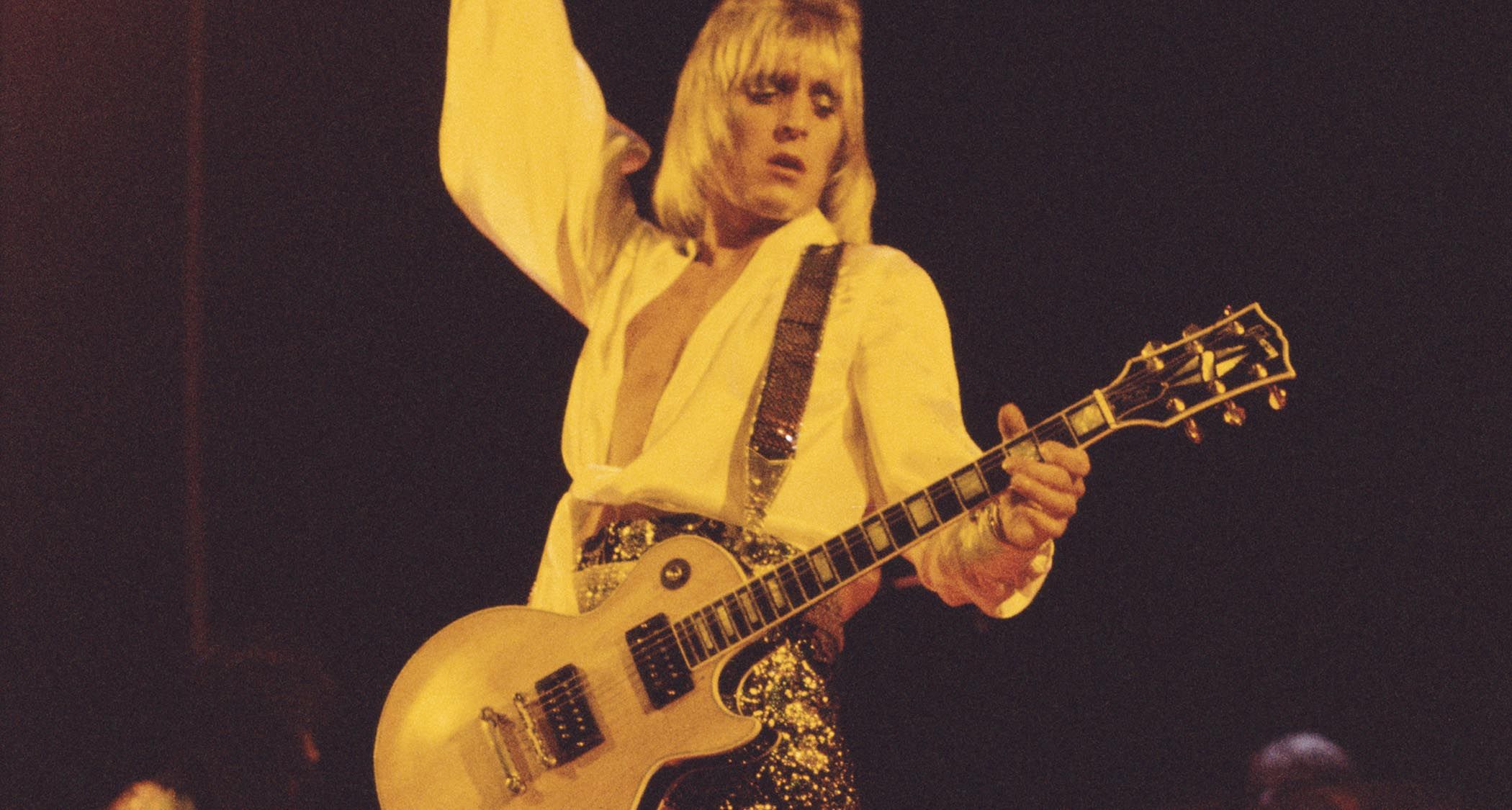
On 1971's Hunky Dory, Ronson finally received arranger credit for Changes, Life on Mars?, and other tracks. He even instructed Rick Wakeman on the iconic piano parts, despite having no formal training.
Ziggy Stardust's orchestral genius
On The Rise and Fall of Ziggy Stardust and the Spiders from Mars, Ronson's string arrangements whipped up hysteria on Five Years, and he created the funky ARP synthesizer sound on Suffragette City that many mistook for saxophones.
Bowie's bisexuality shakes Ronson
When Bowie announced he was bisexual in January 1972, the practicing Mormon Ronson was embarrassed and worried about his family's reaction in Hull. But he understood Bowie was manipulating the media.
Rescuing Lou Reed's career
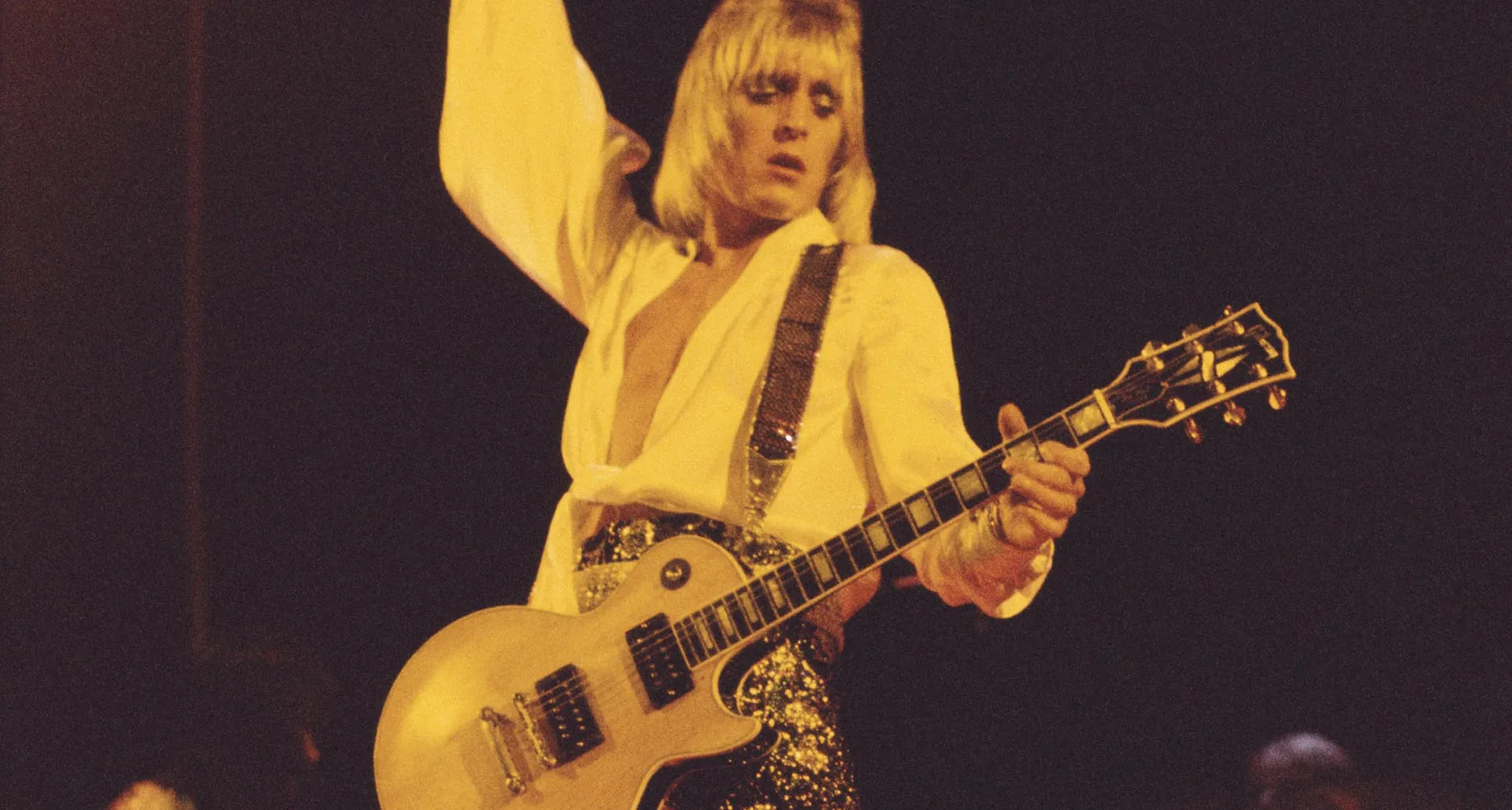
Ronson produced and played on Lou Reed's Transformer in 1972, effectively saving Reed's solo career after his debut flopped. Reed later called it his best-produced album, crediting Ronson's influence over Bowie's.
“Transformer is easily my best-produced album. That has a lot to do with Mick Ronson.”
The final Ziggy performance
On October 20, 1973, Ronson played with Bowie for the last time that decade at The Midnight Special taping. Only 200 people witnessed it live. Bowie ended each song with an affectionate pat on Ronson's back.
Promised stardom that never came
Manager Tony Defries promised Ronson he'd be the next superstar off MainMan's production line. His 1974 solo debut Slaughter on 10th Avenue featured songs Bowie gifted him, but RCA delayed its release by six months.
Mott the Hoople's brief reunion
![David Bowie - Moonage Daydream (Live) [Official Video [4K] - YouTube](https://img.youtube.com/vi/6pXoQ6iYO1w/maxresdefault.jpg)
Ronson joined Mott the Hoople for their final single Saturday Gigs in 1974. Other band members resented him arriving with limos from MainMan while they traveled by bus, and frontman Ian Hunter eventually split the band.
Diamond Dogs without Ronson
Ronson recorded demos for Diamond Dogs tracks 1984 and Dodo, but his work didn't appear on the finished album. Bowie played Rebel Rebel, almost a Spiders from Mars pastiche, himself instead.
The sideman struggles alone
Ronson's 1974 solo tour at London's Rainbow Theatre revealed he was too modest to carry a show without Bowie. The ultimate sideman lacked the confidence to be a frontman, despite his immense talent.
New York and the Rolling Thunder Revue
In 1975, Ronson moved to New York City and met Bob Dylan through Ian Hunter. Dylan invited him to join the Rolling Thunder Revue after a chance encounter at the Bitter End on Bleecker Street.
“That tour rescued Mick's professional life”
Producer and arranger for hire
With his solo career stalled, Ronson became a full-time producer and arranger for Van Morrison, John Mellencamp, Roger McGuinn, and others. He wrote arrangements on Marlboro Light cigarette packets and could be meticulous when engaged.
Morrissey's Your Arsenal triumph
In 1992, Ronson produced Morrissey's acclaimed Your Arsenal while battling liver cancer. Morrissey revealed Bowie wrote letters asking what it was like working with Ronson, suggesting lingering interest in his old guitarist.
One last performance with Bowie
Ronson's final public appearance was at the Freddie Mercury Tribute Concert at Wembley Stadium on Easter Monday 1992, performing All the Young Dudes with Bowie and Ian Hunter. It was his last time onstage.
Death at 46, unrecognized
On April 29, 1993, Mick Ronson died of liver cancer at age 46. He wasn't wealthy by rock-star standards, owning a house in Woodstock and an old Toyota Corolla. He remains largely overlooked by music history.
The unsung architect of glam rock
Morrissey noted Ronson was never on a major British music magazine cover, even when he died. Bowie later admitted Ronson was the perfect foil for Ziggy and compared their duo to Mick and Keith.
“As a rock duo, I thought we were as good as Mick and Keith”
What matters most
Mick Ronson transformed David Bowie from a struggling singer into a rock icon, but never received proper credit or compensation for his foundational contributions to glam rock's greatest albums.