From Indiatimes · TOI Tech Desk · · 1m 50s
Florida uses robot rabbits to hunt Burmese pythons
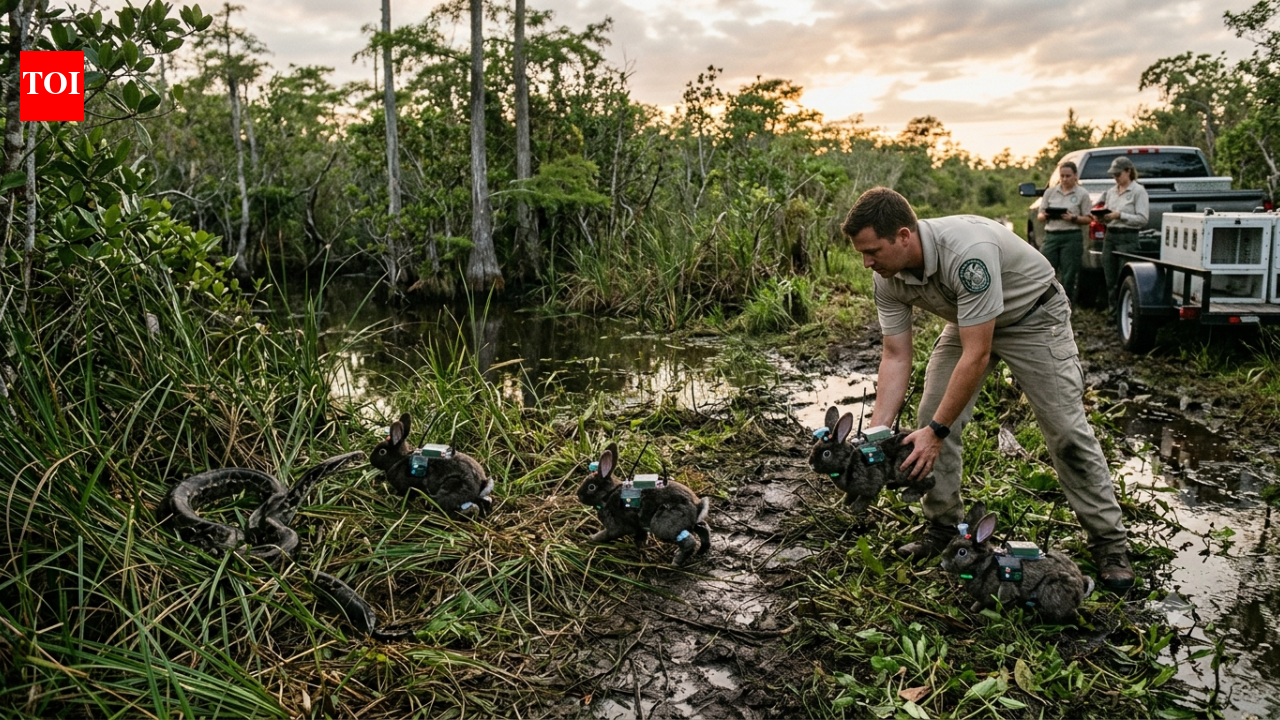
Florida's solar-powered robot rabbits detect Burmese pythons by mimicking prey and alerting officials when snakes climb trees.
In brief
Florida's solar-powered robot rabbits detect Burmese pythons by mimicking prey and alerting officials when snakes climb trees. Florida wildlife officials use solar-powered robot rabbits to track Burmese pythons, which climb trees more often as juveniles than adults. Originally reported by Indiatimes.
Florida introduces robot rabbits
Florida introduced solar-powered robot rabbits in 2025 to tackle its growing population of invasive Burmese pythons.
Study reveals python tree climbing
A study tracked 346 Burmese pythons between 2017 and 2024 to understand when and how they climb trees.
Juveniles climb trees more
Juvenile Burmese pythons climb trees at least once in 17% of sightings, while adults climb in 14% of cases.
Why juveniles climb trees
Smaller size and lighter weight make juvenile pythons more likely to climb trees than adults.
Robot rabbits detect pythons
Robot rabbits mimic prey with heat signatures and scents to attract pythons and alert officials when snakes are detected.
How robots work
The robots use AI cameras to monitor areas and notify officials when a python approaches for removal.
Python removal efforts
Florida has removed over 19,000 Burmese pythons since 2017 through contractor programs and the annual Florida Python Challenge.
Python Challenge results
In the 2026 Florida Python Challenge, 907 participants from 30 states and countries removed 280 Burmese pythons.
Why tree climbing matters
The findings help wildlife workers locate smaller pythons that climb trees, improving python removal efforts in Florida's dense vegetation.
The key point
Florida wildlife officials use solar-powered robot rabbits to track Burmese pythons, which climb trees more often as juveniles than adults.
Read the TL;DR — this story on one card.