From Infobae · · 1m 10s
How to Grow Food in Small Spaces
Grow fresh food indoors with easy tips for limited spaces.
In brief
Grow fresh food indoors with easy tips for limited spaces. Growing leafy greens and herbs indoors requires 4-6 hours of direct sunlight daily, proper drainage, and regular watering to produce food in small areas. Originally reported by Infobae.
Light is key for indoor plants
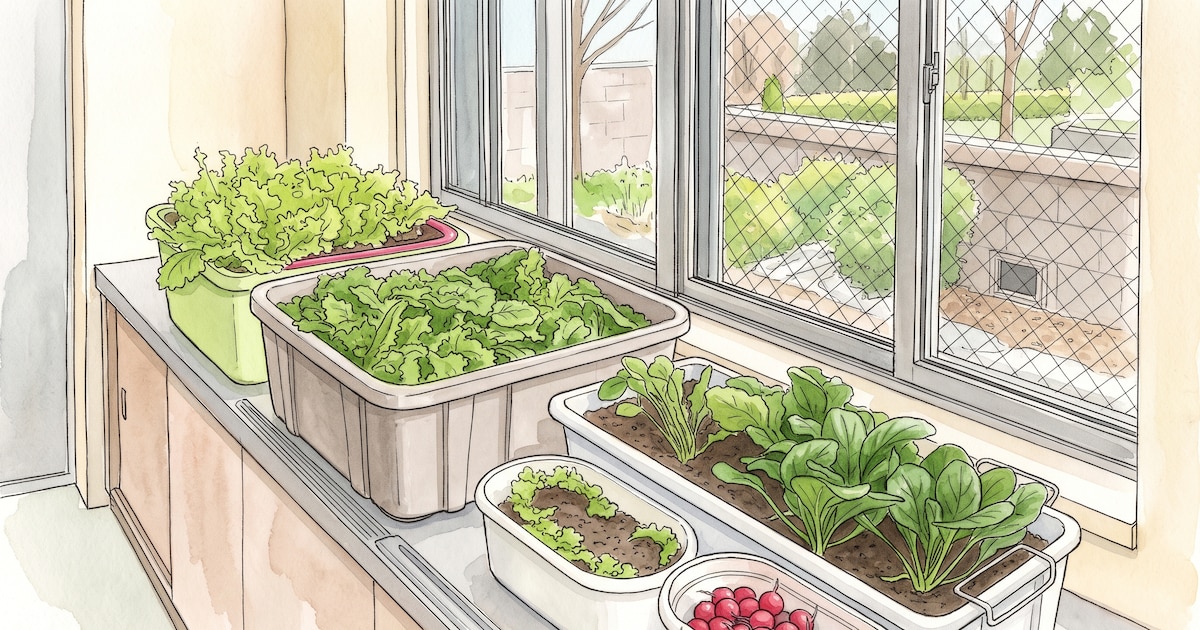
The light defines which species can grow indoors, requiring at least 4 to 6 hours of direct sunlight daily for leafy greens and herbs.
“Las hortalizas de hoja y las hierbas suelen adaptarse mejor a macetas ubicadas cerca de una fuente de luz.”
Drainage prevents root problems
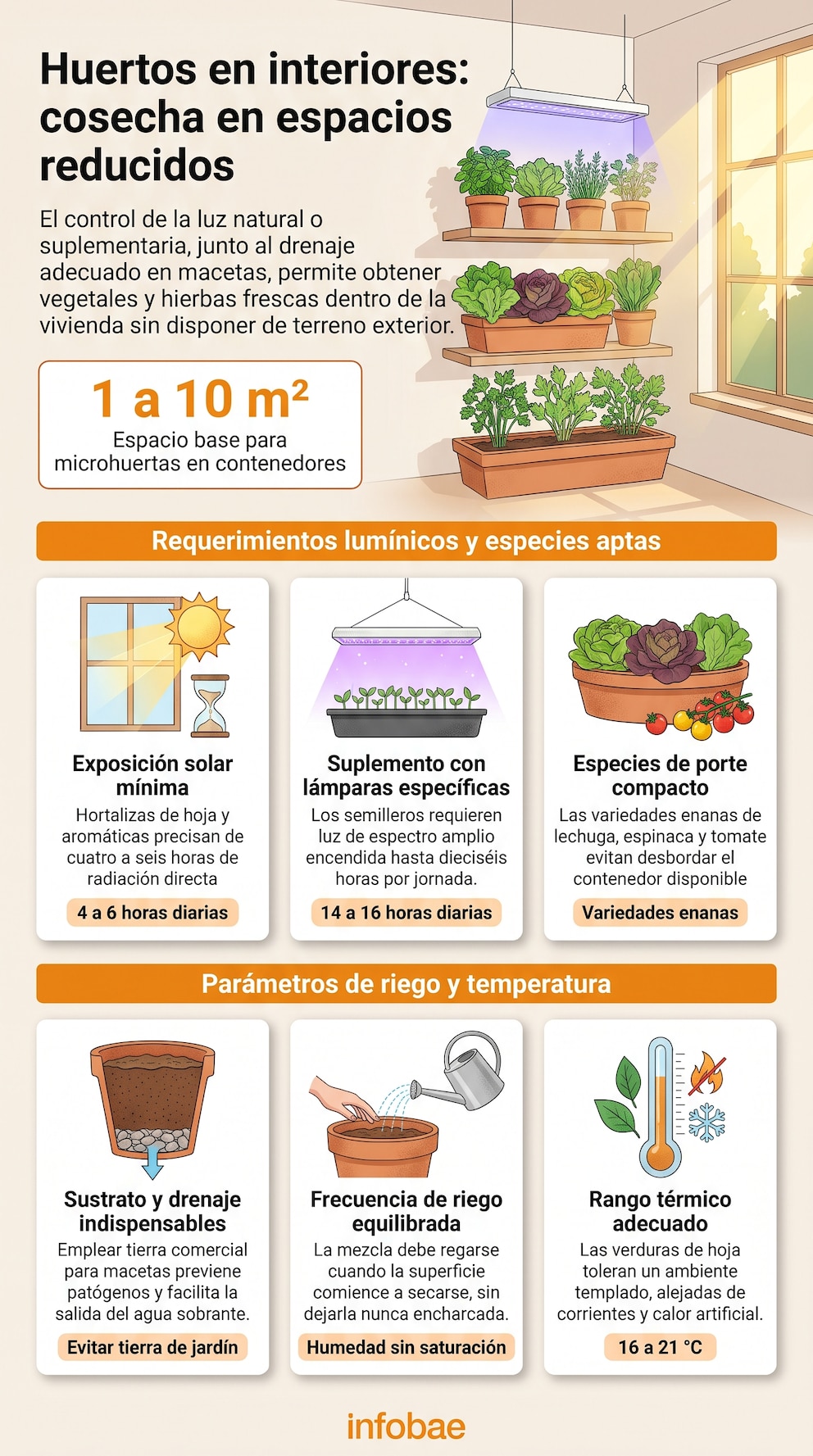
Containers with drainage holes and a tray to collect excess water reduce root rot and disease risks in small spaces.
“Los recipientes con drenaje ayudan a evitar el exceso de humedad y los problemas en las raíces.”
Choose compact plants for small areas
Prioritize leafy greens, herbs, and compact varieties like dwarf tomatoes for limited spaces.
“La Organización de las Naciones Unidas para la Alimentación y la Agricultura (FAO) incluye lechuga, albahaca, tomate, frijoles, cebolla, apio, rábano y espinaca entre los cultivos aptos para microhuertas en contenedores.”
Watering and temperature matter
Water when the top layer dries but before complete drying, and keep plants between 16 and 21°C to avoid stress.
“La Universidad de Vermont sitúa el rango de mejor desarrollo entre 16 y 21°C.”
Hygiene ensures safe food
Use clean water, wash leaves before eating, and avoid nitrogen-rich fertilizers to prevent nitrate buildup.
“El exceso de fertilizantes nitrogenados puede favorecer la acumulación de nitratos en verduras de hoja.”
The main idea
Growing leafy greens and herbs indoors requires 4-6 hours of direct sunlight daily, proper drainage, and regular watering to produce food in small areas.
Read the TL;DR — this story on one card.