From Kiplinger · · 4m
Trump Accounts: ranking the 5 ETF choices for kids
New tax-deferred accounts for children come with five low-cost index funds. Here's how they compare.
In brief
New tax-deferred accounts for children come with five low-cost index funds. Here's how they compare. Vanguard's VTI offers the broadest market exposure with over 3,500 holdings, making it the best choice for long-term compounding in a Trump Account. Originally reported by Kiplinger.
New accounts for kids launched
Starting July 4, 2026, the federal government contributes $1,000 to a tax-deferred Trump Account for every eligible child born between January 1, 2025 and December 31, 2028.
“For every eligible American child born between January 1, 2025, and December 31, 2028, the federal government will contribute $1,000”
How to open a Trump Account
Parents complete IRS Form 4547 through the Trump Accounts app, tax filing, or the IRS Individual Online Account website. They can add up to $5,000 annually beyond the initial contribution.
Five ETFs, not mutual funds
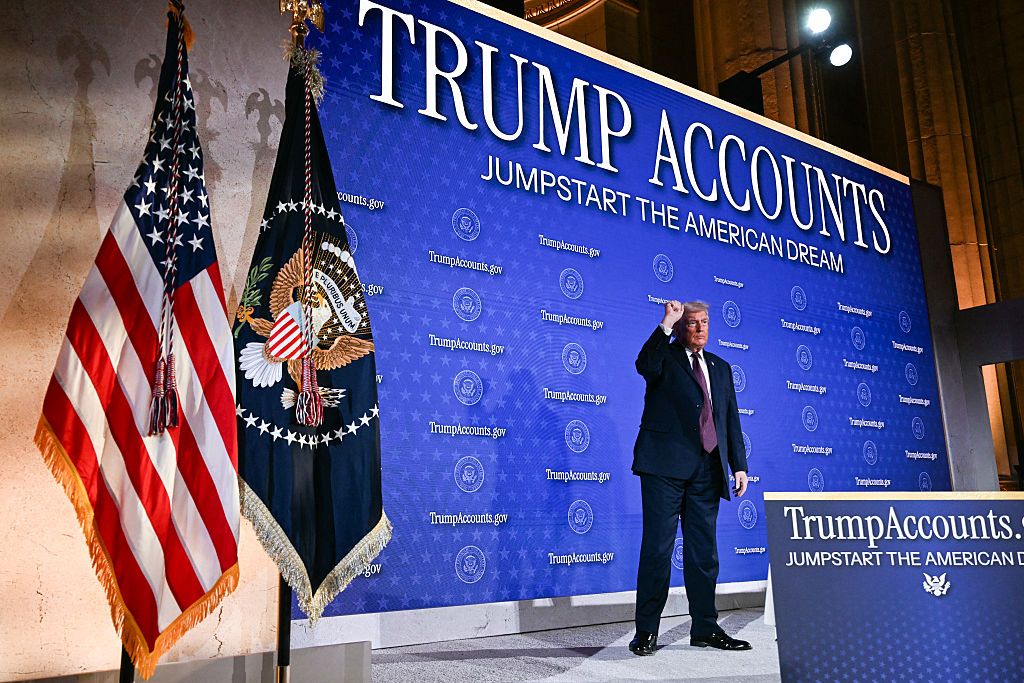
Unlike typical workplace 401(k) plans, Trump Accounts offer five passively managed, low-cost exchange-traded funds focused on U.S. stocks. All provide broad equity exposure with decades for compounding.
The five options look similar
All five ETFs provide broad U.S. stock exposure, charge minimal fees, and have overlapping largest holdings. But their underlying indexes differ in breadth, company count, and concentration in mega-cap stocks.
Expense ratios are tiny
All five ETFs charge between 0.02% and 0.03% annually. That works out to roughly $2 to $3 per year for every $10,000 invested, making fees virtually irrelevant.
“A 0.02% expense ratio works out to approximately $2 annually for every $10,000 invested”
Assets under management vary
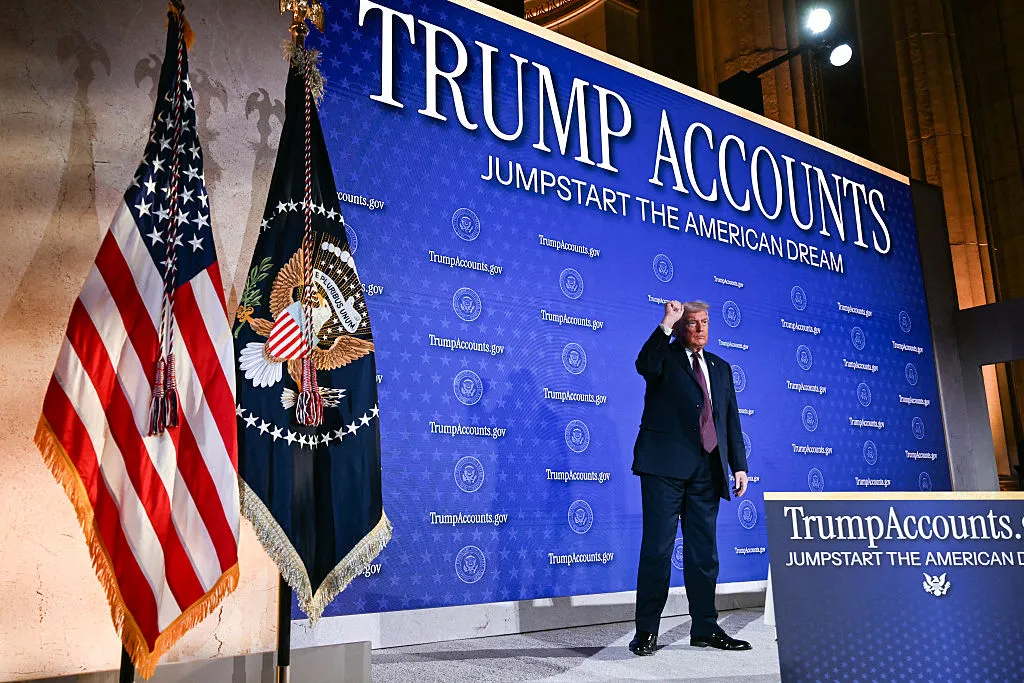
The five ETFs manage between $14 billion and $889 billion. Larger funds are more established, but all manage enough assets to remain viable long-term.
Liquidity is essentially identical
All five ETFs have nearly identical bid-ask spreads of 0.01%, meaning there's virtually no difference in trading costs when buying or selling shares.
Past returns don't predict future
Over the past decade, the five ETFs returned between 14.5% and 15.1% annually. But historical performance doesn't determine which will perform best going forward.
Rank 5: iShares Core S&P 500
IVV tracks only 500 large-cap stocks, excluding hundreds of mid- and small-cap companies. Its heavy concentration in mega-cap tech stocks leaves it vulnerable if market leadership rotates.
Rank 4: State Street S&P 500
SPYM is the default Trump Account option and charges the lowest fee at 0.02%. But it inherits the same large-cap limitations as IVV, with heavy tech concentration and no mid-cap or small-cap exposure.
Rank 3: State Street S&P 1500
SPTM expands to roughly 1,500 stocks by combining large-, mid-, and small-cap indexes. It offers a middle ground between concentrated large-cap funds and comprehensive total-market options.
Rank 2: iShares Total U.S. Stock

ITOT holds 2,439 stocks and captures roughly 95% of the investable U.S. market. It adds nearly 1,000 more companies than SPTM without charging extra, providing substantially broader diversification.
Rank 1: Vanguard Total Stock
VTI holds more than 3,500 large-, mid-, small-, and micro-cap stocks, offering the most comprehensive market exposure. It embodies founder John Bogle's philosophy of buying the entire haystack at low cost.
“Don't look for the needle in the haystack. Just buy the haystack!”
VTI uses sampling approach
Rather than owning every security in its benchmark, Vanguard constructs a portfolio that closely tracks the index while avoiding the least-liquid securities, minimizing tracking error.
VTI remains market-cap weighted
Despite holding 3,500+ stocks, VTI is market-cap weighted, so mega-cap tech stocks still occupy prominent positions. But the depth underneath provides exposure to a much broader cross-section of American businesses.
Vanguard's ownership structure
Vanguard operates as a cooperative where fund shareholders indirectly own the management company. Without public shareholders demanding profits, Vanguard has historically cut fees to return economies of scale to investors.
Best for hands-off investing
VTI is particularly well-suited to Trump Accounts designed to compound for decades. Parents don't need to predict which sectors or market caps will lead. VTI simply owns the market and lets relative weights evolve naturally.
The essence
Vanguard's VTI offers the broadest market exposure with over 3,500 holdings, making it the best choice for long-term compounding in a Trump Account.