From MIT Technology Review · · 2m
A bionic hand reveals how the brain adapts
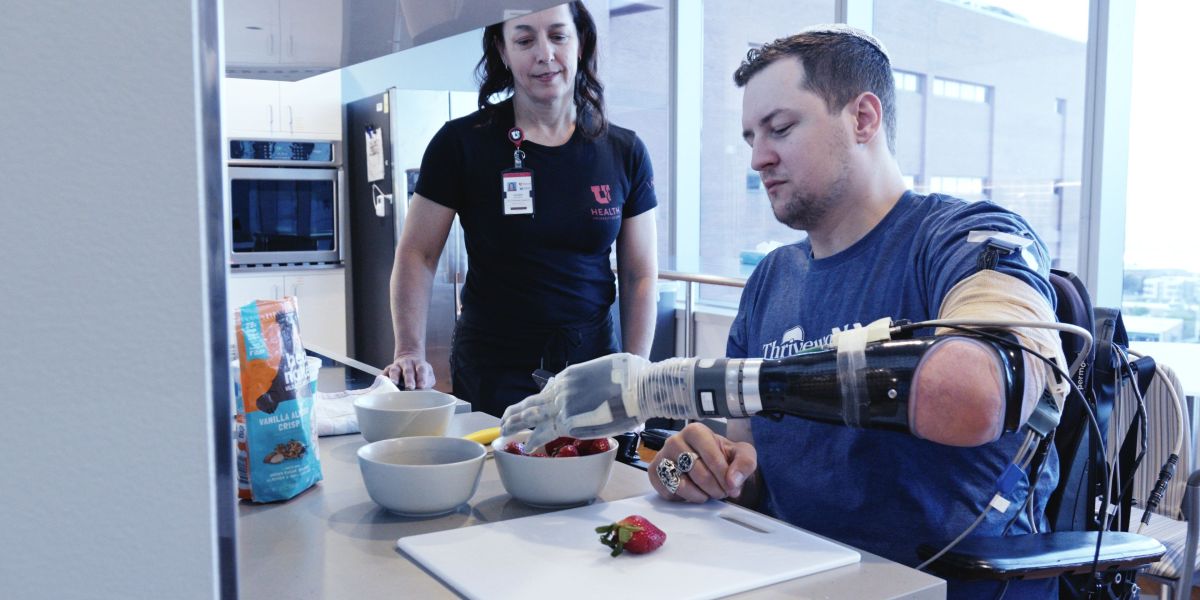
A trauma therapist with a prosthetic hand wired to his nerves is helping scientists understand how the brain responds to cutting-edge technology.
In brief
A trauma therapist with a prosthetic hand wired to his nerves is helping scientists understand how the brain responds to cutting-edge technology. Alexander Davidson, the first person to take home a prosthetic hand wired directly to his nerves, is helping researchers at the University of Utah study how the brain adapts…
A hand wired to the brain
Alexander Davidson, a trauma therapist paralyzed as a teenager, is testing a prosthetic hand that connects directly to nerves in his arm.He literally has wires coming out of his arm to plug it in with.
“He literally has wires coming out of his arm to plug it in with.”
First to take it home
Avi is the ninth person to trial this technology. But he is the first to take it home and use it independently, for things like drinking from a cup and writing.
Seventeen years of adaptation

Davidson has learned to use seven different prosthetics in the seventeen years since his accident. He fitted hundreds of hours of lab-based training and physical therapy around his demanding job as a therapist.
Why he joined the trial
Davidson will not keep the prosthetic long term and will eventually need surgery to remove the implanted electrodes. He joined anyway to help push the technology forward.
“I am not going to benefit from this … I wanted to be a part of this in the context of being able to help push the technology forward.”
What researchers want to learn
The University of Utah team running the trial wants to answer how the prosthetic fares in real-world settings outside the lab, what people use it for, and where improvements can be made.
The brain's mystery response
Scientists performed brain scans before the trial to see how Davidson's missing left hand was represented in his brain.They do not know whether his brain will change as a result of using the bionic hand.
Here's the gist
Alexander Davidson, the first person to take home a prosthetic hand wired directly to his nerves, is helping researchers at the University of Utah study how the brain adapts to bionic limbs.
Read the TL;DR — this story on one card.