From Malay Mail · · 1m 20s
AI tool predicts cancer patients’ survival chances from facial photos
US researchers create AI tool using facial photos to predict cancer survival rates.
In brief
US researchers create AI tool using facial photos to predict cancer survival rates. US researchers developed AI tools that analyze facial features to estimate cancer patients' survival chances and biological age, with higher accuracy when combined. Originally reported by Malay Mail.
AI tool predicts cancer survival
US researchers developed AI tools to predict cancer patients' survival chances from facial photographs.
“US researchers have created AI tools to predict cancer patients' survival chances and biological age from facial photographs, reported in The Lancet Digital Health”
Models analyze facial features
The tools, FAHR-FaceAge and FAHR-FaceSurvival, analyse facial features to estimate biological age and predict cancer survival.
“The model was trained on more than 40 million facial photos and adapted into two tools: FAHR-FaceAge, which estimates biological age, and FAHR-FaceSurvival, which predicts cancer patients’ survival directly from facial images without relying on age estimates”
Survival model focuses on key areas
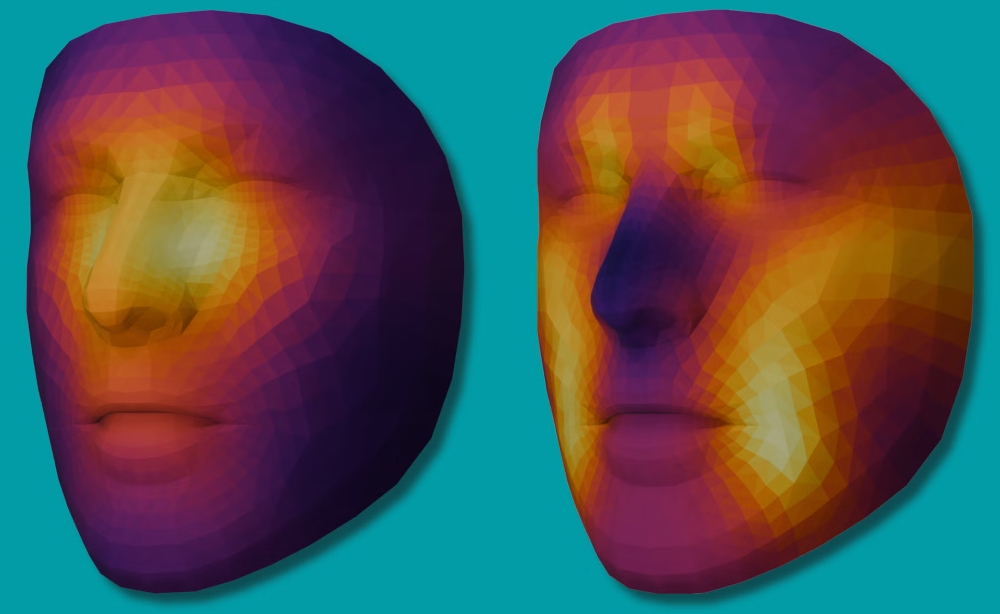
The survival model focused mainly on areas beneath the eyes and around the nose.
“Researchers found that the survival model focused mainly on areas beneath the eyes and around the nose, while the age-estimation model examined facial features around the mouth and temples”
Age-estimation model examines features
The age-estimation model examined facial features around the mouth and temples.
“Researchers found that the survival model focused mainly on areas beneath the eyes and around the nose, while the age-estimation model examined facial features around the mouth and temples”
Training and validation data
The survival model was trained on 34,363 patients and tested on 3,820 images, with independent validation using 4,892 cancer patients in the Netherlands.
“The survival model was trained on images of 34,363 patients and tested on another 3,820, with results independently validated using data from 4,892 cancer patients in the Netherlands”
Risk differences in patients
Patients in the highest-risk group had more than three times the mortality risk of those in the lowest-risk group.
“Researchers found that patients classified in the highest-risk group had more than three times the mortality risk of those in the lowest-risk group, even after accounting for clinical factors”
Age appearance affects survival
Patients whose faces appeared at least five years older than their actual age had a 21 per cent higher mortality risk.
“Patients whose faces appeared at least five years older than their actual age also had a 21 per cent higher mortality risk, while those appearing at least five years younger had a 17 per cent lower risk”
What it means
US researchers developed AI tools that analyze facial features to estimate cancer patients' survival chances and biological age, with higher accuracy when combined.