From Marksblogg · Mark Litwintschik · · 4m
Open source flight planning can save real fuel
A hands-on test shows how Scikit-decide, OpenAP, NOAA winds, and OpenTop can search smarter flight paths.
In brief
A hands-on test shows how Scikit-decide, OpenAP, NOAA winds, and OpenTop can search smarter flight paths. Open flight planning tools can model aircraft, weather, routes, and fuel closely enough to compare real choices before a plane flies. Originally reported by Marksblogg.
Fuel is the prize
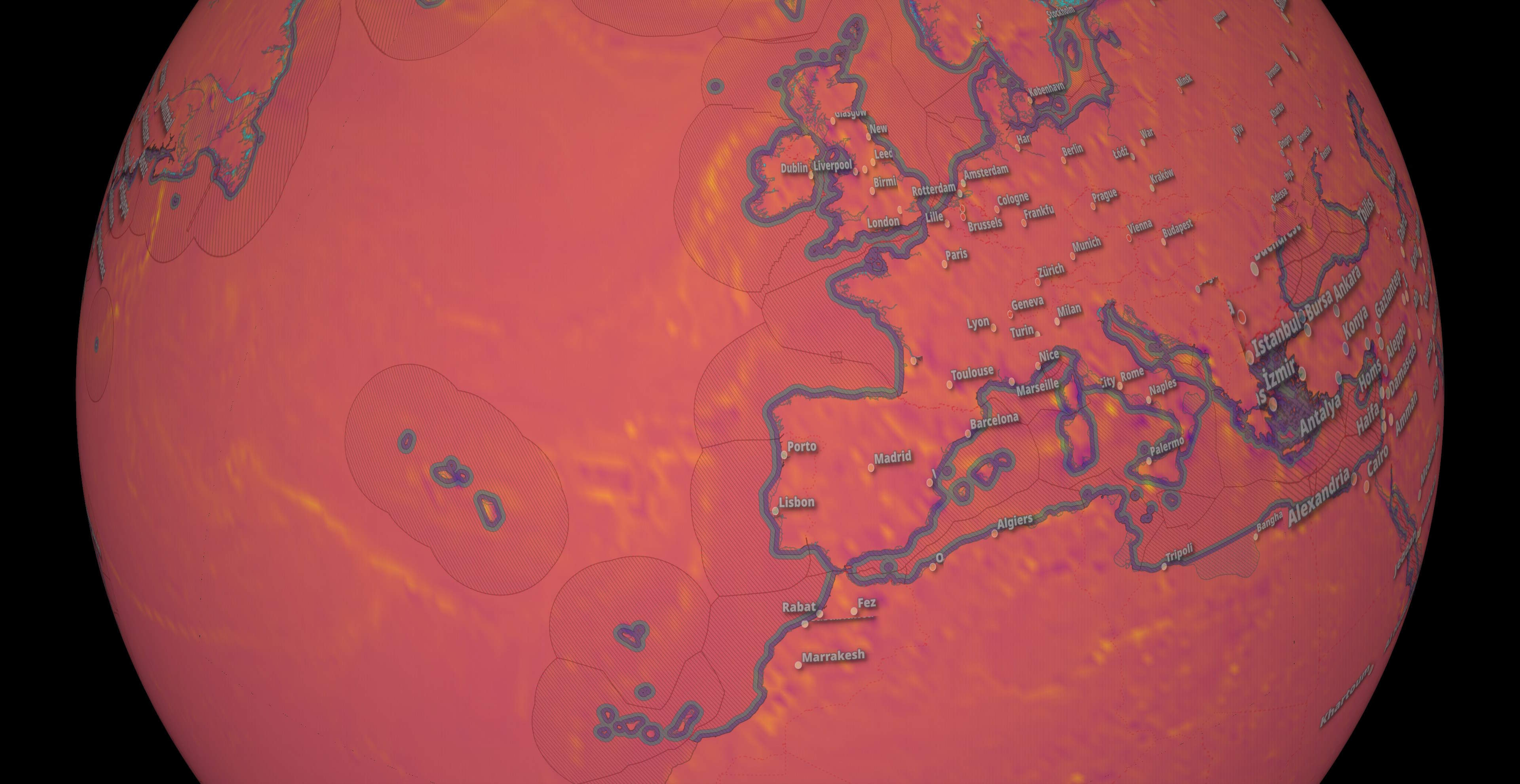
A nonstop Boeing 787-9 from Newark to Rome could burn about $68K in jet fuel. A better wind-aware route might save a few thousand dollars on one flight.
“could need $68K in jet fuel”
Open tools compete
Commercial flight planning exists, but the test uses Scikit-decide, OpenAP aircraft models, and NOAA wind data to build an open source path finder.
“offer an open source solution”
Scikit-decide plans paths
Scikit-decide has spent six years growing into a toolkit for reinforcement learning, planning, and scheduling, including flight paths and drone swarms.
“Scikit-decide has been in development for six years.”
OpenAP models aircraft
OpenAP, built by TU Delft's Dr. Junzi Sun, supplies aircraft performance and fuel behavior. The post pairs it with Scikit-decide's flight path solver.
The setup is heavy
The workstation is a high-end Ryzen 9 desktop with 96 GB of RAM, a fast 4 TB NVMe SSD, and Ubuntu 24 running through WSL on Windows 11 Pro.
Python does the work
The environment uses Python 3.12, scikit-decide, OpenAP, and OpenTop. The install pulls a large stack of packages and needs at least 8 GB of disk space.
“at least 8 GB of storage capacity”
DuckDB handles data
DuckDB is set up with H3, JSON, Lindel, Parquet, and Spatial extensions. QGIS renders the route and wind maps using Natural Earth and Marine Regions data.
Aircraft data is packed in
OpenAP ships thousands of lines of Python plus aircraft datasets. Its aircraft files cover Boeing, Airbus, Embraer, Gulfstream, and Cessna models.
The A380 shows detail
The Airbus A380 file includes weight limits, wing geometry, cruise range, engine options, drag coefficients, and phase behavior from takeoff to landing.
Engines get modeled too
OpenAP includes 427 engines, with fuel flow, emissions indexes, thrust, bypass ratio, and manufacturer data. Turbofans dominate the dataset.
“There are 427 engines listed”
Fuel formulas vary
Fuel model rows define coefficients by aircraft type and engine. The A320, B737, A332, E190, and other types each get tuned values, with a default fallback.
Navigation data is global
The package ships almost 14,000 airports across 236 countries, plus navigation fixes and aids. That gives route search real geographic anchors.
“almost 14K airport locations and codes”
Toulouse to Berlin
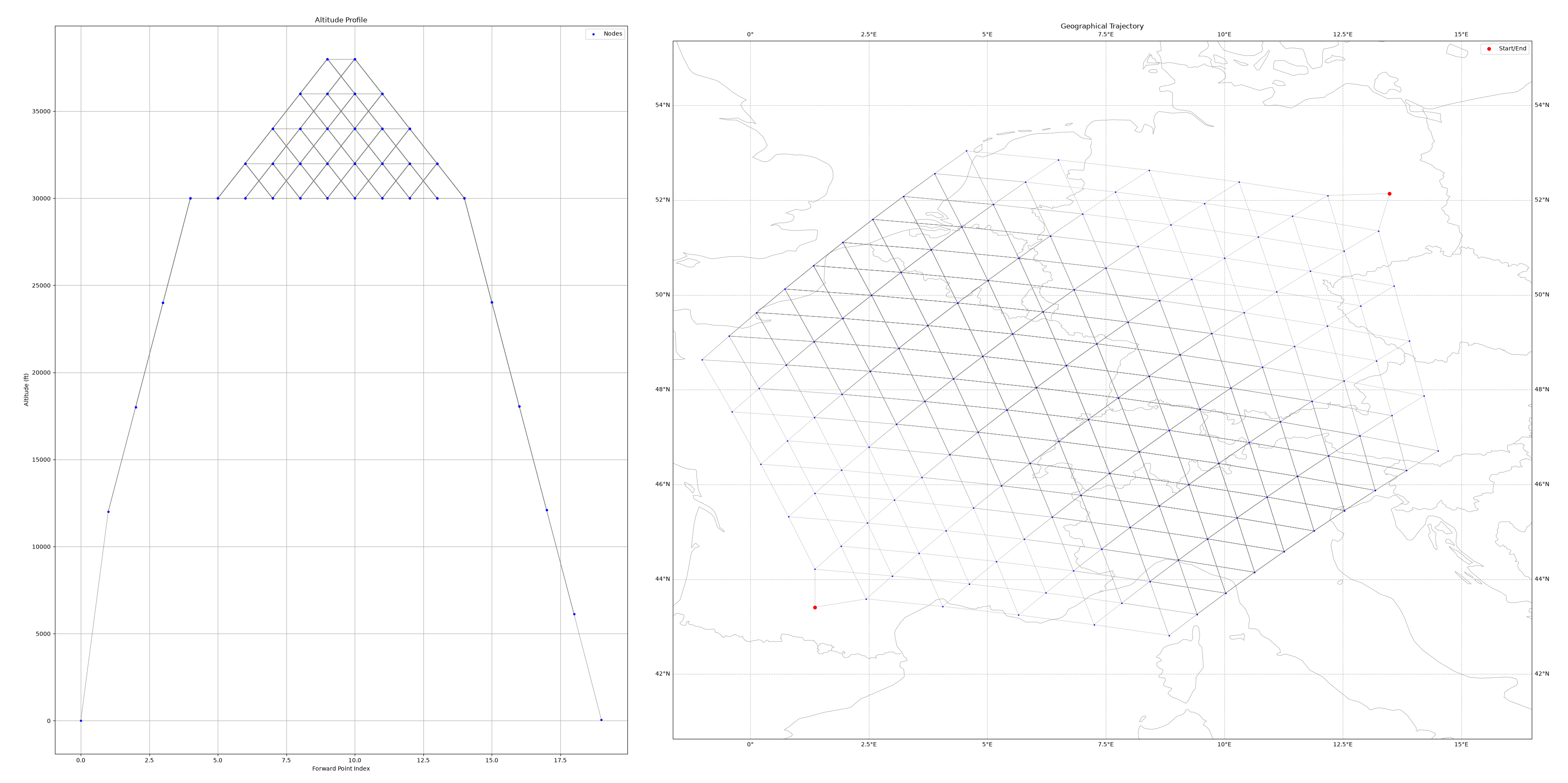
The first Scikit-decide run searches an A320 path from Toulouse to Berlin using May 1, 2026 NOAA weather, A* search, and fuel as the cost target.
Weather enters the graph
If recent NOAA GRB2 files are missing, Scikit-decide downloads them. Each 143 to 144 MB file covers global weather for one forecast time.
“Each file has data covering the entire planet.”
Berlin route solved fast
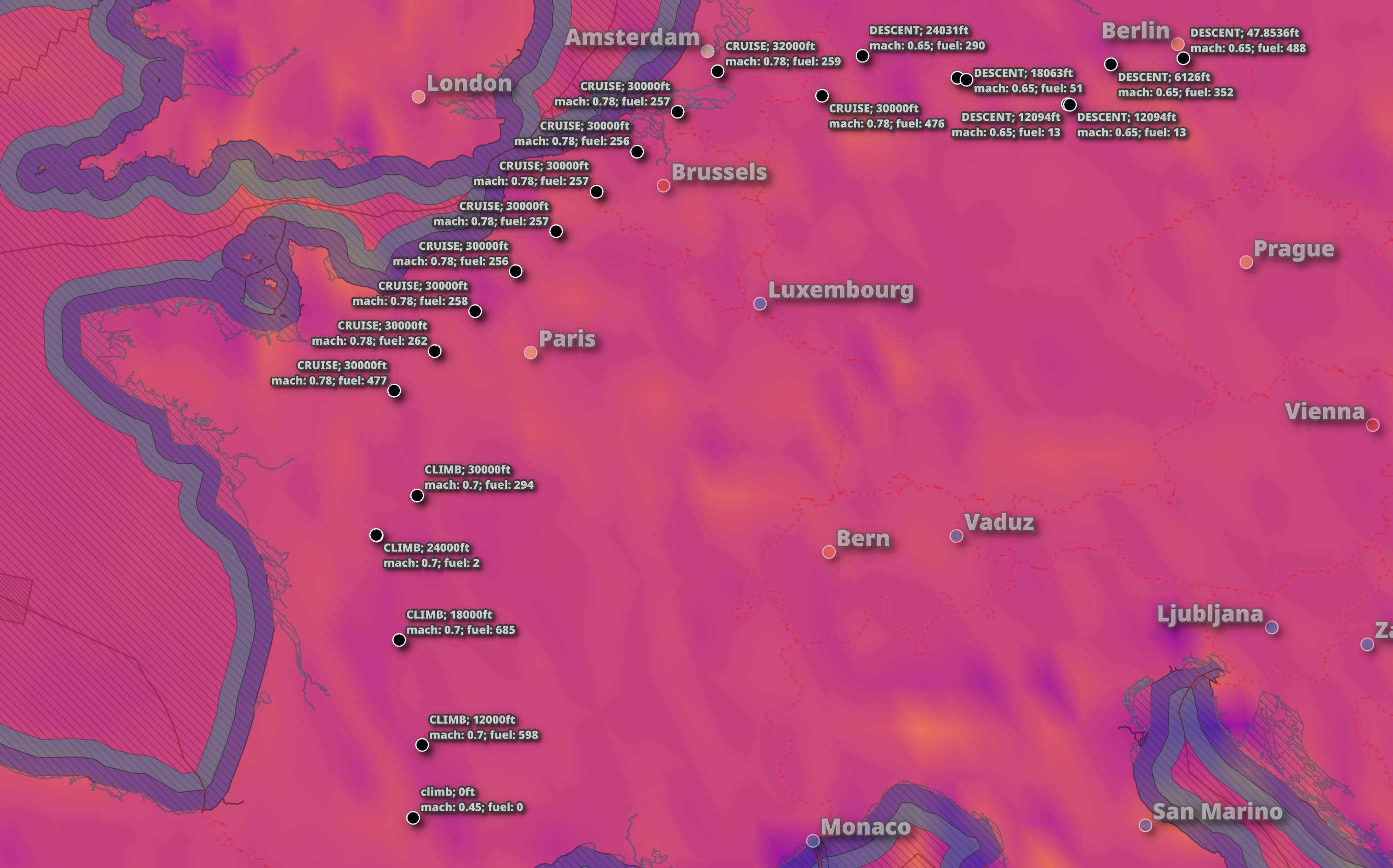
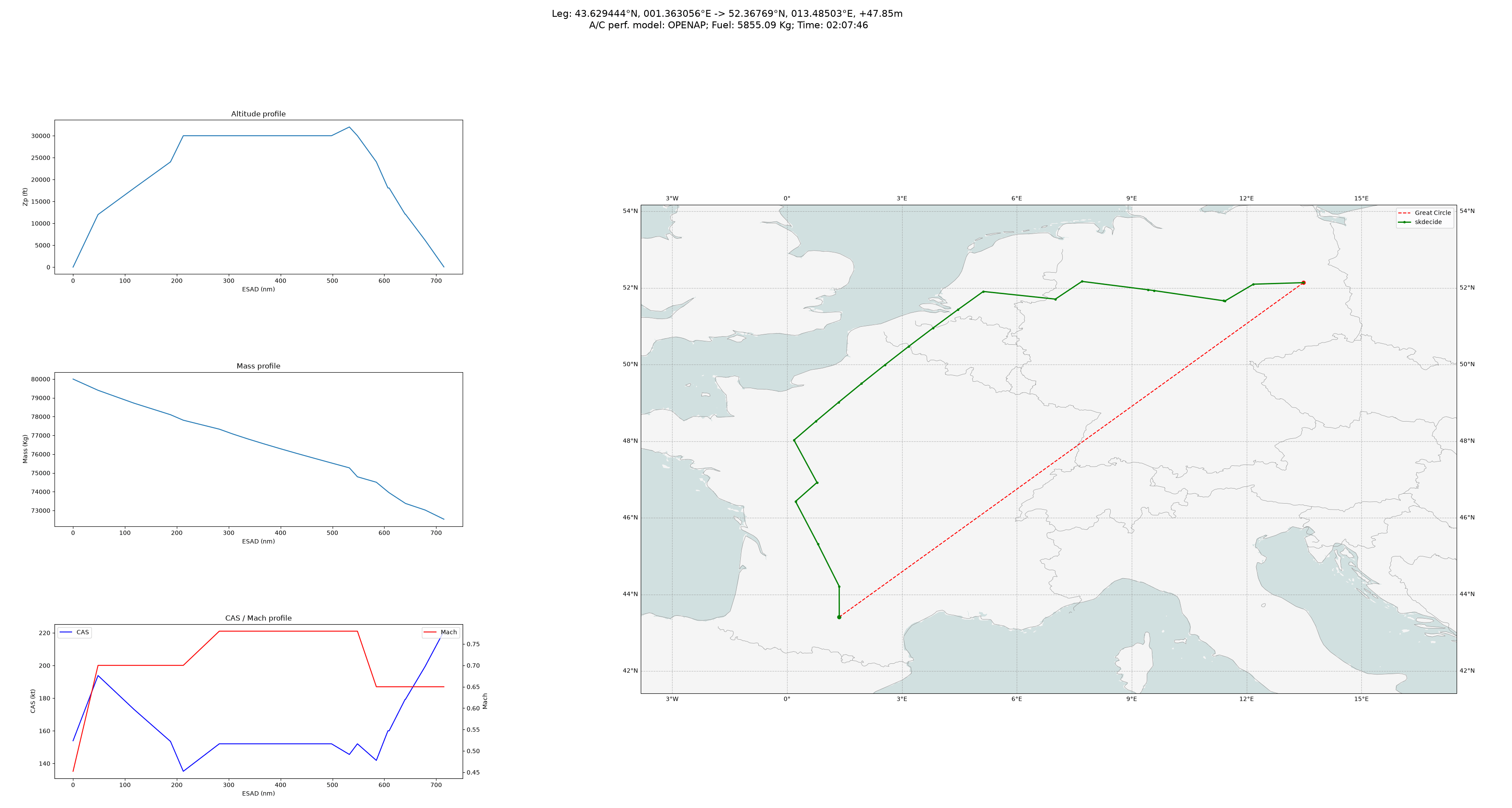
A* finds a 19-step route in 0.28 seconds. The rollout reports about 7,666 seconds of flight time and 5,855 kg of fuel.
“Goal reached after 19 steps!”
Warsaw changes the answer
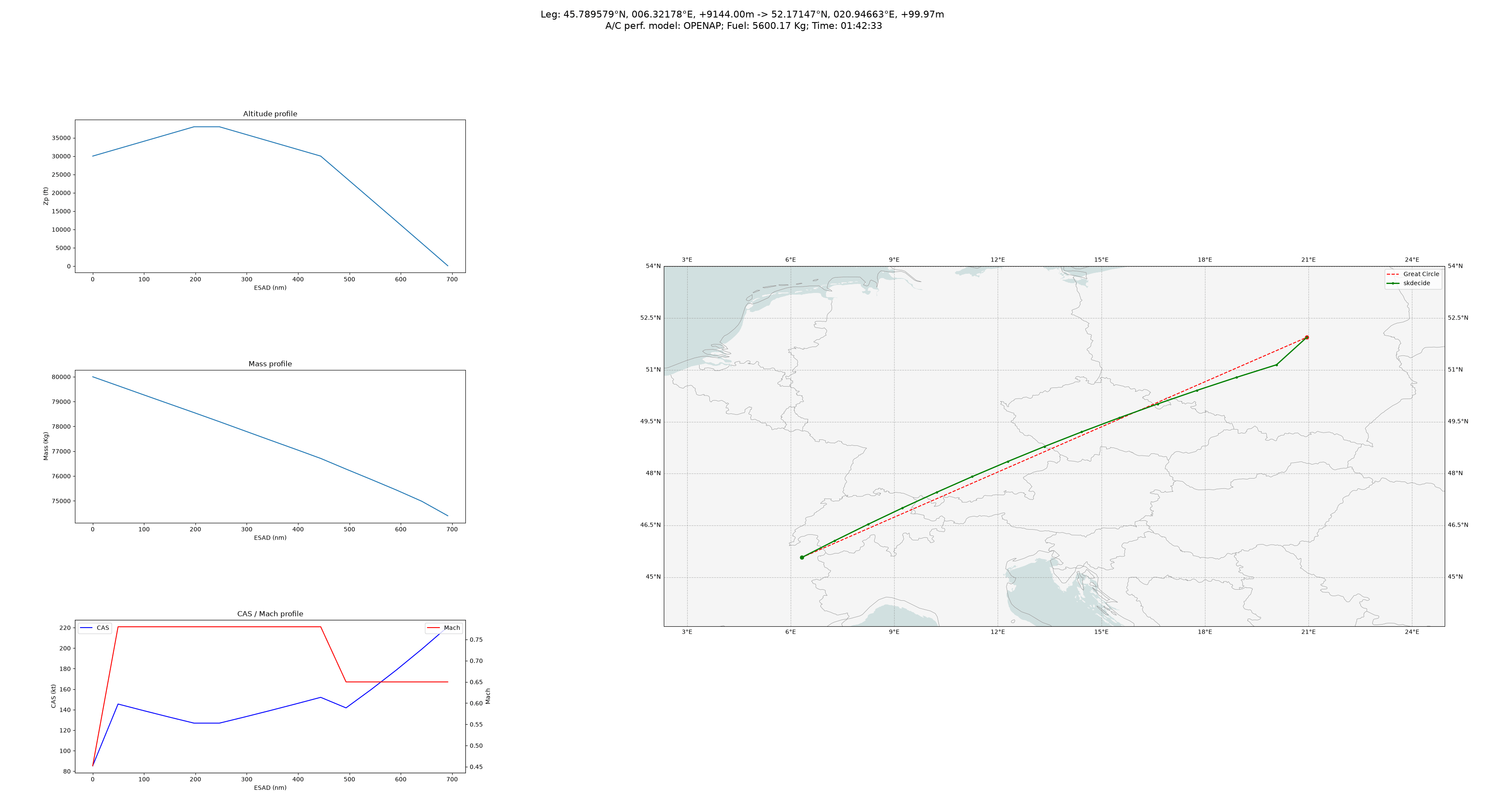
For Toulouse to Warsaw, the initial target altitude is higher. That lets the A320 climb sooner, fly more directly, and solve a 14-step route.
Farther can burn less
Warsaw is 500 km farther than Berlin, yet the modeled path arrives almost 45 minutes faster and uses only 76% of the Berlin flight's fuel.
“only needed 76% of the fuel”
OpenTop compares jets
OpenTop adds trajectory planning with a grid cost file. An Amsterdam to Frankfurt test compares an A320 and B737 against a fuel-and-grid objective.
Small differences matter
On Amsterdam to Frankfurt, the A320 burns 1,625.6 kg in 35.8 minutes. The B737 burns 1,622.1 kg, flies higher, and takes 39.2 minutes.
“fuel burn: 1622.1 kg”
The one thing
Open flight planning tools can model aircraft, weather, routes, and fuel closely enough to compare real choices before a plane flies.





