From MoneyWeek · · 3m
Axa shares are going cheap, should you buy?
The French insurer has transformed itself into a lean P&C powerhouse and now trades at valuations that look too low.
In brief
The French insurer has transformed itself into a lean P&C powerhouse and now trades at valuations that look too low. Axa has successfully pivoted from complex life insurance to simpler property and casualty insurance, and at a forward P/E of 8 with an 8.4% total shareholder yield planned for 2028, the stock appears…
Axa's radical transformation begins

In 2016, CEO Thomas Buberl took over Axa and set out to transform it from a complex life insurance company into a lean global property and casualty insurer. Life insurance tied up billions in capital reserves for decades.
Selling Equitable frees up billions
Axa carved off its US life insurance arm, Axa Equitable, which freed up billions in capital. The company immediately used this firepower to acquire XL Group, a leading global P&C insurer, for $15.3 billion.
Revenue shrinks but profits hold steady
Between 2016 and 2022, Axa's revenue fell 34% to €66.6 billion as it exited life insurance. Yet net income fell just 13% to €5 billion, showing the shift to P&C was more profitable.
Insurance prices surge globally

Starting around 2019, inflation and losses pushed insurers worldwide to raise prices. Higher interest rates also boosted returns on investment portfolios backing underwriting, creating a double tailwind for the industry.
Axa's underwriting profit surges
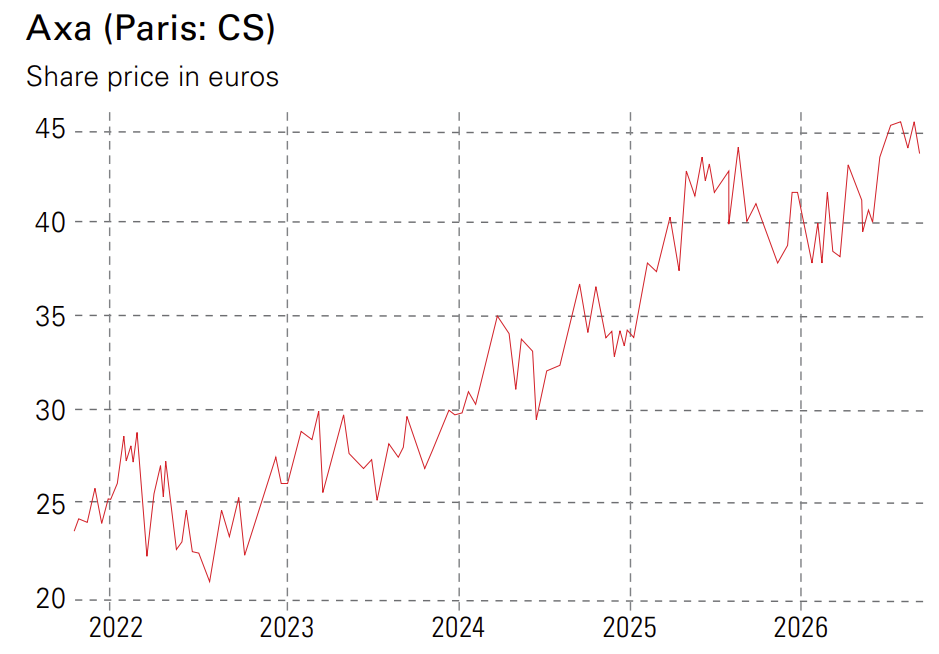
Axa's combined ratio fell to 90.6% in 2025 from 99.5% in 2020. Below 100% means underwriting profit, so this improvement shows the company is making money on every policy it writes.
Net income nearly doubles by 2025
By 2025, Axa's net income rose to €9.8 billion on revenue of €75 billion, with €58 billion from P&C underwriting. The company had successfully become a lean, profitable property and casualty powerhouse.
Asset manager sold to BNP Paribas
Axa sold its investment management division to BNP Paribas for €5.4 billion, 15 times earnings. The proceeds went straight back to shareholders via buybacks, rewarding investors for the transformation.
New growth plan targets 7-9% earnings

Axa's 2027-2029 plan aims for 7% to 9% compound annual earnings growth, up from the previous 6% to 8% target. The company will expand in European small and medium-sized enterprises and save €7 million yearly through AI-driven cost cuts.
Cash generation to hit €25 billion
Axa forecasts €25 billion in cumulative cash generation over three years, up from €21 billion in the prior period. Most of this will flow back to shareholders through dividends and buybacks.
Shareholder yield reaches 8.4% by 2028
Axa plans to return €5.4 billion in 2027 and €5.8 billion in 2028, with buybacks shrinking the share count by over 10%. Total shareholder yield, including dividends and buybacks, is pencilled in at 8.4% for 2028.
Valuation looks too cheap
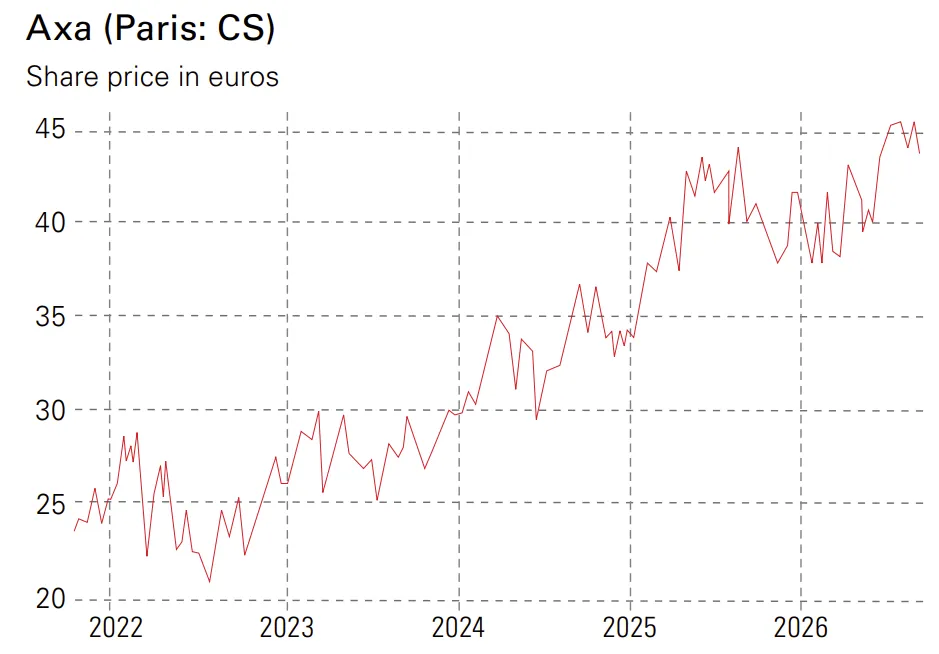
Axa trades at a forward P/E of 8 and price-to-book of 1.59, cheap compared with its earnings outlook and cash return plans. The stock's rating seems too low given its transformation and growth prospects.
“Axa shares are worth a closer look at their current valuation.”
Risks remain but are manageable
A soft insurance market could wipe out growth, and higher losses could force the company to cut shareholder returns. But Axa's short-tail policies reprice yearly, letting it adjust quickly to new market conditions.
The headline
Axa has successfully pivoted from complex life insurance to simpler property and casualty insurance, and at a forward P/E of 8 with an 8.4% total shareholder yield planned for 2028, the stock appears undervalued.