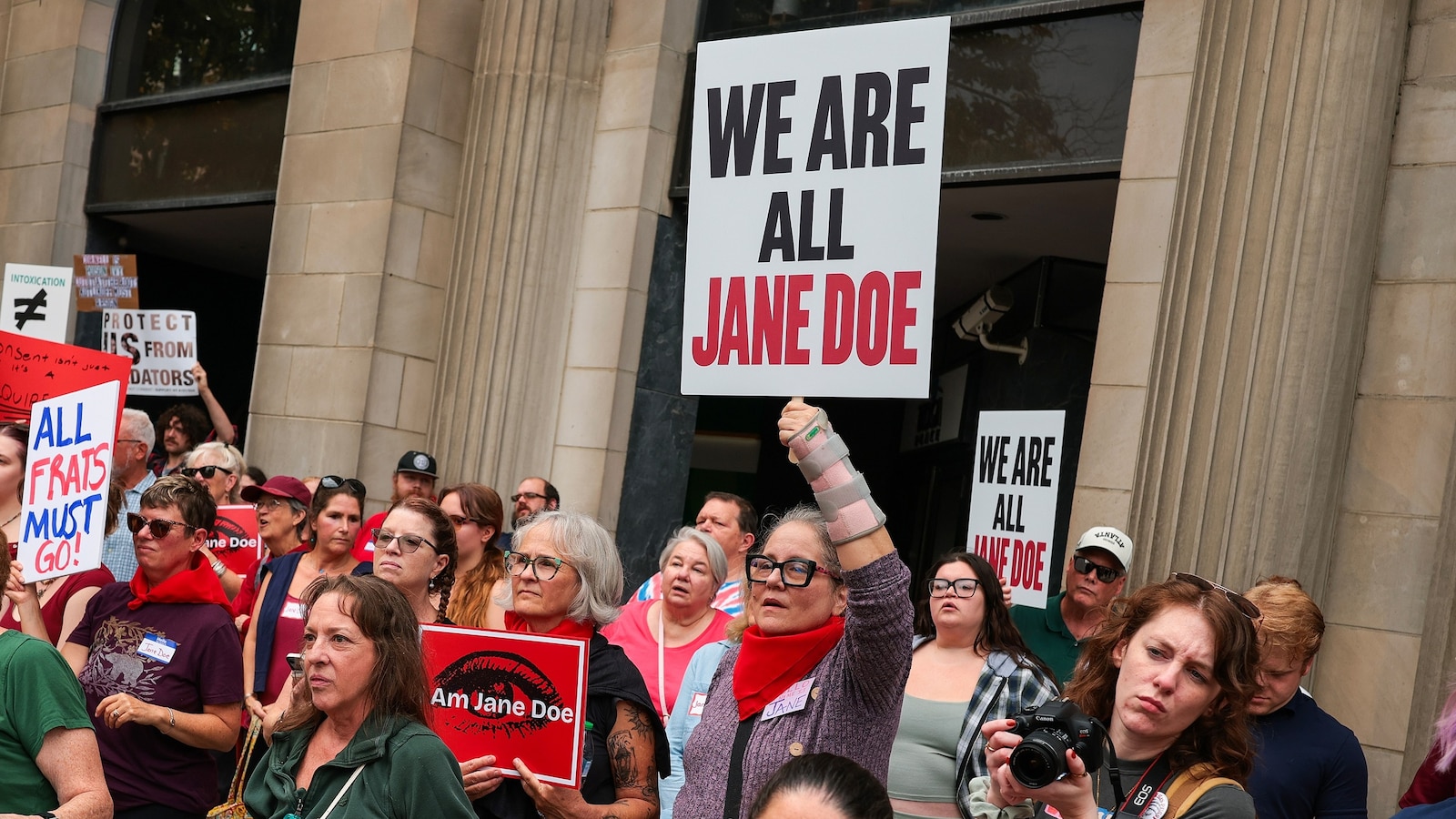
From Mother Jones · Inae Oh · · 2m
Cornell Rape Case Blocked by Voluntary Intoxication Loophole
New York’s voluntary intoxication loophole likely prevented Cornell rape case from being prosecuted in 2024.
In brief
New York’s voluntary intoxication loophole likely prevented Cornell rape case from being prosecuted in 2024. Cornell rape allegations were dismissed due to New York’s voluntary intoxication loophole that requires victims to prove inability to consent when intoxicated. Originally reported by Mother Jones.
Cornell rape allegations
Cornell University faced rape allegations in 2024 that district attorney Matthew Van Houten declined to investigate.
“She never says that she was drugged without her knowledge. She admits to taking drugs and alcohol voluntarily and with knowledge. She does not allege that she was forced to engage in any acts. She does not say that she was physically helpless or unconscious or incapacitated at any point during the time at the fraternity house.”
Voluntary intoxication loophole
New York’s law requires victims who voluntarily became intoxicated to prove they were unable to consent to sex.
“The [reform] bill has been blocked by one man, and that man is Assembly Speaker Carl Heastie.”
Victim’s account

Jane Doe admitted to voluntarily taking drugs and alcohol but did not claim physical helplessness or unconsciousness.
“She admits to taking drugs and alcohol voluntarily and with knowledge. She does not say that she was physically helpless.”
Law’s definition of helplessness
Physical helplessness means unconscious or unable to communicate lack of consent, excluding severe intoxication.
“Under New York State law, being physically helpless is defined as being unconscious or physically unable to communicate a lack of consent.”
Historical context
New York’s rape laws from the 1950s required victims to fight back to prove rape and allowed marital rape.
“In the 1950s, New York law had an earnest resistance requirement, saying that if you didn’t fight back, it wasn’t rape.”
Recent reforms

New York added no-means-no statute in 2000 and eliminated rape statute of limitations in 2006.
“In 2000, New York added a no-means-no statute to the third-degree rape statute.”
Current reform bill
A bill to reform voluntary intoxication exclusion has passed New York Senate unanimously twice.
“For two years running, this bill has passed unanimously in New York’s Senate.”
Assembly speaker blocks bill
Assembly Speaker Carl Heastie has blocked reform bill despite supermajority support in Assembly.
“He has not allowed this bill to get to the floor for a vote. He didn’t allow it in 2025. He didn’t allow it in 2026.”
DA’s decision
District attorney Matthew Van Houten declined to investigate Cornell case in 2024.
“He looked at a summary of the allegations and came to the conclusion that there was no provable crime”
Impact on victim
Jane Doe was failed by campus security and district attorney due to voluntary intoxication loophole.
“This young woman was failed by many people. She was clearly failed by people who took advantage of her state of incapacitation.”
Reform bill requirements
Reform bill requires victim to be incapable of controlling conduct and perpetrator to know victim’s condition.
“The first is that the victim is incapable of appraising or controlling their own conduct.”
Gov. Hochul’s role
Governor Kathy Hochul could push for reform by calling on Speaker Heastie to pass bill or including it in budget.
“So, Gov. Kathy Hochul really has the opportunity to lead here by calling on Speaker Heastie to pass this bill”
Law’s role in DA’s decision
Voluntary intoxication loophole played role in DA’s decision but does not excuse failure to investigate.
“They certainly played a role in his decision, but they do not let him off the hook.”
Next steps
Reform bill faces final hurdle with Assembly Speaker Carl Heastie blocking vote despite supermajority support.
“He has not provided us with an explanation. He has not met with advocates or survivors.”
At a glance
Cornell rape allegations were dismissed due to New York’s voluntary intoxication loophole that requires victims to prove inability to consent when intoxicated.