From Mother Jones · Ari Berman · · 5m
How the Supreme Court killed voting rights
The Roberts court is dismantling the Voting Rights Act using the same legal playbook that destroyed Reconstruction 150 years ago.
In brief
The Roberts court is dismantling the Voting Rights Act using the same legal playbook that destroyed Reconstruction 150 years ago. The Supreme Court has weaponized the 14th Amendment against Black political power by claiming racism is over, echoing tactics used to end Reconstruction and impose Jim Crow. Originally…
Louisiana fights to keep Black districts
In May 2026, hundreds of protesters descended on Baton Rouge to oppose a plan to dismantle Louisiana's majority-Black congressional districts. The Republican legislature moved quickly after the Supreme Court's Callais decision struck down key voting rights protections.
Cleo Fields' district targeted again

Rep. Cleo Fields, a 63-year-old lawyer, testified against the redistricting plan that would eliminate his district stretching 200 miles from Baton Rouge to Shreveport. The Supreme Court had called it an unconstitutional racial gerrymander.
Four Black members in 150 years
Fields pointed out that since Reconstruction, Louisiana has elected only four Black members to Congress, despite nearly a third of the state being Black. He was one of them, and now the legislature wanted to reduce that number further.
“Since Reconstruction, Louisiana has elected four African Americans to Congress. And you're looking at all of them. Four.”
The first Black congressman

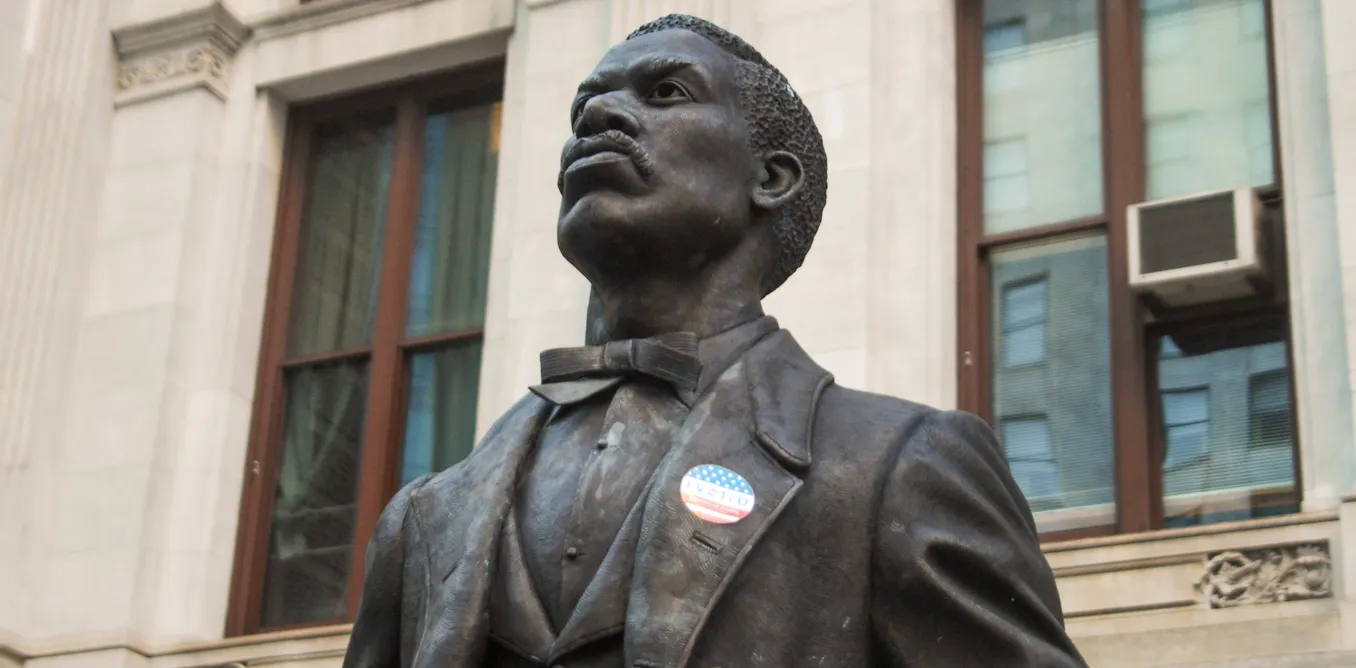
In 1868, John Willis Menard became the first Black person ever elected to Congress. But his white opponent challenged his right to serve, and the House voted 130 to 57 to keep the seat empty rather than seat a Black man.
“Mr. Speaker, I appear here more to acknowledge this high privilege than to make an argument.”
114 years without Black representation
After Charles Edmund Nash's single term ending in 1876, Louisiana went 114 years without a single Black member of Congress. The end of Reconstruction and the rise of Jim Crow made it impossible for Black candidates to win.
Reconstruction's brief promise
From 1865 to 1877, roughly 2,000 Black officeholders were elected across the South after the 13th, 14th, and 15th amendments granted equal citizenship and voting rights. But this multiracial democracy lasted only 12 years.
Fields' first congressional career

In 1993, at age 30, Fields became the House's youngest member, joining the largest incoming class of Black officeholders in history. But his district was struck down in 1996 by the Supreme Court's conservative majority as an unconstitutional racial gerrymander.
“When you put a mirror in front of Congress, it should reflect America.”
28 years before returning to Congress
After leaving Congress in 1996, Fields served twice more in the Louisiana Senate. In 2024, after civil rights groups won a federal court order creating a second majority-Black district, he won back his old seat at age 61.
The Slaughterhouse Cases begin the rollback
After the Civil War, John Archibald Campbell, a former Supreme Court justice who had voted to ban Black citizenship, moved to Louisiana determined to destroy Reconstruction through the courts. He challenged a public health law regulating butchers.
“He was "one of the single most evil lawyers in the history of America. But he was very smart."”
The court sides with Campbell
In 1873, the Supreme Court ruled that the 14th Amendment did not give the federal government power to protect citizens' rights. This decision withdrew federal oversight of how Southern states used power to subjugate Black people.
The Colfax massacre and its aftermath

On Easter Sunday 1873, white vigilantes attacked Black Republicans defending a courthouse in Colfax, Louisiana, killing at least 57 people. Three years later, the Supreme Court's Cruikshank decision freed the murderers and gutted federal power to punish voting rights violations.
The court ignores obvious racism

The Cruikshank decision claimed there was no evidence the conspiracy was based on race, even though white mobs had murdered Black men to seize political control. The court ruled states alone could protect citizen rights.
“A government which cannot protect its humblest citizens from outrage and injury is unworthy of the name and ought not to command the support of a free people.”
Plessy v. Ferguson legalizes segregation
In 1896, the Supreme Court upheld Louisiana's law requiring racial segregation on railways. The court rejected arguments that segregation violated the 14th Amendment and even blamed Black people for seeing it as unequal.
Roberts has always opposed voting rights

As a young lawyer in Ronald Reagan's Justice Department, John Roberts fought to limit the Voting Rights Act to cases with proven intentional discrimination. As chief justice, he has used this same standard to dismantle voting protections.
Shelby County weakens the VRA
In 2013, Roberts struck down the part of the Voting Rights Act requiring Southern states to get federal approval before changing voting rules. He invoked equal sovereignty, a doctrine previously used to defend slavery in the Dred Scott case.
Partisan gerrymandering becomes a tool
In 2019, the court allowed partisan gerrymandering, ruling federal courts cannot throw out maps drawn to advantage one party. Since race and party are tightly connected in the South, this gave legislators a cover story for racist maps.
Callais kills the Voting Rights Act
In 2024, the Supreme Court ruled that a majority-Black district giving equal representation to Black voters violated white voters' rights under the 14th Amendment. The court put partisan maps above voting rights protections.
Racism is over, the court claims
Justice Samuel Alito justified killing the Voting Rights Act by declaring that vast social change has occurred and racism is no longer a problem. But Louisiana's history tells a different story.
The same playbook, 150 years later
The Roberts court has revived 19th-century arguments that the law should not enforce racial equality. Like Plessy and Cruikshank before it, Callais renders the Reconstruction amendments unenforceable except to serve white people.
“Like the Slaughterhouse and Cruikshank decisions before it, Callais renders the Reconstruction amendments unenforceable, except to serve white people.”
Fields challenges the court
Fields says no Black Louisianan has ever been elected from a majority-white district. He challenges the Supreme Court to come to Louisiana as a Black man and run for Congress to see if racism is really over.
“I say to members of the Supreme Court, come to Louisiana as a Black man and run for Congress and see where that gets you.”
Here's the gist
The Supreme Court has weaponized the 14th Amendment against Black political power by claiming racism is over, echoing tactics used to end Reconstruction and impose Jim Crow.